

When your furnace won't turn on, your home can quickly become uncomfortable, especially during cold weather. The problem may come from the thermostat, power supply, ignition system, or another furnace component. In this guide, BlueStars Parts explains the most common causes, troubleshooting steps, and repair options to help you get your heating system running again.
Quick Diagnosis: Why Won't Your Furnace Turn On?
If your furnace won't turn on, its behavior can help narrow down the possible cause. The table below lists common symptoms first, followed by less common or more system-specific issues. Use these quick checks before moving to detailed troubleshooting.
| Symptom | Likely Cause | Quick Check |
|---|---|---|
| Thermostat calls for heat, but furnace doesn't start | Thermostat settings or power issue | Set to Heat, raise the temperature, and check batteries. |
| Furnace fan runs, but no warm air comes out | Igniter or gas supply issue | Listen for normal ignition activity. |
| Furnace starts but shuts off shortly afterward | Dirty flame sensor or restricted airflow | Check the air filter and open vents. |
| Furnace is completely silent with no indicator lights | No electrical power to furnace | Check the power switch and circuit breaker. |
| Furnace repeatedly starts and stops | Airflow restriction or condensate issue in high-efficiency models | Check the air filter and visible condensate drain. |
| Inducer runs, but ignition never begins | Pressure switch or vent blockage | Check accessible intake and exhaust vent openings. |
| Diagnostic LED is flashing | Furnace fault detected | Match the flash code with the furnace manual. |
1. What's Causing Your Furnace Not to Turn On?
Understanding where the startup sequence stops can help narrow down the cause and determine whether a basic check or professional repair is needed.
1.1. Thermostat Is Not Calling for Heat
The furnace will not start unless the thermostat sends a call for heat. If your furnace won't turn on, the issue may be related to incorrect thermostat settings, such as being set to Cool or having a temperature setting that is too low. Weak batteries, faulty wiring, or a thermostat control problem can also prevent the furnace from starting. Set it to Heat, raise the temperature above the current room temperature, and replace the batteries if needed.

Incorrect thermostat settings are one possible reason a furnace will not start (Source: BlueStars Parts)
1.2. Tripped Circuit Breaker or Furnace Power Switch Is Off
Gas furnaces still need electricity to operate the blower, control board, and ignition system. If the furnace switch is off or the circuit breaker has tripped, the unit may remain completely silent. Check both power sources and restore them if needed. If the breaker trips again, have the electrical issue inspected professionally.
1.3. Furnace Access Panel Is Not Closed Properly
Many furnaces have a door safety switch that prevents operation when the access panel is loose or incorrectly installed. If the furnace stopped working after filter replacement or maintenance, check that the panel is seated and secured correctly. A loose front panel can keep the safety switch open and prevent startup.

Check that the furnace access panel is seated and secured correctly (Source: BlueStars Parts)
1.4. Restricted Airflow Is Causing the Furnace to Overheat
A clogged air filter, blocked return vent, closed supply register, or blower problem can restrict airflow across the heat exchanger. As a result, heat builds up inside the furnace, causing it to overheat and triggering the primary high-limit switch to open. This safety mechanism shuts off the burners, while the blower may continue running to help cool the system. Start by checking the air filter and making sure all supply and return vents are clear.
A clogged air filter, restricted airflow, or a faulty safety component can cause repeated shutdowns. Learn more about the possible causes in our guide to furnace keeps turning on and off.
1.5. Furnace Overheating or Primary Limit Switch Is Open
The primary limit switch monitors furnace temperature and opens the heating circuit when excessive heat is detected. An open limit switch is often a symptom of overheating rather than a failed switch. Common underlying causes include clogged air filters, blocked vents, or blower problems that restrict airflow.
While the switch itself can occasionally fail, replacing it without addressing the root cause may lead to repeated shutdowns. Check for airflow restrictions first, and have a qualified HVAC technician inspect the system if the problem persists.
For compatible Goodman furnaces, the 20162904 Furnace Primary Limit Switch (150°F to 110°F) from BlueStars Parts is designed to open at approximately 150°F and reset around 110°F. Always correct the cause of overheating and confirm compatibility before replacing the switch.
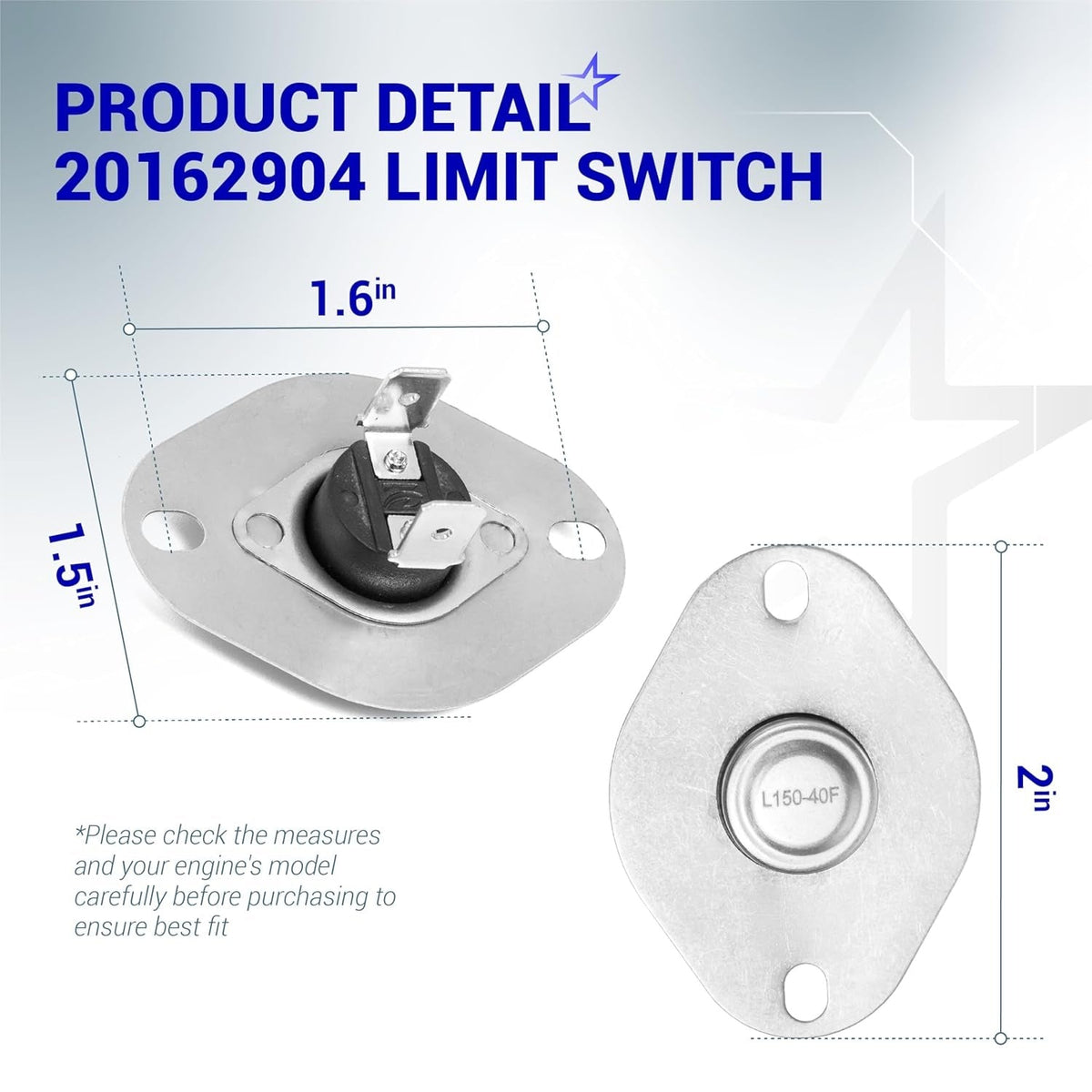
20162904 Furnace Primary Limit Switch from BlueStars Parts (Source: BlueStars Parts)
1.6. Igniter or Ignition System Failure
If the furnace fan or inducer runs but the burners fail to ignite, the problem may lie in the ignition system. If the igniter does not glow, it could be worn out, damaged, or not receiving power from the control board. If the igniter glows but no flame appears, the issue may involve the gas supply, gas valve, or ignition sequence. Repeated failed ignition attempts can also trigger a safety lockout, preventing the furnace from restarting until the issue is resolved.
If the burners ignite briefly and then shut off, a flame-sensing problem may be responsible. Review these bad flame sensor symptoms to better understand the warning signs.
1.7. Gas Supply, Pressure Switch, or Other Safety Control Problem
The furnace startup sequence can be interrupted at different stages by safety controls or gas supply issues.
-
Before ignition, the inducer must establish proper draft, allowing the pressure switch to confirm safe venting conditions. Blocked intake or exhaust vents, condensate buildup, or a faulty pressure switch can prevent the ignition sequence from continuing.
-
During ignition, the furnace needs an adequate gas supply and a properly functioning gas valve to light the burners. If gas is unavailable or the valve fails to open, the igniter may activate without producing a flame.
If basic checks do not restore operation, avoid bypassing safety switches or working directly on gas components. A qualified HVAC technician can safely inspect the venting, gas supply, and safety-control systems.

A gas supply problem can prevent the furnace from igniting (Source: BlueStars Parts)
2. How to Troubleshoot a Furnace That Won't Turn On
If your furnace won't turn on, start with the simplest checks before assuming an internal component has failed. Follow these steps in order to narrow down the problem safely.
Step 1: Check the Thermostat
Set the thermostat to Heat and raise the set temperature a few degrees above the current room temperature. If it uses batteries, replace weak or dead batteries. Also make sure the thermostat display is working normally.
Step 2: Check Furnace Power
Make sure the furnace power switch, which often looks like a regular light switch, is set to On. Then check the electrical panel for a tripped furnace breaker. If the breaker trips again after being reset, stop troubleshooting and contact a qualified technician.

Make sure the furnace power switch is set to On (Source: BlueStars Parts)
Step 3: Make Sure the Access Panel Is Fully Closed
Check that the furnace access panel is correctly positioned and securely closed. Many furnaces use a door safety switch that can prevent operation when the panel is loose or improperly installed. This is especially worth checking after replacing a filter or inspecting the furnace.
Step 4: Check the Air Filter and Airflow
Inspect the furnace filter and replace it if it is heavily clogged with dust or debris. Make sure supply registers and return air vents are open and not blocked by furniture, curtains, or other objects. Restricted airflow can cause overheating and trigger a safety shutdown.

Inspect the furnace filter and replace it if it is heavily clogged with dust (Source: BlueStars Parts)
Step 5: Identify What the Furnace Is Doing
Next, call for heat and observe what happens. The point where the startup sequence stops can help narrow down the problem. Pay attention to whether the inducer starts, the igniter activates, or the burners light before shutting off.
| What Happens | What It May Indicate | Next Check |
|---|---|---|
| Nothing happens | Power or thermostat issue | Recheck thermostat and power |
| Inducer starts, but no ignition | Vent or pressure switch issue | Check vents and condensate |
| Igniter operates, but no flame appears | Ignition or gas supply issue | Check gas supply; call a technician |
| Burners ignite, then shut off after a few seconds | Dirty flame sensor or flame-sensing issue | Note diagnostic codes; have the flame sensor inspected |
| Blower runs with no heat | Ignition, burner, or safety-control issue | Observe burner operation |
| Furnace starts and stops repeatedly | Restricted airflow, overheating, or safety issue | Check the air filter and vents |
An inducer running without ignition can point toward a pressure-switch or venting problem, while a furnace that receives a heat call but fails to light may have an ignition-system fault.
Step 6: Check High-Efficiency Furnace Vents and Condensate
This step applies only to high-efficiency condensing furnaces equipped with a condensate drainage system. If you have a conventional non-condensing furnace, skip the condensate check.
For condensing models, visually inspect the outdoor intake and exhaust pipes for obvious obstructions, such as debris, snow, or ice. Also check for standing water, leaks, or visible blockages around the condensate drain or trap. Blocked venting or poor condensate drainage can interfere with proper draft or activate a safety control, preventing the ignition sequence from continuing.
Note: Do not disconnect pressure-switch tubing, open sealed combustion components, or bypass furnace safety controls. Internal inspection and testing should be handled by a qualified HVAC technician.

Inspect the outdoor intake and exhaust pipes for obvious obstructions (Source: BlueStars Parts)
Step 7: Read the Furnace Diagnostic Code
If your furnace has a diagnostic LED, look through the viewing window or check the control-board area without removing energized components. Note the number and pattern of flashes, then compare it with the fault-code chart on the furnace panel or in the owner's manual.
Diagnostic codes vary by brand and model, so use the chart for your specific furnace rather than a generic code list. If the code points to an ignition, pressure switch, limit switch, gas, or electrical fault, professional diagnosis is recommended.
If your furnace won't turn on, start with the basic checks below. For additional guidance on identifying common heating problems, see our guide to furnace troubleshooting.
3. When Should You Call a Professional?
If your furnace won't turn on after basic troubleshooting, professional diagnosis may be necessary. Some warning signs require immediate action, while others indicate that you should schedule an HVAC inspection.
3.1. Stop Immediately: Safety Warning Signs
Stop using the furnace and seek assistance if you notice:
-
Gas smell: Evacuate immediately and contact your gas utility or emergency services from a safe location. Avoid electrical switches.
-
Carbon monoxide (CO) alarm: Evacuate and call emergency services. Do not re-enter until cleared.
-
Repeated breaker trips: Stop resetting the breaker and leave the furnace off.
-
Abnormal combustion: Soot, smoke, unusual flames, or overheating require immediate professional attention.
3.2. Schedule Professional Service: Persistent Furnace Problems
Contact a qualified HVAC technician if:
-
The furnace still won't start after checking the thermostat, power, filter, and access panel.
-
Safety lockouts or fault codes repeatedly occur.
-
Burners fail to ignite or shut off quickly.
-
The furnace frequently starts and stops despite clear airflow.
-
Unusual noises, such as banging, grinding, or squealing, persist.
-
Internal components such as the igniter, gas valve, pressure switch, or control board may be faulty.
A technician can diagnose electrical, ignition, gas, and safety-control issues and recommend appropriate repairs.

Professional diagnosis may be necessary after completing the basic troubleshooting steps (Source: BlueStars Parts)
4. How to Prevent Your Furnace From Not Turning On
Regular maintenance can help prevent furnace shutdowns caused by airflow restrictions, blocked venting, condensate drainage issues, and ignition failures. These steps are especially useful when a furnace won't turn on but fan works.
-
Replace air filters regularly: Check and replace dirty filters to maintain airflow and prevent overheating.
-
Keep supply and return vents clear: Remove obstructions to ensure proper air circulation and avoid high-limit switch shutdowns.
-
Maintain the blower system: Schedule routine inspections to address dust buildup, worn components, or reduced airflow.
-
Inspect intake and exhaust vents: Check accessible outdoor openings for snow, leaves, ice, or debris that may disrupt venting and ignition.
-
Monitor condensate drainage: Check high-efficiency furnaces for visible clogs, leaks, or standing water that could trigger safety shutdowns.
-
Check thermostat settings: Set the thermostat to Heat and replace weak batteries when needed.
-
Maintain ignition components: Have a qualified HVAC technician inspect the igniter, flame sensor, burners, and safety controls annually to prevent ignition failures.
-
Address warning signs early: Seek professional inspection for frequent cycling, delayed ignition, unusual noises, or recurring fault codes.
5. FAQs: Furnace Won't Turn On
5.1. Why won't my furnace turn on but the fan works?
If the furnace fan runs but no heat is produced, the cause may depend on whether the burners ignite. If the burners never light, an ignition system failure or gas supply problem may be responsible. If the burners ignite but shut off after a few seconds, a flame-sensing issue may be involved. Alternatively, restricted airflow can cause overheating, triggering the high-limit switch to open and shut off the burners while the blower continues running.
5.2. How do I know if my furnace limit switch is bad?
Common signs of a bad furnace limit switch include a blower that runs continuously, frequent short cycling, or a furnace that will not ignite. Because similar symptoms can also result from overheating or poor airflow, an HVAC technician should test the switch before replacement.
5.3. Why does my furnace keep turning off after it starts?
If your furnace keeps turning off after starting, the timing can help identify the cause.
-
If the burners shut off after a few seconds, a dirty flame sensor or flame-sensing issue may be responsible.
-
If the furnace runs for several minutes before shutting down, restricted airflow from a clogged filter or blower problem may cause overheating and trigger the high-limit switch.
-
If the heating cycle stops unpredictably, thermostat, control board, or power supply issues may be interrupting normal operation.
5.4. Why won't my high-efficiency furnace start?
High-efficiency furnaces produce condensate, so a clogged drain line can trigger a safety shutdown and prevent burner ignition. Blocked intake or exhaust venting and pressure-switch problems can also interrupt the startup sequence.
5.5. Why won't my furnace turn on with the thermostat?
First, make sure the thermostat is set to Heat and the selected temperature is above the current room temperature. If the furnace still does not respond, possible causes include dead thermostat batteries, wiring problems, loss of furnace power, or an ignition or control-board fault.
If your furnace won't turn on, start with simple checks such as the thermostat, power supply, air filter, and vents before moving on to more complex components. For worn or failed furnace parts, BlueStars Parts offers furnace parts replacement options to help keep your heating system running safely and efficiently.
Contact Information
8 The Green, Ste A, Dover, Delaware 19901-3618, United States
Website: https://bluestarsparts.com/
References
Baugh, T. (n.d.-a). Furnace limit switch guide. Carrier. https://www.carrier.com/us/en/residential/hvac-resources/furnaces/furnace-limit-switch/
Baugh, T. (n.d.-b). Your guide to a furnace not turning on. Carrier. https://www.carrier.com/us/en/residential/hvac-resources/furnaces/furnace-not-turning-on/
Fonda, A. (n.d.). Furnace not turning on. Trane. https://www.trane.com/residential/en/resources/troubleshooting/gas-furnaces/furnace-not-turning-on/


