

If a faulty flame sensor causes your furnace to shut down shortly after ignition, cycle repeatedly, or fail to maintain consistent heating, recognizing bad flame sensor symptoms early can help you narrow down the cause and prevent unnecessary furnace interruptions. At BlueStars Parts, you can find replacement parts and practical resources to help keep your heating system operating properly.
Quick Diagnosis: Signs You Have a Bad Flame Sensor
Use the table below to distinguish operational problems from physical signs and determine whether cleaning or replacement may be appropriate. Symptoms alone cannot confirm that the flame sensor has failed, so further testing may be necessary.
| Type | Symptom | What It Means | Clean or Replace? |
|---|---|---|---|
| Operational | Short cycling | Flame signal may be interrupted. | Diagnose first; clean if contaminated. |
| Cold air from vents | Burners may shut off too soon. | Check flame sensor and diagnose further. | |
| Repeated clicking or ignition attempts | Furnace cannot confirm a stable flame. | Diagnose ignition and flame-sensing system. | |
| Flame-sensor error code or lockout | Possible sensor contamination, grounding, wiring, flame quality, ignition, gas supply, or control-board issue. | Diagnose first; replace only if confirmed faulty. | |
| Physical | Soot or light corrosion on sensor rod | Buildup can interfere with flame detection. | Clean if the sensor is otherwise intact. |
| Heavy corrosion or cracked porcelain | Sensor has permanent physical damage. | Replace |
Operational symptoms describe how the furnace behaves, while physical signs can be seen directly on the flame sensor. If symptoms continue after cleaning, further testing may be needed before replacing the part.
1. What Does a Furnace Flame Sensor Do?
A furnace flame sensor is a safety component located near the burner assembly. Its main job is to confirm that a burner flame is present after the gas valve opens. Most modern flame sensors use flame rectification, producing a very small electrical signal that tells the control board combustion has been established.
When the sensor detects a stable flame, the control board allows the gas valve to remain open and the heating cycle continues. If the flame signal is missing or too weak, the board shuts off the gas supply to prevent unburned gas from accumulating. A dirty, damaged, or poorly positioned sensor can therefore cause the furnace to shut down even when the burners initially ignite.

A furnace flame sensor confirms that a burner flame is present. (Source: BlueStars Parts)
2. Common Symptoms of a Bad Flame Sensor
Common bad flame sensor symptoms can be divided into two groups: operational symptoms and physical symptoms. These symptoms can also have other causes, so proper diagnosis is important before replacing the sensor.
2.1. Operational Symptoms
-
Burners Ignite Then Shut Off After a Few Seconds: This is a strong clue of a possible flame-sensing issue, but it does not confirm a faulty sensor. Wiring, grounding, gas supply, combustion, or control-board problems can cause similar symptoms. Further diagnosis is needed before replacement.
-
Repeated Ignition Attempts or Furnace Lockout: The furnace may retry ignition after failing to establish or confirm a stable flame. After several unsuccessful attempts, some systems enter a safety lockout. This may involve the flame sensor or other ignition-system components.
-
Furnace Blows Cold Air: If the burners shut off prematurely while the blower continues running, cool air may come from the vents. Flame-sensing problems are one possible cause, but airflow restrictions, overheating, or other furnace faults should also be checked.
-
Clicking / Re-Ignition Attempts: Repeated clicking may occur during ignition retries. This is a secondary clue rather than a reliable sign of a bad flame sensor, as igniter, gas supply, wiring, or other ignition-system issues can produce similar symptoms.
-
Flame-Sensing or Ignition Error Code: Diagnostic LEDs or control-board codes may indicate flame-detection or ignition problems. Check the furnace manual for model-specific meanings. An error code alone does not confirm sensor failure.
2.2. Physical Symptoms
-
Soot / Carbon / Oxidation: Light oxidation or surface buildup on the sensor rod may interfere with flame detection and can often be addressed through proper cleaning. However, significant soot buildup around the burners may indicate a broader combustion problem that requires professional inspection. Cleaning the sensor alone may not resolve the underlying issue.
-
Severe Corrosion or Pitting: A heavily corroded, worn, or pitted sensing rod may no longer provide a reliable flame signal. Unlike light surface oxidation, significant deterioration can indicate that replacement is more appropriate than cleaning.
-
Cracked Ceramic Insulator: Inspect the ceramic or porcelain section around the base of the sensor for visible cracks or other damage. A cracked insulator can interfere with the electrical signal and generally indicates that the flame sensor should be replaced rather than cleaned.

Common bad flame sensor symptoms can be divided into operational and physical signs. (Source: BlueStars Parts)
3. Should You Clean or Replace the Flame Sensor?
Whether you should clean or replace a flame sensor depends on its physical condition and how the furnace responds after cleaning. Light surface buildup may be removable, while permanent damage or recurring flame-sensing problems usually require further diagnosis and may point to replacement.
| Situation | When to Clean | When to Replace | Need Further Diagnosis? |
|---|---|---|---|
| Light soot, carbon, or oxidation | Clean light surface buildup if the sensor is intact. | Only if damaged or confirmed faulty. | Yes, if symptoms persist or significant burner soot is present. |
| Furnace shuts off shortly after ignition | Clean if the sensor is visibly contaminated. | Only if testing confirms sensor failure. | Yes, check flame signal, wiring, grounding, and combustion. |
| Recurring flame-sensing error or lockout | Clean if contamination is found. | Only if the sensor is confirmed faulty. | Yes, investigate the flame-sensing and ignition systems. |
| Severe corrosion or pitting | Cleaning may not restore a damaged surface. | Replace if the sensor rod is physically deteriorated. | If problems continue after replacement. |
| Cracked ceramic insulator or damaged sensor | Cleaning cannot repair physical damage. | Replace the damaged sensor. | If symptoms persist after replacement. |
| Intermittent flame-sensing problems | Inspect, clean light buildup, and test one normal heating cycle. | Only if testing confirms sensor failure. | Yes, check wiring, grounding, and flame-sensing circuit. |
| Clean sensor but no improvement | Avoid repeated cleaning without identifying the cause. | Only if the sensor is confirmed faulty. | Yes, inspect the broader ignition, gas, and flame-sensing systems. |
4. How to Replace a Furnace Flame Sensor
Because the sensor is part of a gas furnace safety system, follow the furnace manufacturer's service instructions and stop if you are not comfortable working around gas or electrical components. The following steps provide a general overview; the exact procedure varies by furnace model.
Step 1: Turn Off Power and Gas
Set the thermostat so the furnace is not calling for heat. Turn off electrical power to the furnace at the service switch or circuit breaker, then close the furnace gas shutoff valve before opening the cabinet. Follow the manufacturer's instructions for safely isolating the equipment before internal service.
Safety note: If you smell gas before or during the repair, do not operate electrical switches or continue working on the furnace. Leave the area and contact your gas utility or emergency services from a safe location.
Step 2: Remove Access Panel and Locate Sensor
Remove the furnace access panel according to the manufacturer's instructions. Locate the burner assembly and look for a thin metal flame-sensing rod with a ceramic base, typically mounted in the burner flame path with one electrical wire.
Do not confuse the flame sensor with the igniter, which is responsible for lighting the gas. Refer to your furnace manual or model-specific diagram to confirm the correct component. Before removal, take a photo of the wire connection and mounting orientation to ensure proper reinstallation.
Safety note: Allow the furnace and burner area to cool completely before touching internal components.

Remove the furnace access panel according to the manufacturer's instructions. (Source: BlueStars Parts)
Step 3: Disconnect Wire and Remove Sensor
Note the sensor's mounting position before removal. Carefully disconnect the electrical wire from the sensor terminal, remove the mounting screw, and slide the sensor out of the burner assembly. Some flame sensors are secured by a single mounting screw, although the exact design varies by furnace.
Safety note: Do not pull on the wire itself. Grip the connector when disconnecting it to reduce the risk of damaging the wiring.
Step 4: Compare New Sensor With Original Part
Before installation, compare the replacement with the original sensor. Check the part number, mounting bracket, terminal connection, rod length and shape, and overall orientation. Flame sensors are not universal, so the replacement must match the specifications for the specific furnace model.
Do not choose a replacement based only on appearance. Confirm compatibility using the furnace model number, service manual, or original flame sensor part number.

Check the part number, mounting bracket, and terminal connection before installation. (Source: BlueStars Parts)
Step 5: Install the New Sensor
Insert the new flame sensor into the same mounting position as the original, making sure the sensing rod is positioned in the burner flame path. Secure the mounting screw according to the manufacturer's instructions, then reconnect the electrical wire firmly to the sensor terminal.
Safety note: Handle the replacement by its ceramic base or mounting bracket and avoid touching the sensing rod with bare hands. Follow the manufacturer's handling and installation guidance to reduce the risk of contamination or damage.
Step 6: Restore Gas and Power and Test
Reinstall the furnace access panel securely. Open the gas shutoff valve if it was closed, restore electrical power, and set the thermostat to call for heat. Observe one complete heating cycle and confirm that the burners ignite, remain lit, and the furnace operates normally.
If the burners stay lit throughout a normal heating cycle, the replacement likely resolved the issue. If the furnace still shuts off or enters lockout, stop replacing parts and seek professional diagnosis of the ignition, flame-sensing, gas, or control system.
Safety note: Stop the furnace immediately if you smell gas or notice abnormal burner behavior. Do not repeatedly reset a locked-out furnace.
The correct flame sensor should match both the furnace model and the original part number. Probe shape, mounting position, electrical connection, and compatibility can vary between furnace systems, so verify the fit before ordering.
Recommended Replacement Parts
Before choosing a replacement, follow this sequence: Furnace model number → Original flame sensor part number → Manufacturer-approved cross-reference → Compatible replacement. Sharing the same furnace brand does not mean flame sensors are interchangeable.
| Compatible Furnace Brands | Furnace Flame Sensor | Replacement/Cross-Reference Part Numbers |
|---|---|---|
| Lennox, Armstrong, Ducane | 69W43 Furnace Flame Sensor | 69W43, 69W4301, LB-74940B, LB74940B |
| Goodman, Amana, Daikin, Janitrol | 0130F00010 Furnace Flame Sensor | 0130F00010, B1172606, B11726-06, 20488501 |
| Carrier, Bryant, Payne, Day & Night | LH680014/LH680534 Furnace Flame Sensor | LH680014, LH680534, LH680012, LH33WZ511, LH33WZ515, LH33WZ517, and related part numbers |
| Lennox, Armstrong, Ducane | 52W29 Furnace Flame Sensor | 52W29, 52W2901, 31L71, 31L7101, LB-74940A |
Please verify your appliance model and original part number before purchasing to ensure the replacement is compatible.
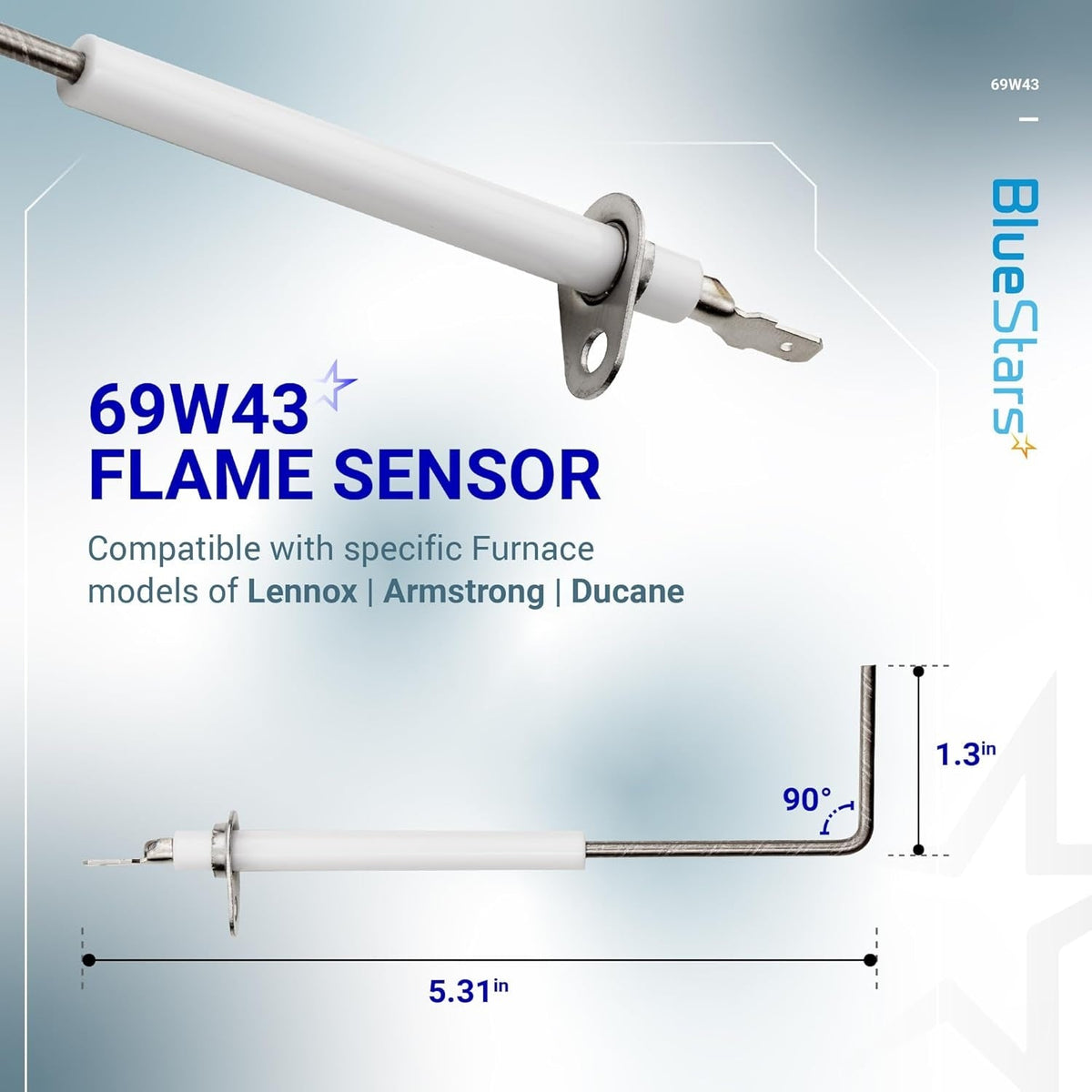
Recommended Replacement Parts to restore gas and power (Source: Bluestars Parts)
5. When Should You Call a Professional?
A dirty flame sensor can sometimes be cleaned or replaced, but some furnace problems require professional diagnosis. Contact a qualified HVAC professional if you notice any of the following:
- The furnace still short cycles after cleaning or replacing the sensor: Continued shutdowns may indicate another problem with the ignition system, wiring, gas supply, control board, or airflow rather than the flame sensor itself.
- The furnace repeatedly enters ignition lockout: Recurring lockouts can result from a faulty flame sensor, igniter, gas-pressure problem, blocked vent, overheating, or control-board issue. A technician can identify the actual cause before resetting the system.
- You smell gas near the furnace: Stop using the furnace and leave the area. Do not operate electrical switches or attempt further repairs. Contact your gas utility or emergency services from a safe location.
- A carbon monoxide alarm activates: Leave the home immediately and contact emergency services. Carbon monoxide is odorless and can indicate a serious combustion or venting problem.
- You find burned wiring, damaged connectors, or other electrical problems: Electrical damage requires further testing and should not be corrected simply by replacing the flame sensor.
- The sensor looks fine but flame-sensing error codes keep returning: Persistent ignition or flame-sensing faults after cleaning may require testing of the sensor signal, grounding, wiring, gas valve, or control board.
6. FAQ: Bad Flame Sensor Symptoms
6.1. Why Does My Furnace Shut Off a Few Seconds After the Burners Ignite?
If the burners ignite but shut off after a few seconds, a dirty or faulty flame sensor is one possible cause, but not definitive proof. The control board may shut off the gas when it cannot confirm a stable flame. Wiring, poor grounding, gas supply, combustion, or control-board issues can cause similar symptoms. Further diagnosis is needed before replacing the sensor.
6.2. Can a Bad Flame Sensor Cause a Complete Furnace Lockout?
Yes. If the furnace repeatedly fails to confirm a flame, the control board may stop further ignition attempts and place the system in lockout mode. The number of failed attempts before lockout varies by furnace model and control system.
6.3. Should I Clean or Replace a Dirty Flame Sensor?
A sensor with light soot or oxidation may only need cleaning, provided it is otherwise undamaged and the manufacturer's instructions permit cleaning. Replace the sensor if it has cracks, severe corrosion, or physical damage, or if testing confirms that it continues to fail after cleaning.
6.4. Does a Bad Flame Sensor Affect My Energy Bill?
It can indirectly increase heating costs if it causes frequent short cycling. Repeated starts and stops may reduce heating performance and increase component wear. However, higher energy use depends on the furnace's operating conditions and the underlying cause of the shutdowns.
6.5. How Do I Find the Correct Flame Sensor Part Number for My Furnace Brand?
Check the original sensor for a printed part number and locate the furnace model number on the equipment data label. Compare these details with the manufacturer's service manual or replacement-part compatibility list rather than choosing by brand or appearance alone.
Recognizing bad flame sensor symptoms early can help you investigate repeated furnace shutdowns and ignition lockouts. If replacement is needed, browse Furnace Parts from BlueStars Parts. Always verify your furnace model, original part number, and replacement specifications before ordering.
Contact Information:
8 The Green, Ste A, Dover, Delaware 19901-3618, United States
Website: https://bluestarsparts.com/
References:
Carrier. (n.d.). Furnace flame sensor: What it is, why it fails, and how to fix it. https://www.carrier.com/us/en/residential/hvac-resources/furnaces/furnace-flame-sensor/
Lennox. (2026, May 20). Understanding furnace flame sensors. https://www.lennox.com/residential/lennox-life/consumer/furnace-flame-sensor
Orr, B. (2021, December 17). Flame sensing – The basics. HVAC School. https://www.hvacrschool.com/flame-sensing-the-basics/


