

A furnace can fail in different ways, it may not start, cycle too often, or run without producing enough heat. Effective furnace troubleshooting begins by observing the symptom and checking basics such as thermostat settings, power, airflow, and ignition before moving to more complex components. This guide from BlueStars Parts helps you work through those clues in a clear order and recognize when professional help may be needed.
Quick Diagnosis: Common Furnace Problems
Before starting detailed furnace troubleshooting, use the table below to match what your furnace is doing with a likely cause and the safest first check.
| Symptom | Possible Cause | First Check | Fix Level |
|---|---|---|---|
| Furnace completely dead | Thermostat, power switch, or tripped breaker | Check thermostat, furnace switch, and breaker | DIY |
| Burners light then shut off | Dirty flame sensor or safety shutdown | Check for repeated short cycles or error codes | Professional |
| Inducer runs but burners never light | Pressure switch, ignition, venting, or gas issue | Check diagnostic codes and outdoor vents | Professional |
| Furnace blows cold air | Thermostat setting, ignition failure, or overheating | Set fan to AUTO and check the filter | DIY |
| Furnace turns on/off repeatedly | Restricted airflow, thermostat, or limit switch | Check filter, vents, and thermostat | DIY |
| Blower runs constantly | Fan set to ON or control/limit issue | Set the thermostat fan to AUTO | DIY |
| Weak airflow | Dirty filter or blocked vents | Inspect the filter and open all vents | DIY |
| Breaker keeps tripping | Electrical fault or overloaded component | Stop resetting the breaker repeatedly | Professional |
| Gas/burning smell | Gas leak, overheating, or electrical issue | Turn off the system; leave immediately if you smell gas | Professional |
| Strange noise | Loose panel, blower, motor, ignition, or other mechanical issue | Note when and where the noise occurs | Professional |
1. Furnace Troubleshooting Checklist
A good furnace troubleshooting process starts with simple checks before moving deeper into the heating sequence. Working in order can help you narrow down common furnace issues without replacing parts unnecessarily.
1.1. Quick Checks You Can Do First
Start with the basic settings, power, and airflow. Many heating problems can be traced to one of these simple issues.
- Check the thermostat: Set it to HEAT and raise the temperature above the current room temperature.
- Check the fan setting: Use AUTO during normal heating.
- Check furnace power: Make sure the furnace switch is ON.
- Check the circuit breaker: Confirm the furnace breaker has not tripped.
- Inspect the air filter: Replace it if it is heavily clogged.
- Check supply and return vents: Keep them open and free from obstructions.
- Check the access panel: Make sure it is properly closed.
- Look for diagnostic lights: Note any blinking LED pattern before resetting the system.
1.2. Deeper Checks If the Problem Continues
If basic troubleshooting does not resolve your furnace problems, observing the startup sequence can help narrow down the possible cause. However, homeowners should limit their checks to safe observations and accessible external components, leaving internal testing to qualified HVAC technicians.
Observe Only: Identify What Happens During Startup
-
Listen for the inducer motor: Note whether it starts when the thermostat calls for heat.
-
Watch for ignition: If a manufacturer-provided viewing window is available, observe whether the igniter glows or sparks without removing internal panels.
-
Observe burner operation: Note whether the burners ignite, shut off after a few seconds, or run for several minutes before stopping.
-
Read diagnostic codes: Check accessible LED indicators or error displays and compare the codes with the furnace manual.
Visual Checks: Inspect Accessible Components
-
Confirm fuel availability: Check whether natural gas service or propane fuel is available and visually verify the position of an accessible external shutoff valve.
-
Check airflow restrictions: Inspect the air filter and make sure supply and return vents are not blocked.
-
Inspect outdoor vent openings: Look for visible snow, ice, leaves, or debris around accessible intake and exhaust vents.
-
Check condensate drainage: On high-efficiency condensing furnaces only, look for visible leaks, standing water, or signs of a backed-up drain without disassembling the system.
Technician-Level Testing: Leave Internal Components to Professionals
If these observations suggest a problem with the gas valve, pressure switch, wiring, control board, igniter, or other internal safety components, contact a qualified HVAC technician for further diagnosis.
Safety Note: Do not disconnect pressure-switch tubing, remove condensate traps, bypass safety controls, test electrical connections, or adjust internal gas valves without appropriate qualifications and manufacturer procedures. If you smell gas or a carbon monoxide alarm activates, evacuate immediately and contact emergency services from a safe location.

A good furnace troubleshooting process starts with simple checks before moving deeper (Source: Bluestars Parts)
1.3. Follow the Furnace Startup Sequence
One of the easiest ways to narrow down furnace issues is to identify how far the system gets through its startup sequence. The exact sequence can vary by furnace model, but the pattern below provides a useful diagnostic starting point.
| What Happens | What It May Indicate | Next Area to Check |
|---|---|---|
| Nothing happens | Thermostat, power, or control issue | Thermostat, furnace switch, breaker |
| Inducer doesn't start | Inducer, control, or power issue | Power supply, diagnostic code |
| Inducer runs, no igniter | Pressure switch, igniter, or control issue | Vents and diagnostic code |
| Igniter glows, no flame | Gas supply or gas valve issue | Gas supply |
| Flame lights then dies | Flame sensor issue | Flame-sensing system |
| Heat starts then shuts down | Restricted airflow or high-limit shutdown | Filter and vents |
| Blower runs without heat | Thermostat, limit, or ignition issue | Fan setting and diagnostic code |
2. 11 Common Furnace Problems and How to Troubleshoot Them
The following common furnace problems cover power, ignition, airflow, electrical, and safety-related issues, followed by a guide to reading diagnostic codes.
2.1. Furnace Won't Turn On at All
What does it usually mean?
A completely unresponsive furnace may have a simple power or thermostat problem, but ignition, control, or fuel issues can also prevent startup. Start with the easiest external checks before assuming an internal component has failed.
What to check first:
-
Make sure the thermostat is set to HEAT.
-
Raise the set temperature above room temperature.
-
Check that the furnace power switch is ON.
-
Check the circuit breaker and air filter.
What you can safely do:
Correct the thermostat settings, turn the furnace switch back on, or reset a breaker once if it has tripped. Replace a heavily clogged filter and make sure the furnace access panel is fully closed.
When to stop:
If the breaker trips again or the furnace remains completely dead after these checks, stop troubleshooting. The problem may involve wiring, the control board, ignition system, or another internal component that requires professional diagnosis.
2.2. Furnace Ignites but Shuts Off After a Few Seconds
What does it usually mean?
When the burners light normally but go out within only a few seconds, the flame sensor is one possible cause. A dirty or faulty sensor may fail to confirm the flame, causing the control system to shut off the gas as a safety measure.
What to check first:
-
Watch whether the burners light and quickly shut off.
-
Note any diagnostic light or error code.
-
Check the air filter for heavy buildup.
-
Look for repeated ignition attempts or system lockout.
What you can safely do:
Start by correcting obvious airflow problems. If testing confirms that the flame sensor is faulty, the 0130F00010 Furnace Flame Sensor from BlueStars Parts is designed for compatible Goodman, Amana, Daikin, and Janitrol furnace models. Always verify the original part number and furnace model before replacement.
When to stop:
Do not assume the flame sensor is the cause based on the symptom alone. Wiring, grounding, gas supply, burners, or control problems can produce similar behavior, so repeated shutdowns after basic checks require professional diagnosis.
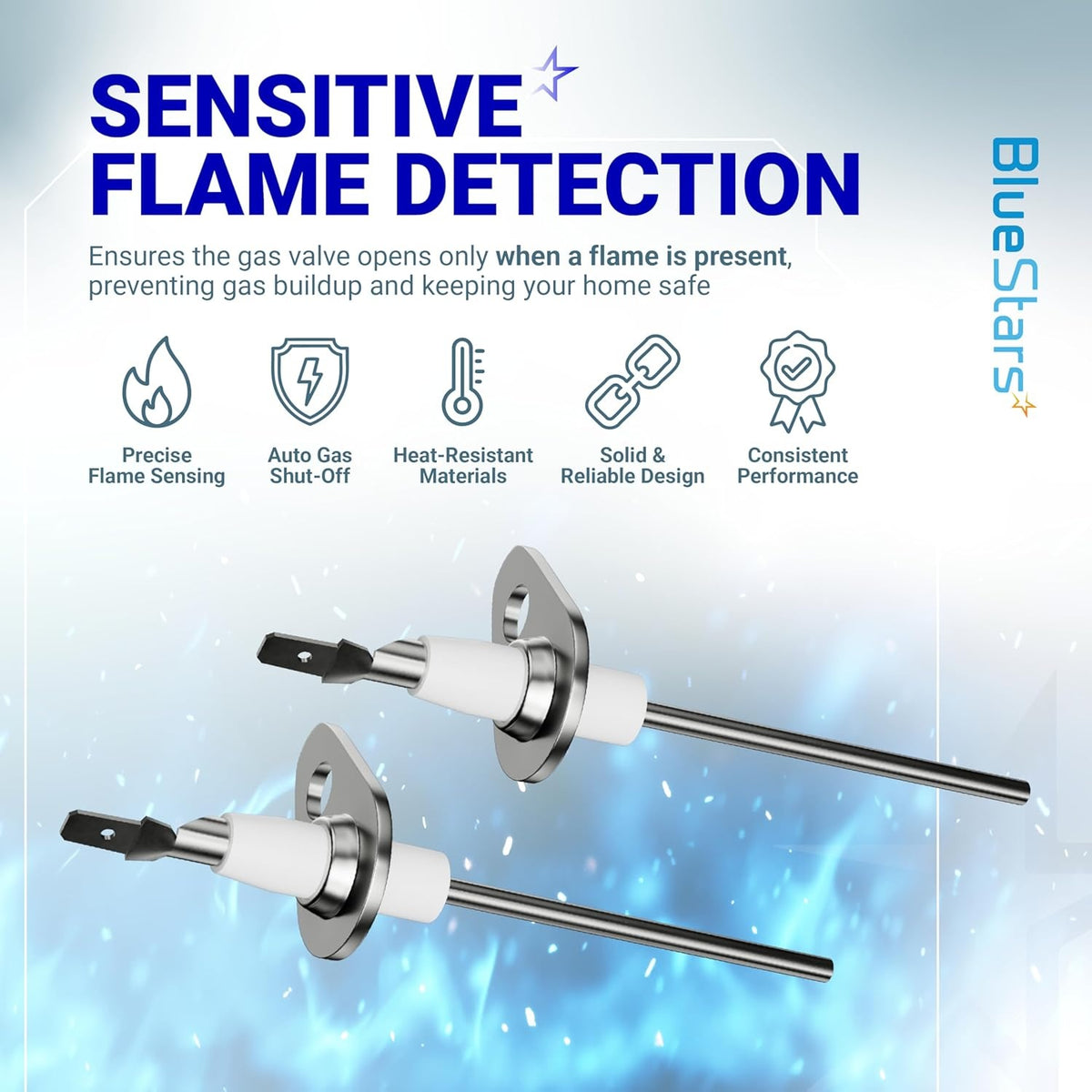
The 0130F00010 Furnace Flame Sensor from BlueStars Parts (Source: Bluestars Parts)
2.3. Furnace Won't Ignite or Light
What does it usually mean?
If the furnace begins its startup sequence but the burners never light, the problem may involve the igniter, gas supply, pressure switch, flame-sensing system, or furnace controls. Modern furnaces commonly use an electronic igniter rather than a standing pilot light.
What to check first:
-
Confirm the thermostat is calling for heat.
-
Listen for the inducer motor starting.
-
Look for the igniter glowing or sparking.
-
Check whether diagnostic lights appear.
What you can safely do:
If the igniter does not glow and has been properly diagnosed as failed, replacement may restore normal ignition. The 20261709S Furnace Hot Surface Ignitor is designed for specific Goodman, Amana, and Janitrol systems; match the original part number before ordering.
When to stop:
Stop if the igniter operates but no flame appears, or if the system repeatedly attempts ignition and locks out. Gas valves, pressure switches, wiring, and internal controls should be checked by a qualified professional.
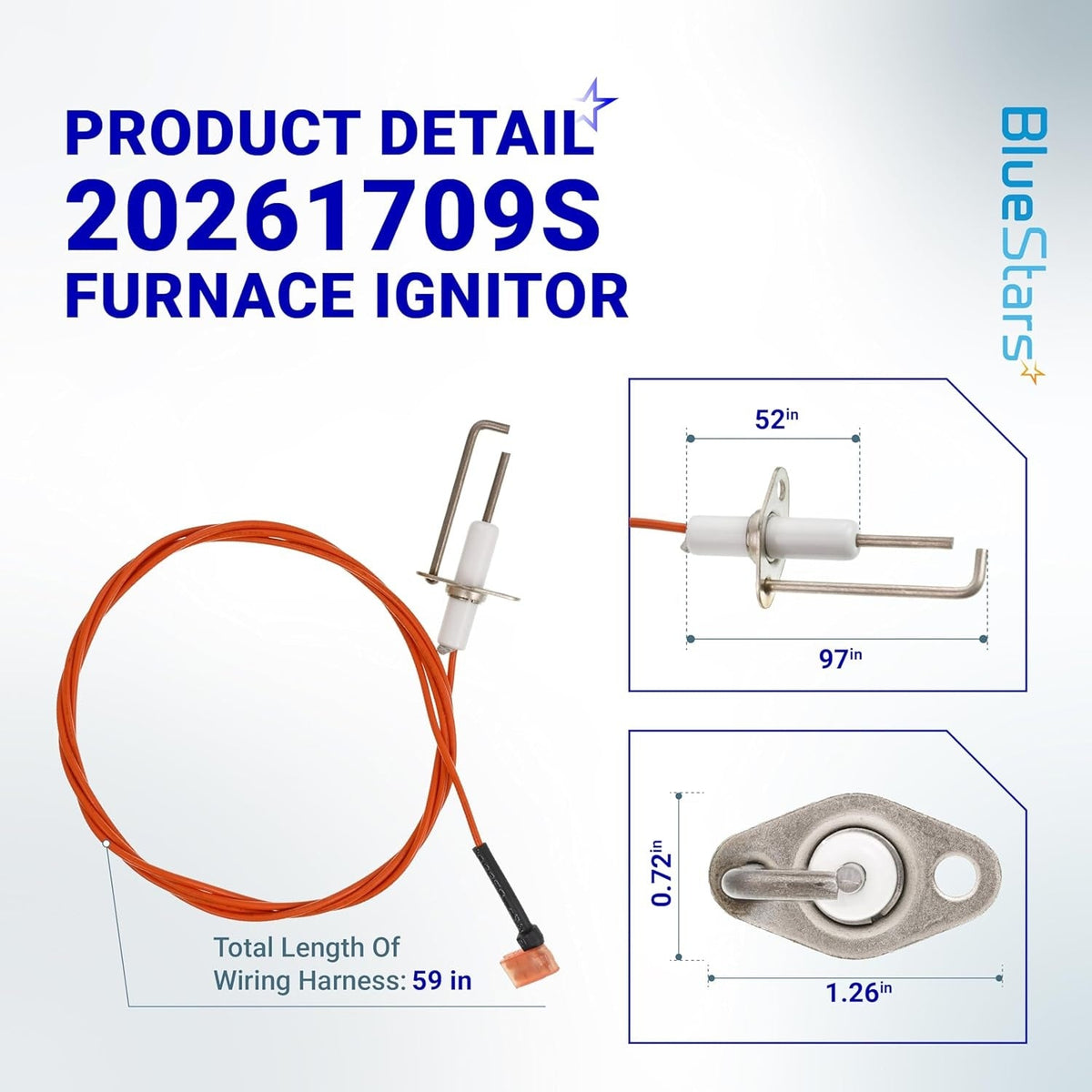
The 20261709S Furnace Hot Surface Ignitor is designed for specific brands (Source: Bluestars Parts)
2.4. Furnace Is Blowing Cold Air
What does it usually mean?
A furnace may blow cool air briefly during startup, but continuous cold air can point to an incorrect thermostat setting, failed ignition, restricted airflow, or a high-limit shutdown. When the furnace overheats, the burners may turn off while the blower keeps running to cool the system.
What to check first:
-
Set the thermostat fan to AUTO.
-
Check the air filter.
-
Make sure supply and return vents are open.
-
Observe whether the burners ignite and stay on.
What you can safely do:
Correct thermostat and airflow problems first. If proper airflow has been restored but testing confirms a failed limit switch, the 87F16 Furnace Primary Limit Switch may fit specific Lennox furnaces. Match the original temperature rating, configuration, and part number before replacement.
When to stop:
Do not replace a limit switch simply because it has opened. A clogged filter, blocked vents, blower problem, or other airflow restriction may be causing genuine overheating. If the furnace continues hitting the high limit after airflow checks, professional diagnosis is needed.
If your furnace continues running but the air feels cold, explore our guide to troubleshooting a furnace blowing cold air for more details on possible causes and checks.
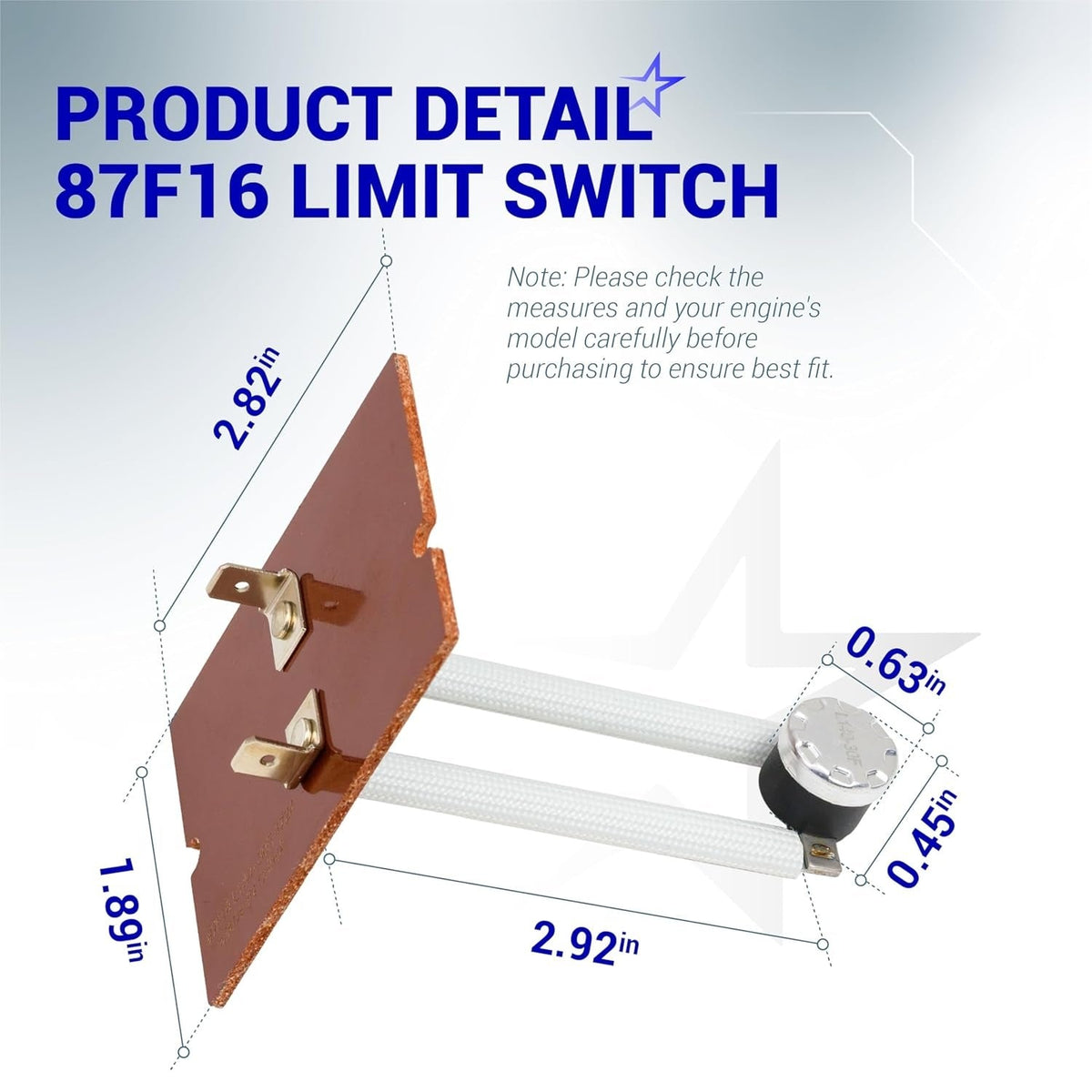
The 87F16 Furnace Primary Limit Switch may fit specific Lennox furnaces (Source: Bluestars Parts)
2.5. Furnace Short Cycles
What does it usually mean?
Short cycling occurs when the furnace repeatedly starts and stops before completing a normal heating cycle. The timing of each shutdown can help narrow down the underlying cause:
-
Shuts off after a few seconds: If the burners ignite but quickly go out, a dirty flame sensor, flame-sensing failure, or ignition-related issue may be interrupting the heating cycle.
-
Shuts off after several minutes: Restricted airflow from a clogged filter, blocked vents, or blower problems can cause overheating, triggering the high-limit switch to shut off the burners.
-
Cycles at irregular intervals: Thermostat problems, control issues, or an improperly sized furnace may cause inconsistent heating cycles.
What to check first:
-
Inspect the air filter.
-
Open blocked or closed vents.
-
Check the thermostat setting and location.
-
Note any diagnostic codes.
What you can safely do:
Replace a clogged filter, restore proper airflow, and make sure the thermostat is not being affected by a nearby heat source. These simple corrections can resolve some furnace issues that cause premature shutdown.
When to stop:
If the furnace still cycles every few minutes after airflow and thermostat checks, stop. Flame sensors, limit switches, controls, furnace sizing, or other internal problems may require professional evaluation.
2.6. Furnace Blower Runs Constantly
What does it usually mean?
A furnace blower that runs continuously is not always a sign of a problem. When the thermostat fan is set to ON, the blower circulates air continuously, even when the burners are not heating. When set to AUTO, the blower should normally operate during heating cycles, with a short delay before or after burner operation. If it continues running without producing heat, restricted airflow, overheating, an open high-limit switch, or a thermostat or control issue may be responsible.
What to check first:
-
Check whether the thermostat fan is set to ON or AUTO.
-
Switch to AUTO and observe whether the blower stops after the normal cooldown period.
-
Inspect the air filter and make sure supply and return vents are clear.
-
Note whether the burners ignite, stay lit, or shut off while the blower continues running.
-
Check any accessible diagnostic codes for signs of overheating or safety-control issues.
What you can safely do:
If the fan is set to ON, switching to AUTO may restore normal cycling. Replace a clogged air filter and clear accessible airflow obstructions to reduce the risk of overheating and high-limit switch activation. Remember that an open limit switch may be protecting the furnace from excessive heat rather than indicating a failed component.
When to stop:
If the blower continues running well beyond the normal cooldown period with the fan set to AUTO, or the burners repeatedly shut off while the blower stays on, schedule professional service. A qualified HVAC technician can diagnose potential thermostat, high-limit switch, blower control, or control board problems without bypassing safety controls.

A blower that never seems to stop may be responding to a thermostat fan (Source: Bluestars Parts)
2.7. Furnace Has Weak or Low Airflow
What does it usually mean?
Weak airflow can prevent rooms from heating properly and may also contribute to furnace overheating. Common causes include a dirty filter, blocked registers, duct problems, or a struggling blower motor.
What to check first:
-
Inspect and replace a dirty filter.
-
Open all supply registers.
-
Clear return-air grilles.
-
Compare airflow between different rooms.
What you can safely do:
Restore clear airflow by changing the filter and removing obstructions around vents. Also make sure furniture, rugs, or curtains are not blocking the return-air path.
When to stop:
If airflow remains weak throughout the home, the problem may involve the blower motor, ductwork, evaporator coil, or another internal restriction. These furnace problems need a more detailed professional inspection.
2.8. Furnace Keeps Tripping the Circuit Breaker
What does it usually mean?
A single breaker trip can occur after a temporary power disturbance, but repeated trips indicate an electrical problem or excessive electrical load. Because the breaker is a safety device, repeatedly resetting it is not a solution.
What to check first:
-
Check the furnace filter for restriction.
-
Make sure vents are open.
-
Confirm the furnace is not sharing an overloaded circuit.
-
Note when the breaker trips during operation.
What you can safely do:
You can correct basic airflow restrictions and reset the breaker once. If the furnace then runs normally, monitor it for further problems.
When to stop:
If the breaker trips again, do not keep resetting it. Wiring faults, blower motor problems, electrical components, or the electrical panel may be involved and should be inspected by a qualified professional.

A single breaker trip can occur after a temporary power disturbance (Source: Bluestars Parts)
2.9. Furnace Smells Like Gas or Something Burning
What does it usually mean?
Unusual furnace odors may indicate anything from dust buildup to serious safety hazards. Identify the smell and take appropriate action:
-
Gas or rotten-egg smell: Evacuate immediately, avoid electrical switches, and contact your gas utility or emergency services from a safe location.
-
Electrical or burning-plastic smell: Stop using the furnace and seek professional inspection. Evacuate and call emergency services if smoke or fire is present.
-
Dust or first-season burning smell: A mild dusty odor may occur during initial use and should fade quickly. Persistent or strong odors require professional inspection.
What to check first:
-
Identify the general type of odor without approaching or opening the furnace.
-
If there is no suspected gas leak or serious burning odor, visually check for smoke, soot, or other warning signs.
-
For a mild first-season dust smell, note whether it fades during normal operation.
-
Check the air filter only when the furnace is off and safe to inspect.
What you can safely do:
A mild first-season dust smell may disappear as accumulated dust burns off. Regular filter replacement and professional maintenance can help reduce dust buildup. However, suspected gas leaks and electrical burning odors are not suitable for DIY repairs and require qualified assistance.
When to stop:
Stop troubleshooting immediately if you smell gas, notice smoke or soot, detect burning plastic, or experience repeated electrical problems. Evacuate immediately for suspected gas leaks or fire hazards. If a dusty smell persists, becomes stronger, or repeatedly returns, stop using the furnace and schedule an HVAC inspection.
2.10. Furnace Is Making Unusual Noises
What does it usually mean?
Some furnace noises are normal, but unusual sounds may indicate mechanical, ignition, or electrical problems:
-
Banging during ignition: Possible delayed ignition or combustion issue requiring immediate professional attention.
-
Grinding or screeching: Worn blower motor bearings or damaged components.
-
Rattling or vibrating: Loose exterior panels, ductwork, or blower components.
-
Persistent buzzing: Possible electrical component malfunction.
-
Popping or clicking after shutdown: Often caused by ductwork expanding or contracting, but persistent noises require inspection.
What to check first:
-
Note when the noise occurs: ignition, startup, operation, or shutdown.
-
Check the air filter and accessible exterior panels for dirt or looseness.
-
Watch for burning odors, smoke, or repeated breaker trips.
What you can safely do:
Replace dirty filters and secure accessible exterior panels with the furnace turned off. If noises persist, contact an HVAC technician. Avoid internal repairs.
When to stop:
Turn off the furnace and seek professional help for loud ignition bangs, grinding, screeching, or persistent buzzing. If smoke or electrical hazards occur, stop using the system. If you smell gas, evacuate immediately and contact emergency services or your gas utility from a safe location.

Furnace making unusual noises is one of the main problems (Source: Bluestars Parts)
2.11. How to Read Furnace Diagnostic Error Codes
What does it usually mean?
Many modern furnaces use an LED on the control board or viewing panel to communicate operating status and furnace issues. The meaning of each blink pattern varies by manufacturer and model, so the furnace's own diagnostic chart is the correct reference.
What to check first:
-
Look for a blinking or steady diagnostic light.
-
Count the flashes and pauses.
-
Write down the exact pattern.
-
Compare it with the chart on the furnace panel or owner's manual.
What you can safely do:
Use the code to identify the next area to inspect rather than treating it as proof that a specific part has failed. For example, a pressure-switch or limit-related code may be triggered by venting or airflow conditions rather than a defective switch itself.
When to stop:
If the code points to the gas valve, pressure switch, ignition system, electrical components, control board, or another internal safety control, stop at diagnosis and seek professional help. Never bypass a safety device simply to clear an error code.
3. When Should You Call a Professional?
Basic furnace troubleshooting can resolve some simple problems, but certain issues require professional diagnosis. Stop troubleshooting and call a qualified professional if:
- You smell gas: Leave the area immediately and contact your gas utility or emergency services from a safe location. Do not try to restart the furnace.
- The furnace still does not work after basic checks: You have checked the thermostat, power, filter, vents, and fuel supply, but the problem continues.
- The circuit breaker keeps tripping: Repeated trips can indicate an electrical fault. Do not keep resetting the breaker.
- The furnace repeatedly locks out or shuts down: Frequent ignition failures or safety shutdowns may involve internal controls or combustion components.
- You notice persistent burning odors, smoke, or soot: These signs can indicate overheating, electrical problems, or combustion-related furnace problems.
- The furnace makes loud or unusual noises: Banging, grinding, hissing, or strong electrical buzzing can point to mechanical, ignition, or electrical faults.
4. FAQs: Furnace Troubleshooting
4.1. What is the most common furnace problem?
A dirty or clogged air filter is one of the most common furnace problems. It restricts airflow, reduces heating performance, and can cause the furnace to overheat or shut down.
4.2. What is the first thing to check when the furnace stops working?
Start by checking the thermostat. Make sure it has power, is set to HEAT, and the set temperature is higher than the current room temperature; then check furnace power and the air filter.
4.3. When should I stop troubleshooting and call a professional?
Stop furnace troubleshooting if basic thermostat, power, filter, airflow, and fuel checks do not solve the problem. Gas odors, repeated breaker trips, combustion problems, or internal electrical faults also require professional help.
4.4. Why is my furnace running but not heating the house?
The furnace may be running without producing enough heat because of a clogged filter, blocked vents, ignition failure, a faulty limit switch, or a gas supply problem. Start by checking airflow and thermostat settings.
4.5. Can one furnace problem cause several different symptoms?
Yes. A single issue can produce several furnace issues at once. For example, a clogged filter can cause weak airflow, overheating, short cycling, uneven heating, and even automatic shutdowns.
Effective furnace troubleshooting starts with simple checks and careful attention to how the system behaves. If the problem continues or involves gas, electrical parts, or safety controls, professional diagnosis is the safest next step. For compatible furnace parts and reliable furnace components, explore BlueStars Parts to help keep your heating system working properly.
Contact information
8 The Green, Ste A, Dover, Delaware 19901-3618, United States
Website: https://bluestarsparts.com/
References
Mayes, R. (n.d.). Heater not working? Try our furnace troubleshooting guide. Carrier. Carrier – Furnace Troubleshooting Guide
Trane. (n.d.). Furnace troubleshooting: 7 gas furnace solutions. Trane – Gas Furnace Troubleshooting
Fonda, A. (n.d.). Furnace main burner shuts off after ignition: 4 reasons why. Trane. Trane – Furnace Main Burner Shuts Off After Ignition


