


Just swapped in a new tank, but your grill still won't light or barely holds a flame? A full propane tank not working is frustrating, but the cause is usually simple, like a tripped safety device in the regulator, a loose connection, or a tank that isn't as full as you think. In this guide, BlueStars Parts walks you through the signs to look for, safe checks you can do yourself, and when it's time to call a pro.
Quick Diagnosis: Why Is Your Full Propane Tank Not Working?
Match your grill's symptoms with the likely cause and the safest next step.
| Symptom | Likely Cause | First Check | Action |
|---|---|---|---|
| Burners won't light | Tripped excess-flow device or loose connector | Check connection and valve position | DIY reset if no leak |
| Very low flame | Regulator restriction, kinked hose, or blockage | Inspect hose and burner | DIY check; replace faulty parts professionally |
| Gas flows then stops | Low fuel or flow restriction | Check tank weight and connections | DIY check; call a technician if unresolved |
| Tank feels full, gauge reads low | Low fuel or inaccurate gauge reading | Check tare weight and tank weight | Refill or exchange if needed |
| Problem in cold weather | Reduced propane vaporization | Check temperature and fuel level | Reduce demand; never heat the tank |
| Hissing or gas smell | Possible gas leak | Do not approach or investigate | Evacuate and call for help |
Safety note: Never perform DIY troubleshooting when you suspect an active propane leak.
1. Before You Troubleshoot a Full Propane Tank: Tools and Safety
You don't need special tools to figure out why gas isn't flowing, just a few household items and a safe place to work. Gather them first, then go through the safety steps before you touch the tank or regulator.
1.1. Tools and Materials You Need
| Tool/Material | Purpose |
|---|---|
| Spray bottle with soapy water | Checks newly connected fittings for leaks |
| Bathroom or luggage scale | Estimates remaining propane by comparing total weight with tare weight |
| Propane tank gauge (optional) | Provides a rough pressure-based indication of fuel supply |
| Flashlight | Helps inspect hoses, fittings, and burner openings |
| Soft burner brush | Removes debris and spider webs from burner tubes |
| Owner's manual | Confirms the correct connection, reset, lighting, and cleaning procedures |
1.2. Safety Steps
Before troubleshooting a full propane tank, follow these precautions to reduce the risk of fire, gas leaks, and injury.
- Work outdoors: Keep the propane cylinder upright in a well-ventilated outdoor area.
- Turn everything off: Set all burner controls to OFF before connecting or disconnecting the tank.
- Keep ignition sources away: Do not smoke, use open flames, or operate electrical switches when a leak is suspected.
- Stop if you smell gas: Leave the area immediately. Do not continue inspecting or leak-testing the connection. Contact your propane supplier or emergency services from a safe location.
- Leak-test new connections: Perform an approved soapy-water leak test after connecting or reconnecting fittings, before lighting the grill.
- Never use a flame: Use an approved leak-detection solution or soapy water, never a match or lighter.
- Do not repair gas components: Never disassemble the tank valve or regulator. Have damaged hoses, regulators, and fittings inspected or replaced by a qualified professional.
1.3. How to Perform a Leak Test
Perform a leak test after installing a new tank or reconnecting propane fittings, provided there is no existing sign of an active gas leak.
- Step 1 - Prepare the solution: Use an approved leak-detection solution or a mixture of dish soap and water.
- Step 2 - Keep appliances off: Set all burner controls to OFF before opening the tank valve according to the manufacturer's instructions.
- Step 3 - Apply the solution: Coat the accessible connection points, including the tank-to-regulator fitting and hose connections.
- Step 4 - Watch for bubbles: Growing bubbles indicate a possible leak at the tested connection.
- Step 5 - Respond to leaks: Close the tank valve if it is safe to do so. Do not use the appliance. If a connection leak persists or the valve itself appears to leak, contact your propane supplier.
- Step 6 - Finish safely: If no bubbles appear, follow the appliance manufacturer's instructions before lighting the grill.
Important: If you already smell propane or hear unexplained hissing, do not perform this test. Leave the area and seek assistance from a safe location.

Do a soapy water leak test before using a full propane tank that isn't working (Source: BlueStars Parts)
2. 6 Causes of a Full Propane Tank Not Working and How to Fix Them
When a tank is full but no gas reaches the burners, the problem is usually somewhere between the tank valve and the burner. Like other propane tank problem issues, the cause may involve the regulator, connector, fuel supply, or grill components. Start with the following checks, and leave any repairs involving pressurized gas components to a qualified professional.
2.1. Tank Valve Opened Too Fast (Excess Flow Safety Tripped)
Cause: Most grill regulators have a safety feature that cuts gas flow to a trickle if it senses a sudden rush of gas, like a leak. Opening the tank valve too fast, or connecting the tank while the burner knobs are on, can trip it by mistake. The tank is full, but you only get a tiny flame or none at all.
How to fix:
- Step 1 - Turn everything off: Set all burner controls to OFF and close the tank valve.
- Step 2 - Disconnect the regulator: If there are no signs of a gas leak, disconnect the regulator according to the grill manufacturer's instructions.
- Step 3 - Reconnect securely: Attach the regulator connector by hand until properly seated. Do not overtighten it.
- Step 4 - Open the valve slowly: Follow the manufacturer's instructions to reopen the tank valve gradually.
- Step 5 - Restart the grill: Perform the manufacturer-approved leak test after reconnecting, and only if no leak is detected, wait for the recommended period and light the grill according to its owner's manual.
Quick check after fix: The burners should produce a stable flame. If low flow continues after the specified reset procedure, stop troubleshooting and have the regulator and gas supply inspected. Do not repeatedly disconnect or reconnect the system without manufacturer guidance.

Open the tank valve slowly when a full propane tank is not working after a reset (Source: BlueStars Parts)
2.2. Connector Not Fully Seated on the Tank
Cause: A QCC1/Type 1 connector must be properly seated against the propane cylinder valve to establish a secure gas connection. A loose, misaligned, or damaged connector seal can prevent normal gas flow or cause leakage.
How to fix:
- Step 1 - Close the valve first: Turn the burner knobs and tank valve OFF before you touch the connector.
- Step 2 - Inspect the connection: With the tank valve closed and no suspected active leak, check the connector threads and accessible sealing surfaces for visible dirt or damage.
- Step 3 - Reconnect by hand: Align the connector correctly and tighten it by hand according to the manufacturer's instructions. Never use pliers or a wrench to force the tank connector.
- Step 4 - Exchange the tank if the seal is damaged: A cracked or missing seal inside the tank valve isn't a DIY repair.
Quick check after fix: Perform a soapy-water leak test on the reconnected fitting before lighting the grill. If bubbles continue to form, stop using the system and contact your propane supplier.
2.3. Faulty Regulator or Damaged Hose
Cause: Regulators and hoses wear out over time. A regulator that sticks in safety mode, a blocked vent, or a cracked, kinked, or brittle hose can all reduce gas flow. A worn part can also cause a propane regulator leaking gas at the fittings.
How to fix:
- Step 1 - Inspect the hose: Look for cracks, brittleness, heat damage, or permanent kinks. Do not continue using a visibly damaged hose.
- Step 2 - Check the regulator externally: Look for visible corrosion, physical damage, or an obstructed vent. Never insert tools into the regulator or attempt to open its housing.
- Step 3 - Replace damaged components professionally: A faulty regulator or damaged hose should be replaced with a compatible assembly. Never repair a leaking hose with tape, clamps, or adhesives.
- Step 4 - Verify specifications: Check the appliance's required outlet pressure, BTU demand, tank connection, and hose fitting before selecting a replacement.
For grills with a 3/8-inch male flare inlet, the 6FT Propane Hose Regulator with Integrated Pressure Gauge from BlueStars Parts combines a low-pressure regulator, QCC1/Type 1 tank connector, and a six-foot hose. It is listed for compatible Weber, Nexgrill, Cuisinart, Char-Broil, and other outdoor appliances using the specified fitting. Confirm the appliance connection and pressure requirements before ordering, as it is not suitable for high-pressure systems or every grill model.
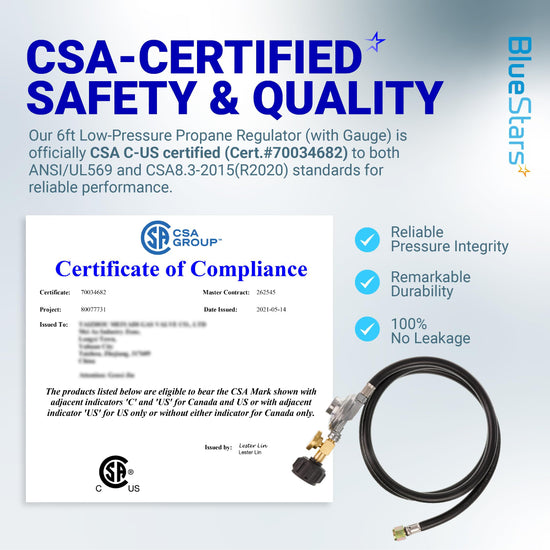
6FT Propane Hose Regulator with Integrated Pressure Gauge (Source: BlueStars Parts)
2.4. Tank Not Actually Full
Cause: A propane tank may feel heavy but contain less fuel than expected. Some exchange providers fill standard 20 lb cylinders with approximately 15 lb of propane rather than the full rated amount. This can cause the grill to run out of fuel sooner than expected.
How to fix:
- Step 1 - Find the tare weight: Check the empty cylinder weight stamped on the collar, usually marked "TW."
- Step 2 - Weigh the tank: Subtract the tare weight from the total weight to estimate the propane remaining. Compare the result with the cylinder's stated fill capacity rather than assuming every exchanged tank contains 20 lb.
- Step 3 - Check the gauge: Use a compatible propane gauge as a rough indication of fuel supply, not an exact measurement of liquid propane volume.
- Step 4 - Refill or exchange: If the measured fuel weight is below your expected level, arrange a refill or exchange through an authorized provider.
Quick check after fix: Confirm the tank contains sufficient propane before restarting the grill. If the flame remains weak with an adequate fuel supply, inspect the regulator and burner system.
A Propane Tank Gauge Level Indicator for 5-40lb Tanks with QCC1/Type Connection from BlueStars Parts provides a color-coded pressure reading to help monitor compatible propane cylinders. Its QCC1/Type 1 connection fits standard 5-40 lb tanks used with grills, RVs, heaters, and fire pits. Keep in mind that it measures pressure rather than the exact volume of liquid propane, so weighing the tank remains a more useful way to estimate the remaining fuel.
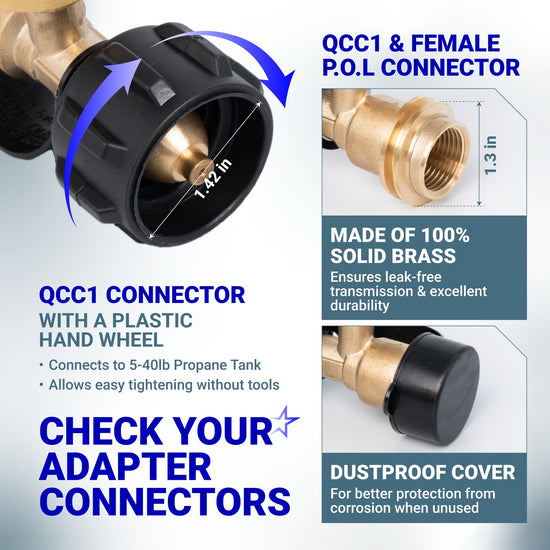
Propane Tank Gauge Level Indicator for 5-40lb Tanks with QCC1/Type Connection (Source: BlueStars Parts)
2.5. Cold Weather Lowering Tank Pressure
Cause: Propane turns from liquid to gas less easily in the cold, so tank pressure drops as temperatures fall. In freezing weather, a small grill tank may not make enough gas to keep up, which leads to low flames. You may also see frost on the outside of the tank, which is normal during use.
How to fix:
- Step 1 - Check fuel and temperature: Confirm that the tank has enough propane and consider how cold outdoor temperatures affect vaporization.
- Step 2 - Reduce gas demand: Avoid running multiple high-demand appliances from a tank that cannot supply the required vaporization capacity.
- Step 3 - Keep the tank unobstructed: Clear loose snow around accessible areas without striking or disturbing the valve and regulator.
- Step 4 - Allow natural temperature recovery: Turn off the appliance and allow the cylinder to return to normal outdoor ambient temperature naturally if it has become excessively cold.
- Step 5 - Never apply external heat: Do not use hot water, heaters, heat guns, or open flames to warm the cylinder.
Quick check after fix: If weak flames continue during cold weather, ask your propane supplier to assess the cylinder size, vaporization capacity, and appliance demand.
For more information, see our Propane Tank Freeze Up guide.
2.6. Blocked Burner Tubes or Orifices
Cause: Spiders and insects like to build webs and nests inside burner tubes, especially after the grill sits unused. Grease and food debris can also clog the burner ports. Blockages limit gas flow, causing weak or uneven flames, and can even push gas back toward the control knobs.
How to fix:
- Turn everything off: Close the tank valve and let the grill cool completely.
- Check the flame pattern: A lazy, yellow flame or burners that only light in spots point to a blockage.
- Clean the burner tubes: Remove the grates and heat shields, then inspect and clean the burner tubes with the appropriate brush according to your grill manufacturer's instructions.
- Clean the burner ports: Gently remove surface debris without enlarging the openings or inserting sharp tools into the gas orifices. If an orifice is blocked or damaged, have it inspected by a qualified technician.
Quick check after fix: Follow the manufacturer's lighting instructions and check for an even, stable flame. If flames remain uneven, yellow, or unstable, stop using the grill and arrange a professional inspection.

Clean blocked burner tubes when a full propane tank is not working but the flame stays weak (Source: BlueStars Parts)
3. Full Propane Tank Not Working: When Should You Call a Professional?
Some propane flow problems may be resolved through manufacturer-approved checks, but others involve damaged or pressurized gas components that require professional attention.
Contact your propane supplier or a qualified technician if:
- Persistent gas leaks: A connection continues leaking after the approved corrective procedure.
- Gas odor or unexplained hissing: Leave the area immediately and contact emergency services or your propane supplier from a safe location.
- Damaged tank valve: A cracked, bent, or stuck cylinder valve requires supplier inspection or tank exchange.
- Repeated low flame: The problem continues after the approved regulator reset and fuel checks.
- Flames around control knobs: Stop using the grill and seek professional inspection.
- Uncertain compatibility: A technician needs to verify the regulator pressure, BTU capacity, and fitting specifications.
If the issue involves a faulty regulator, hose, or adapter, explore Propane Parts at BlueStars Parts for compatible replacement options. Always verify the appliance specifications before purchasing.

Call a technician if your full propane tank is not working because of a leak or damaged valve (Source: BlueStars Parts)
4. How to Prevent Gas Flow Problems With a New Tank
Follow these habits to reduce gas flow problems and keep your grill operating safely:
- Turn burners off before connecting: Set all appliance controls to OFF before attaching the tank.
- Open the tank valve slowly: Follow the manufacturer's instructions to avoid triggering the excess-flow device.
- Hand-tighten the connector: Ensure the QCC1 fitting is properly seated without using tools.
- Leak-test new connections: Check all accessible fittings with an approved leak-detection solution before lighting.
- Check the fuel level: Compare tank weight with its tare weight before use.
- Inspect hoses and regulators: Look for cracks, corrosion, kinks, or visible damage.
- Clean burner tubes regularly: Remove spider webs and debris according to the grill manual.
- Close the tank valve after use: Follow the appliance manufacturer's shutdown procedure.
- Store the cylinder outdoors: Keep it upright in a well-ventilated location, away from ignition sources and excessive heat.

Tighten the connector by hand with the burners off to keep a full propane tank from not working (Source: BlueStars Parts)
5. FAQs: Full Propane Tank Not Working
5.1. How Do I Reset A Propane Regulator?
Turn all burner controls OFF and close the propane tank valve. If there are no signs of a gas leak, follow your grill manufacturer's reset procedure, which may involve disconnecting and reconnecting the regulator. Reopen the tank valve slowly according to the manual before lighting the grill. If the flame remains weak after the specified reset procedure, stop troubleshooting and have the regulator and gas supply inspected.
5.2. Why Is My Grill Flame Low With A Full Tank?
A low grill flame with a full propane tank may result from a tripped excess-flow safety device, a kinked or damaged hose, a faulty regulator, cold weather, or blocked burner tubes. Start by checking the fuel supply and following the manufacturer's regulator reset procedure. If the problem continues, have the gas system inspected before replacing any components.
5.3. Can A New Propane Tank Be Defective?
Yes. A new or exchanged propane cylinder may have a damaged valve, an improperly seated connection, or less propane than expected. Check the tank's external condition and fuel weight without attempting to repair its valve. If the valve is damaged, remains stuck, or the connection appears to leak, stop using the tank and contact the exchange provider or propane supplier.
5.4. How Can I Tell If My Propane Tank Is Really Full?
Weighing the cylinder is a practical way to estimate its remaining propane. Find the tare weight (TW) stamped on the collar, then subtract it from the total weight to calculate the fuel remaining. Compare this amount with the cylinder's stated fill capacity because exchange tanks may contain less than their rated maximum. A pressure-based gauge can provide a rough indication, but it does not measure the exact volume of liquid propane remaining.
A full propane tank not working usually points to a problem with the regulator's excess-flow device, tank connection, fuel supply, cold-weather vaporization, or grill burners. Start with manufacturer-approved checks and inspect accessible components without attempting to repair pressurized gas parts.
If you detect a gas leak, leave the area and contact a propane professional. For confirmed regulator, hose, or fitting problems, explore compatible replacement options from BlueStars Parts and verify your grill's pressure and connection requirements before ordering.
Contact Information:
8 The Green, Ste A, Dover, Delaware 19901-3618, United States
Website: https://bluestarsparts.com/
Explore Related Articles:
Explore more propane troubleshooting and maintenance guides from BlueStars Parts:
- Propane Tank Problem - Understand common propane tank issues, including weak gas flow, leaks, and connection problems.
- Propane Regulator Leaking - Learn how to identify regulator and hose leaks and when replacement is necessary.
- Propane Tank Freeze Up - Understand why propane cylinders develop frost and how cold weather affects gas supply.
References:
- Char-Broil. (n.d.). No gas flow. Retrieved November 15, 2026, from https://www.charbroil.com/support/no-gas-flow
- Ferrellgas. (n.d.). How to check your propane tank level. Retrieved November 15, 2026, from https://www.ferrellgas.com/tank-talk/blog-articles/how-to-check-your-propane-tank-level/
- Napoleon. (n.d.). How to fix low flame, low heat on a gas grill. Retrieved November 15, 2026, from https://www.napoleon.com/en/us/grills/how-fix-low-flame-low-heat-gas-grill
- Blue Rhino. (n.d.). Not getting gas from tank. Retrieved November 15, 2026, from https://bluerhino.com/propane-info/faqs/tank-troubleshooting-faqs/not-getting-gas-from-tank
- Weber. (n.d.). Genesis E-330 owner's manual: Check for gas leaks. Retrieved November 15, 2026, from https://www.manualslib.com/manual/1192598/Genesis-E-330.html?page=11


