

Noticing hissing sounds, bubbles around propane fittings, or an unusual gas smell? These warning signs may indicate a propane regulator leaking, which can pose serious fire and safety risks. Understanding where leaks occur and what causes them is essential before attempting any repairs. In this guide, BlueStars Parts explains common leak locations, safe troubleshooting methods, and when to replace a faulty regulator or call a professional.
Quick Diagnosis: Where Is Your Propane Regulator Leaking?
Use these warning signs to identify possible leak locations. If you already suspect an active gas leak, leave the area instead of performing further checks.
| Leak Location | Possible Cause | First Check | Action |
|---|---|---|---|
| Threaded fitting | Loose or damaged threads | Stop use; note location | Pro repair |
| Tank coupling (QCC1) | Worn seal or poor fit | Stop use; inspect after isolation | Repair / Replace |
| Regulator vent | Internal fault or gas release | Keep away | Pro replacement |
| Regulator body | Crack or corrosion | Observe from a distance | Replace |
| Propane hose | Cracks or damaged fittings | Stop use | Replace |
| Twisted connector | Strained or damaged seal | Do not twist further | Pro repair |
| Gas smell, no bubbles | Undetected leak | Evacuate | Emergency |
Safety Warning: Never continue leak testing when propane odor, unexplained hissing, or other signs of active gas release are present. Leave immediately and contact your propane supplier or emergency services from a safe location.
1. Safety First: Before You Touch a Leaking Regulator
A suspected propane regulator leak can create serious fire and explosion hazards. Follow these safety steps before considering any repair.
- Step 1: Recognize Warning Signs. Treat propane odor, unexplained hissing, or visible gas release as a possible leak.
- Step 2: Avoid Ignition Sources. Do not smoke, use flames, operate electrical switches, or use electronic devices near the leak.
- Step 3: Leave the Area. Move everyone away from the suspected leak immediately.
- Step 4: Shut Off Gas Only If Safe. Close the cylinder valve only if you can do so without approaching the leak.
- Step 5: Contact Emergency Assistance. Call your propane supplier or emergency services from a safe location.
- Step 6: Wait for Professional Clearance. Do not restart appliances or handle the regulator until the system is confirmed safe.
Important: Never loosen fittings, disconnect hoses, block regulator vents, or attempt repairs while a gas leak is suspected.

Close the propane cylinder valve only when it is safe to approach (Source: BlueStars Parts)
2. What's Causing Your Propane Regulator to Leak and How To Fix?
A propane regulator leaking can result from loose connections, worn seals, damaged hoses, or internal component failure. Identifying the specific cause helps determine whether a connection can be corrected or the regulator needs replacement. If you smell gas or hear continuous hissing, stop troubleshooting and contact your propane supplier from a safe location.

A propane regulator leaking can result from loose connections, worn seals, damaged hoses, or internal component failure (Source: BlueStars Parts)
2.1. Loose or Improperly Sealed Threaded Connections
Threaded connections may leak when fittings become loose, threads are damaged, or the wrong sealant is used. NPT pipe threads typically require propane-rated thread sealant, while flare fittings and QCC1 connectors use different sealing methods and should not be wrapped with thread tape.
How to Fix:
- Step 1: Stop using the appliance and isolate the gas supply only if safe.
- Step 2: Have a qualified technician check thread damage, alignment, and fitting type.
- Step 3: Replace damaged fittings and use approved propane-rated sealant only where specified.
- Step 4: Never apply thread tape to flare seats, QCC1 sealing surfaces, or other connections that do not require it.
Quick Test: After professional repair, the connection must pass the manufacturer's approved leak-check procedure before the appliance is used again. Any growing bubbles indicate an unresolved leak.
2.2. Worn or Damaged O-Ring at the Tank Coupling
A worn, cracked, or improperly seated sealing ring can allow propane to escape around the QCC1 tank connection. Repeated cylinder changes, connector damage, or incompatible fittings may prevent the coupling from sealing properly.
How to Fix:
- Step 1: Stop using the system and close the cylinder valve only if safe.
- Step 2: Once the connection is safely isolated, inspect accessible seals and fittings for damage.
- Step 3: Replace a damaged connector or hose assembly with a compatible component.
- Step 4: Replace individual seals only when explicitly permitted by the manufacturer.
Quick Test: Complete the manufacturer's approved connection leak check before use. If leakage persists, stop using the system and contact your propane supplier.
Important: Never modify the cylinder valve's internal sealing components.

Propane QCC1 tank coupling and sealing surfaces that must remain undamaged (Source: BlueStars Parts)
2.3. Ruptured Internal Diaphragm (Vent Hole Leak)
Cause: Gas escaping from a regulator vent may indicate a ruptured diaphragm, an internal valve fault, or pressure-relief operation. The actual cause requires professional diagnosis.
How to Fix:
- Step 1: Stop using the appliance and leave the affected area.
- Step 2: Never cover, plug, or modify the regulator vent.
- Step 3: Contact a qualified propane technician to inspect the regulator and supply pressure.
- Step 4: Replace the faulty regulator or arrange manufacturer-approved professional servicing.
Quick Test: Do not restart or test a regulator that has been venting gas. A professional must verify safe pressure regulation and leak-free operation before reuse.
2.4. Cracked or Corroded Regulator Body
Exposure to moisture, outdoor weather, physical impacts, or aging can damage the regulator housing. Cracks, severe corrosion, or failed housing seals may allow propane to escape directly through the regulator body.
How to Fix:
- Step 1: Stop using the propane appliance.
- Step 2: Observe visible corrosion, cracks, or deformation from a safe distance.
- Step 3: Have the damaged regulator replaced with an approved, compatible model.
- Step 4: Never patch or seal a cracked regulator housing.
Quick Test: A qualified technician should confirm correct gas pressure and leak-free connections before restoring operation.

Severe corrosion on a propane regulator housing may require replacement (Source: BlueStars Parts)
2.5. Aged or Damaged Propane Hose
Propane hoses can deteriorate from UV exposure, heat, abrasion, repeated bending, or prolonged use. Cracks, punctures, or damaged hose fittings may allow gas to escape even when the regulator itself remains functional.
How to Fix:
- Step 1: Stop using the appliance and isolate the gas supply only if safe.
- Step 2: Have the hose checked for cracks, brittleness, abrasion, or damaged fittings.
- Step 3: Replace the defective hose or complete regulator-hose assembly with a compatible part.
- Step 4: Never patch a leaking propane hose with tape, clamps, or adhesives.
Quick Test: Complete the manufacturer's approved leak-check procedure after replacement. Any persistent leakage requires professional inspection.
If a hose or connector needs replacement, explore Propane Pump-Hose-Valve Parts at BlueStars Parts. Verify the required hose length, gas pressure, connection type, and appliance compatibility before ordering.
2.6. Overpressure or Regulator Freeze-Up
Excessive inlet pressure, internal regulator failure, or obstructed venting can cause abnormal pressure conditions and possible gas discharge. Moisture freezing inside the regulator may also restrict gas flow. However, light exterior frost alone does not necessarily indicate a leak.
How to Fix:
- Step 1: Stop using the system if gas is venting, pressure is unstable, or freezing repeatedly affects operation.
- Step 2: Keep the regulator vent clear and protected from moisture according to the manufacturer's instructions.
- Step 3: Have a technician inspect gas pressure, regulator capacity, and possible moisture contamination.
- Step 4: Never use flames, heat guns, or boiling water to thaw a frozen regulator.
Quick Test: Before restarting, a qualified technician should confirm stable inlet and outlet pressure and leak-free operation.

Frost buildup on a propane regulator may occur during cold conditions or gas-flow problems (Source: BlueStars Parts)
2.7. Age: Regulator Past Its Service Life
Over time, a regulator's diaphragm, seals, and internal valve components may deteriorate from temperature changes, corrosion, and normal wear. Replacement intervals vary by manufacturer and application, so an older regulator may require replacement even without obvious external damage.
How to Fix:
- Step 1: Identify the regulator model and manufacturing date.
- Step 2: Check the manufacturer's inspection and replacement schedule.
- Step 3: Look for corrosion, damaged fittings, or visible deterioration without disassembly.
- Step 4: Arrange professional replacement if the regulator is leaking, malfunctioning, or past its specified service interval.
Quick Test: Age alone does not confirm regulator failure. Follow the manufacturer's instructions and have uncertain or unreliable regulators professionally assessed.
3. How to Replace a Propane Regulator Safely
A leaking or damaged propane regulator generally requires replacement rather than a temporary repair. Only proceed with manufacturer-approved replacement procedures when no active leak is suspected.
- Step 1: Stop Use and Isolate Gas. Close the supply only if safe. If a leak is suspected, evacuate and seek professional assistance.
- Step 2: Confirm Compatibility. Match the regulator's pressure rating, flow capacity, connection types, and appliance requirements.
- Step 3: Inspect Related Components. Have damaged hoses, fittings, and seals replaced rather than reused.
- Step 4: Remove the Old Assembly. Follow the manufacturer's instructions. Use professional service for fixed piping or unfamiliar connections.
- Step 5: Install the Replacement. Use approved fittings, correct hose routing, and sealant only where specified.
- Step 6: Verify Leak-Free Operation. Complete the manufacturer's required leak checks before use. If leakage persists, stop and seek professional service.
Safety Note: Never attempt regulator replacement while gas is escaping or the system remains pressurized. A qualified technician is required for complex or permanently installed gas systems.
Recommended Replacement Parts
If professional inspection confirms a faulty propane regulator or damaged supply hose, BlueStars Parts offers these replacement options for compatible applications:
- F273684 12 FT Propane Hose with Two-Stage Regulator: This 12-foot reinforced propane hose includes an integrated two-stage regulator designed to provide regulated gas flow to compatible LP appliances. It may be suitable when an existing hose-regulator assembly is damaged or fails to maintain proper pressure. It replaces part number F273684 and supports select Mr. Heater Buddy and Vent-Free heater applications, along with other compatible equipment.
- 15-inch Propane Regulator Copper Pigtail Hose - POL x 1/4" NPT Male Pipe Thread: This copper supply pigtail connects a compatible propane cylinder's POL valve to the inlet of a suitable high-pressure or first-stage regulator. It is intended to replace a damaged or corroded supply connection in compatible propane systems. This part does not include a pressure regulator and cannot repair an internally defective regulator. Confirm the POL inlet, 1/4-inch male NPT outlet, length, and system specifications before purchasing.
Important: Replacement parts must match your propane system's operating pressure, capacity, connection standards, and appliance requirements. Never substitute parts based only on appearance.
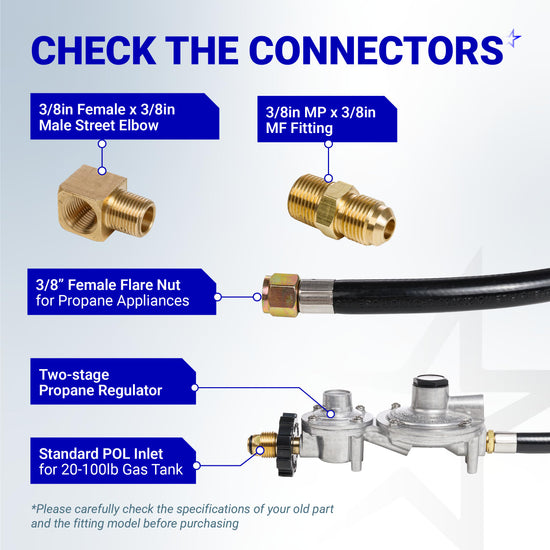
Proper regulator replacement requires compatible fittings and careful leak testing (Source: BlueStars Parts)
4. Propane Regulator Leaking: When Should You Call a Professional?
Propane regulator leaks and internal pressure-control faults require professional attention to prevent fire, explosion, or equipment damage.
Contact a Qualified Propane Professional If:
- Gas odor or hissing: Evacuate and contact emergency assistance.
- Gas escaping from the vent: Possible diaphragm, valve, or pressure-relief fault.
- Cracked or corroded housing: Replace the damaged regulator.
- Persistent connection leaks: Stop using the system until professionally repaired.
- Unstable gas pressure: Weak flames, pressure fluctuations, or repeated freeze-ups.
- Complex installations: Fixed gas piping, residential propane systems, or unfamiliar fittings.
Safety Warning: Never block regulator vents, patch leaking components, or attempt repairs on a pressurized system. Return only after qualified personnel confirm the system is safe.
5. How to Prevent Propane Regulator Leaks
Regular inspection and correct installation help reduce propane regulator leaks and premature component failure.
- Inspect components: Check accessible hoses, regulators, and fittings for visible damage.
- Use compatible parts: Match pressure ratings, flow capacity, and connector types.
- Protect from moisture: Keep the regulator vent clear and correctly positioned.
- Prevent hose strain: Avoid sharp edges, heat, kinks, and excessive pulling.
- Check new connections: Follow approved leak-testing procedures when no active leak is suspected.
- Avoid improper repairs: Never overtighten fittings, modify regulators, or misuse thread sealant.
- Follow service intervals: Check manufacturer recommendations and replace deteriorated components.
Safety Note: Routine checks do not replace professional inspection. If propane odor, unexplained hissing, or gas release occurs, stop troubleshooting and seek emergency assistance.

Regular inspections and proper maintenance help prevent propane regulator leaks (Source: BlueStars Parts)
6. FAQs: Propane Regulator Leaking
6.1. Can a Leaking Propane Regulator Be Repaired?
Minor leaks at external fittings may be corrected through manufacturer-approved repairs by a qualified technician. However, regulators with damaged diaphragms, cracked housings, or defective internal components generally require replacement. Never patch a leaking regulator or attempt repairs while the system is pressurized.
6.2. Why Is Gas Coming Out of the Vent Hole on My Regulator?
Gas escaping from a regulator vent may indicate a ruptured diaphragm, an internal valve malfunction, or excessive pressure triggering a relief mechanism. Stop using the system, leave the affected area, and contact your propane supplier or a qualified technician from a safe location. Never block the vent or attempt to restart the regulator.
6.3. Can I Seal the Vent Hole to Stop the Leak?
No. A regulator vent is necessary for proper pressure regulation and may also serve a pressure-relief function. Blocking it with tape, sealant, or plugs can create dangerous pressure conditions. Stop using the regulator and arrange professional inspection or replacement instead.
6.4. What Tape Should I Use on Propane Fittings?
Use propane-rated PTFE thread sealant tape only on compatible tapered pipe threads, such as NPT connections, when permitted by the manufacturer. Never apply tape to QCC1, POL, or flare sealing surfaces that rely on mechanical seals. Incorrect sealant use may cause leaks or damage fittings, so follow the connection manufacturer's specifications.
6.5. How Long Does a Propane Regulator Last Before It Needs Replacing?
Propane regulator service life varies by manufacturer, regulator design, installation, and operating conditions. Some manufacturers recommend replacement within 10 years, while other applications may have different service intervals. Check the regulator's manufacturing date and the manufacturer's maintenance schedule. Replace leaking, corroded, damaged, or malfunctioning regulators regardless of age.
If you notice a propane regulator leaking, identifying whether the problem comes from a loose connection, damaged hose, or internal regulator failure is essential for safe repairs. Faulty components should be replaced rather than patched, and persistent leaks require professional attention. Explore Propane Parts at BlueStars Parts to find compatible regulators, hoses, and fittings. Always verify pressure ratings and connection specifications before ordering.
Contact Information:
8 The Green, Ste A, Dover, Delaware 19901-3618, United States
Website: https://bluestarsparts.com/
References
- Emerson. (n.d.). LP-Gas Serviceman's Handbook (LP-10).
- GOK. (2026, May 26). Too Old – Too Dangerous? Why You Should Know the Age of Your Pressure Regulator.
- Propane Education & Research Council. (n.d.). What to Do If You Smell Gas.
- Propane Education & Research Council. (n.d.). Safety Guide for Portable Propane Cylinders.
- Propane Education & Research Council. (n.d.). Safety Guide for Propane Users.
- RegO. (2020, October). Regulator Freeze-Ups – Technical Bulletin.


