

When your air conditioner runs but blows warm air, it quickly becomes frustrating. You may notice the AC running all day while the room stays hot, or experience weak airflow with little to no cooling. In some cases, the outdoor unit runs normally, but the indoor space never cools down. Understanding the cause of AC running but not cooling is the first step to fixing the issue. BlueStars Parts offers genuine replacement parts to help restore optimal performance and keep your home cool.
| Quick Check Guide |
|---|
|
Quick check: Before diving into detailed causes, you can quickly check a few common signals to narrow down the issue. These signs often point to simple problems you can identify early:
|
1. AC Running But Not Cooling: Common Causes and How to Fix
1.1 Dirty air filter restricting airflow
A dirty or clogged air filter restricts the return airflow that your AC system depends on to operate efficiently. When the filter is packed with dust, pet hair, or debris, less air can pass through the system. This creates an imbalance in the cooling cycle. The evaporator coil does not receive enough warm air to absorb heat properly, which can cause it to become too cold and eventually freeze. As a result, your AC keeps running, but the amount of cool air delivered to your home is very weak or uneven.
How to fix:
-
Step 1: Turn off the AC completely to avoid pulling more debris into the system.
-
Step 2: Remove the air filter from the return vent or air handler and hold it up to light to check for blockage.
-
Step 3: Replace disposable filters with a new one of the correct size, or wash reusable filters thoroughly and let them dry completely.
-
Step 4: Reinstall the filter correctly with airflow arrows pointing in the right direction.
-
Step 5: Turn the system back on and monitor airflow improvement after 15–20 minutes.
A clogged filter directly impacts airflow and cooling efficiency. This is often the first thing to check when an AC is running but not cooling. Regular replacement every 1-3 months helps maintain stable performance and prevents coil freezing issues.

Replacing a dirty air filter to restore airflow when the AC is running but not cooling (Source: BlueStars Parts)
1.2 Dirty condenser coil blocking heat release
The outdoor condenser coil is responsible for releasing heat absorbed from inside your home. When the coil surface becomes coated with dirt, dust, or organic debris like leaves and grass, it acts as insulation. This prevents heat from dissipating into the outside air. Even if the compressor is running continuously, the system cannot complete the heat exchange process. As a result, the indoor air feels warm or only slightly cool, despite the AC operating for long periods.
How to fix:
-
Step 1: Shut off power to the outdoor unit at the disconnect box or breaker.
-
Step 2: Remove visible debris such as leaves, branches, and grass around the unit.
-
Step 3: Use a garden hose to gently rinse the coil from the outside, flushing dirt outward.
-
Step 4: Straighten any slightly bent fins carefully using a fin comb if needed.
-
Step 5: Maintain at least 2 feet of open space around the unit to ensure proper airflow.
A dirty condenser coil reduces heat transfer efficiency and forces the system to work harder. Cleaning the coil restores proper heat release. This helps the AC cool faster and reduces unnecessary energy consumption.
1.3 Low refrigerant or refrigerant leak
Refrigerant is the substance that absorbs heat from indoor air and carries it outside. When refrigerant levels drop, the cooling cycle becomes incomplete. The system may still run, but it cannot remove enough heat to lower the indoor temperature effectively. In most cases, low refrigerant indicates a leak rather than normal usage. Secondary warning signs include hissing or bubbling sounds, oily residue on refrigerant lines, and ice buildup on the evaporator coil or copper tubing.
How to fix:
-
Step 1: Inspect refrigerant lines for visible ice buildup or frost.
-
Step 2: Check for oily residue around joints, valves, or copper tubing.
-
Step 3: Listen carefully for hissing or bubbling noises during operation.
-
Step 4: Avoid attempting to recharge refrigerant without proper certification.
-
Step 5: Contact a licensed HVAC technician to detect leaks, repair them, and recharge the system.
Refrigerants do not get “used up” under normal conditions. If levels are low, a leak is present and must be fixed first. Ignoring this issue can damage the compressor and lead to costly repairs.

Checking refrigerant lines for signs of leaks when the AC runs but blows warm air (Source: BlueStars Parts)
1.4 Frozen evaporator coil
The evaporator coil can freeze when there is insufficient airflow or when refrigerant pressure is too low. Ice forms on the coil surface, blocking the passage of air through the system. This severely reduces airflow and heat absorption. As a result, the AC may run continuously but produce little to no cool air. In some cases, only weak airflow or slightly warm air comes from the vents.
How to fix:
-
Step 1: Turn off the cooling mode immediately to stop further ice formation.
-
Step 2: Switch the fan setting to “on” to circulate air and speed up thawing.
-
Step 3: Check the air filter and replace it if it is dirty or clogged.
-
Step 4: Ensure all vents are open and not blocked by furniture or curtains.
-
Step 5: Call a technician if the coil freezes again after thawing.
A frozen coil is a symptom of deeper issues such as airflow restriction or refrigerant imbalance. After the ice melts, identify and fix the root cause before restarting the system to avoid repeated freezing.
1.5 Faulty capacitor or compressor startup issue
The capacitor stores and releases electrical energy to help start the compressor and fan motor. If the capacitor becomes weak or fails, the compressor may struggle to start or fail completely. In this situation, the indoor fan may still run, creating the illusion that the AC is working. However, without the compressor, no actual cooling occurs. You may also hear clicking, humming, or buzzing sounds as the system attempts to start.
If the capacitor is the issue, a compatible replacement like the 45+5 MFD uF 370 or 440 Volt VAC Round Dual Run Capacitor CBB65A from BlueStars Parts can help restore startup performance.
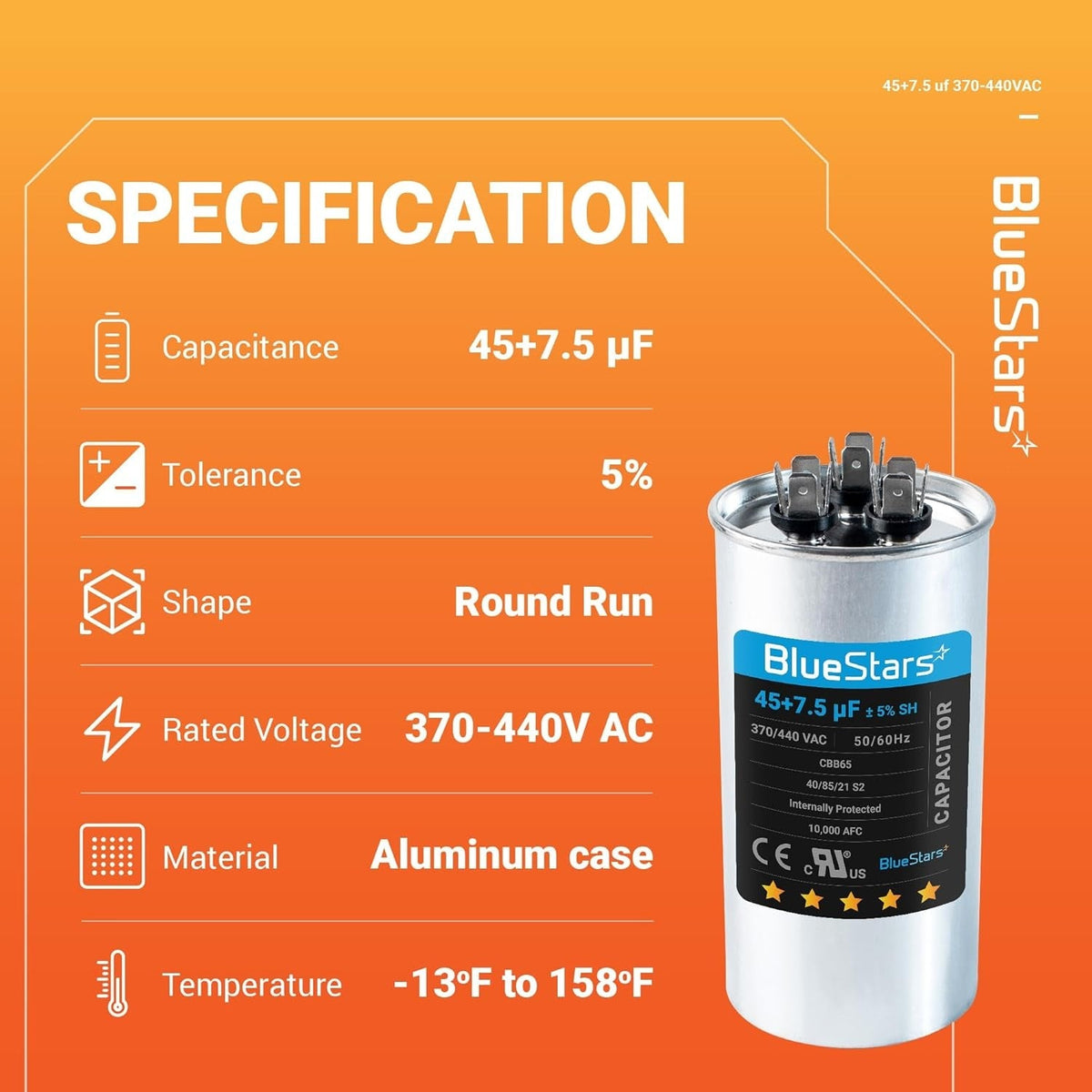
45+5 MFD uF 370 or 440 Volt VAC Round Dual Run Capacitor CBB65A
How to fix:
-
Step 1: Turn off power at the breaker to prevent electrical hazards.
-
Step 2: Listen for repeated clicking or humming when the system tries to start.
-
Step 3: Observe whether the compressor shuts off shortly after attempting to start.
-
Step 4: Inspect the capacitor for bulging top, leaks, or burn marks.
-
Step 5: Replace the capacitor if you have proper knowledge, or call a technician.
A faulty capacitor prevents the compressor from starting correctly. This is a common cause of an AC running but not cooling. Early replacement reduces strain on the compressor and extends system lifespan.
1.6 Thermostat setting or sensor issue
In some cases, the AC system itself is functioning properly, but the thermostat is not sending accurate signals. Incorrect settings, weak batteries, poor placement, or a faulty temperature sensor can cause the system to behave unpredictably. The AC may run at the wrong time, shut off too early, or fail to cool the room to the desired temperature.
How to fix:
-
Step 1: Ensure the thermostat is set to “cool” mode.
-
Step 2: Lower the temperature setting below the current room temperature.
-
Step 3: Replace batteries if the display is dim or unresponsive.
-
Step 4: Check that the thermostat is not exposed to direct sunlight or heat sources.
-
Step 5: Reset the thermostat or inspect wiring if the issue continues.
Thermostat-related issues are often overlooked because the system still appears to run. A quick adjustment or repositioning can restore proper communication. This prevents unnecessary repairs and ensures accurate temperature control.

Checking thermostat settings when the AC runs but does not cool the room (Source: BlueStars Parts)
2. When to Call a Professional
While many AC issues can be handled by a handy DIYer, some symptoms indicate deeper mechanical or electrical failures that require specialized tools and certification. Ignoring these signs can lead to safety hazards or permanent damage to your HVAC system.
Call a pro immediately if you hear:
-
Hissing or high-pitched squealing (refrigerant or compressor issues).
-
Continuous clicking with no startup (major electrical failure).
-
Loud banging from the outdoor unit (broken compressor internals).
-
Buzzing linked to electrical panels (risk of fire or short circuit).

3. How to Prevent AC Cooling Problems
3.1. Change the air filter on schedule
Clogged air filters are the primary reason for decreased cooling efficiency. When debris builds up, it restricts essential airflow, forcing the blower motor to work harder and potentially causing coils to freeze. Replacing your filter every 1-3 months ensures your system maintains peak performance and lowers energy bills. It is your first defense against an ac unit running but not blowing air effectively.
3.2. Keep the outdoor unit clear of dirt and debris
Your outdoor condenser unit requires adequate space to release heat absorbed from your home. Over time, grass and leaves can clog the fins, leading to overheating and premature system cycling. Habitually trim back bushes within two feet and gently wash away dirt with a garden hose. This simple maintenance step prevents the common ac running but not cooling issue by ensuring efficient heat exchange.

Cleaning the outdoor condenser unit to prevent AC unit running but not blowing air (Source: BlueStars Parts)
3.3. Do not ignore weak airflow or longer cooling cycles
Do not wait for a total breakdown if you notice weak airflow or lukewarm air from your vents. These early warning signs often indicate a slow refrigerant leak or a fan motor starting to fail. Addressing these symptoms immediately allows for simple repairs before they escalate into expensive compressor damage. Ignoring performance issues only increases the long-term wear and tear on your mechanical components.
3.4. Check the thermostat and system performance before summer
A proactive test run in early spring can prevent the discomfort of a broken AC during a heatwave. Set your thermostat to a lower temperature and monitor the system for thirty minutes to ensure it reaches the target setpoint without noise. Check that the thermostat is calibrated correctly and has fresh batteries to avoid communication errors. Proper preparation prevents the air conditioner not blowing cold air but running.
3.5. Replace worn parts before they fail completely
Preventative part replacement is the best way to extend the lifespan of your entire HVAC system. Components like capacitors and fan belts have limited lives and often show signs of wear before failing. By choosing high-quality Air conditioner parts from BlueStars Parts, you can swap out aging elements during annual inspections. This proactive approach helps you avoid emergency repair costs and keeps your system reliable.
4. FAQs
4.1. Why is my AC running but not blowing cold air?
This is often caused by a dirty air filter blocking airflow or a clogged outdoor condenser coil preventing heat release. It can also be due to low refrigerant levels or a faulty capacitor that prevents the compressor from starting.
4.2. Should I turn the AC off if it is not cooling?
Yes, you should turn it off to prevent the compressor from overheating or the evaporator coils from freezing. Running a malfunctioning unit can cause permanent damage to expensive internal components.
4.3. How do I reset my central AC not blowing cold air?
Turn off the AC at the thermostat and shut off the circuit breaker for about 30 minutes. After turning the breaker back on, wait a few minutes before setting the thermostat back to "cool" to see if the system restarts.
4.4. Why is my AC running outside but no air coming out inside?
This usually indicates a problem with the indoor blower motor or a completely frozen evaporator coil. Check your air filter first, as a severe blockage can stop almost all airflow from reaching your vents.
Understanding why your AC running but not cooling is the first step toward a DIY fix that saves you time and money. Whether it is a simple cleaning or replacing a dual run capacitor, taking action early keeps your home comfortable. Explore how to restore your cooling with BlueStars Parts today!
Contact information:
8 The Green, Ste A, Dover, Delaware 19901-3618, United States
Website: https://bluestarsparts.com/
Explore Related Articles:
AC Stopped Working Suddenly? Try These Quick Fixes
AC Making Noise? 6 Common Causes and How to Fix Quickly
Why Does Your Air Conditioner Smell Bad? Causes and Fixes


