

When your snow blower won't start, the problem may be caused by stale fuel, a clogged carburetor, a faulty spark plug, or a starter-system issue. Identifying the cause early can help you avoid unnecessary repairs and prepare your machine for winter. At BlueStars Parts, you can find replacement parts and helpful resources to help restore reliable snow blower performance.
Quick Diagnosis: Why Won't Your Snow Blower Start?
Use the quick diagnosis table below to identify a likely cause before moving on to detailed troubleshooting.
| Symptom | Likely Cause | Quick Check |
|---|---|---|
| Nothing happens when you try to start it | Missing safety key, incorrect control setting, or no electrical power | Check the key, engine switch, fuel shutoff valve, and power connection, as applicable. |
| Pull cord won't move or starter won't crank | Frozen recoil starter, starter-system fault, weak battery, or seized engine | Check for ice around the starter. Inspect the battery and connections on electric-start models. |
| Primer bulb is cracked or won't return normally | Damaged primer bulb or a problem with the primer system | Inspect the bulb for cracks, leaks, and deformation. Follow the manual to check its operation. |
| Engine cranks but won't start after storage | Stale fuel or carburetor deposits | Check fuel freshness and inspect the fuel system for deposits. |
| Engine cranks but never fires | Fouled spark plug, ignition fault, or fuel-delivery problem | Inspect the spark plug. A wet or dry plug can provide clues, but neither condition confirms the cause on its own. |
| Engine starts briefly, then stalls | Restricted fuel flow, stale fuel, or a clogged carburetor | Check fuel freshness, the fuel line, and carburetor passages. |
1. What's Causing Your Snow Blower Not to Start?
When your snow blower won't start, the cause may be an incorrect starting setup, a fuel-delivery issue, an ignition fault, or a starter-system problem. Checking these areas in order can help you narrow down the cause without replacing parts unnecessarily.
1.1. Safety Key, Choke, Fuel Valve, or Starting Controls Are Set Incorrectly
Before assuming a part has failed, verify that the starting controls are set correctly. Depending on the model, the ignition or safety key must be inserted, the engine switch must be in the correct position, the fuel shutoff valve must be open, and the choke must be set for a cold start. Some models also require the throttle to be set to the Fast position and the primer to be pressed before starting.
Always follow the starting sequence in your owner's manual because choke, primer, throttle, and key procedures vary between snow blower models.
1.2. Primer Bulb Is Cracked or Not Priming the Engine
The primer bulb helps move fuel toward the carburetor during starting, especially when the engine is cold. If the bulb is cracked, brittle, leaking, or does not return to its normal shape after being pressed, it may not prime the engine properly.
For compatible MTD, Troy-Bilt, Cub Cadet, Craftsman, Tecumseh, and other snow blower models, the 570682A / 951-10639A Primer Bulb is a replacement option for several OEM numbers, including 570682A, 951-10639A, and 751-10639. Confirm your equipment model and original part number before ordering.
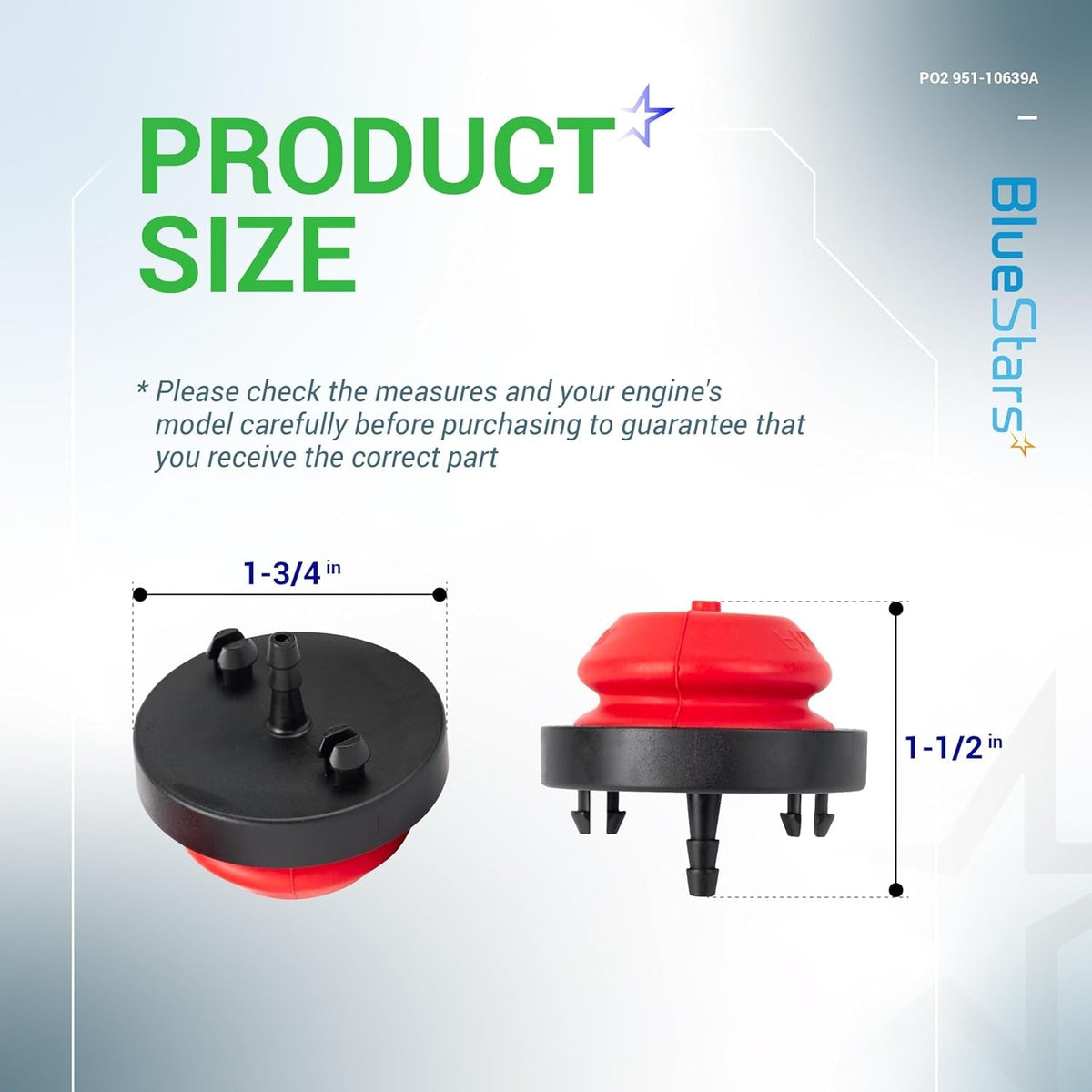
The 570682A / 951-10639A primer bulb is a replacement option for compatible models (Source: BlueStars Parts).
1.3. Stale Fuel Is Restricting Fuel Delivery
Gasoline can deteriorate during storage and leave varnish or deposits in the fuel system. Under some storage conditions, untreated gasoline can begin to degrade in about 30 days, making stale fuel a common cause of hard starting or a no-start condition after the off-season.
If your snow blower has been sitting for months, inspect the fuel before troubleshooting more complex components. Drain old or contaminated gasoline according to the manufacturer's instructions, then use fresh fuel that meets the engine manufacturer's specifications.
1.4. Carburetor Is Clogged or Not Delivering Fuel
The carburetor controls the air-fuel mixture entering the engine. Deposits from stale fuel can clog the main jet or internal passages, preventing enough fuel from reaching the engine and causing it to crank without starting.
If cleaning does not restore proper fuel flow or the carburetor is damaged, the 951-12705 / 951-10974A Snow Blower Carburetor Assembly is available for compatible MTD, Troy-Bilt, Cub Cadet, Craftsman, and related snow blower models. It replaces several OEM numbers, including 951-12705, 951-10974A, and 751-12705. Verify your exact model and linkage configuration before purchasing.
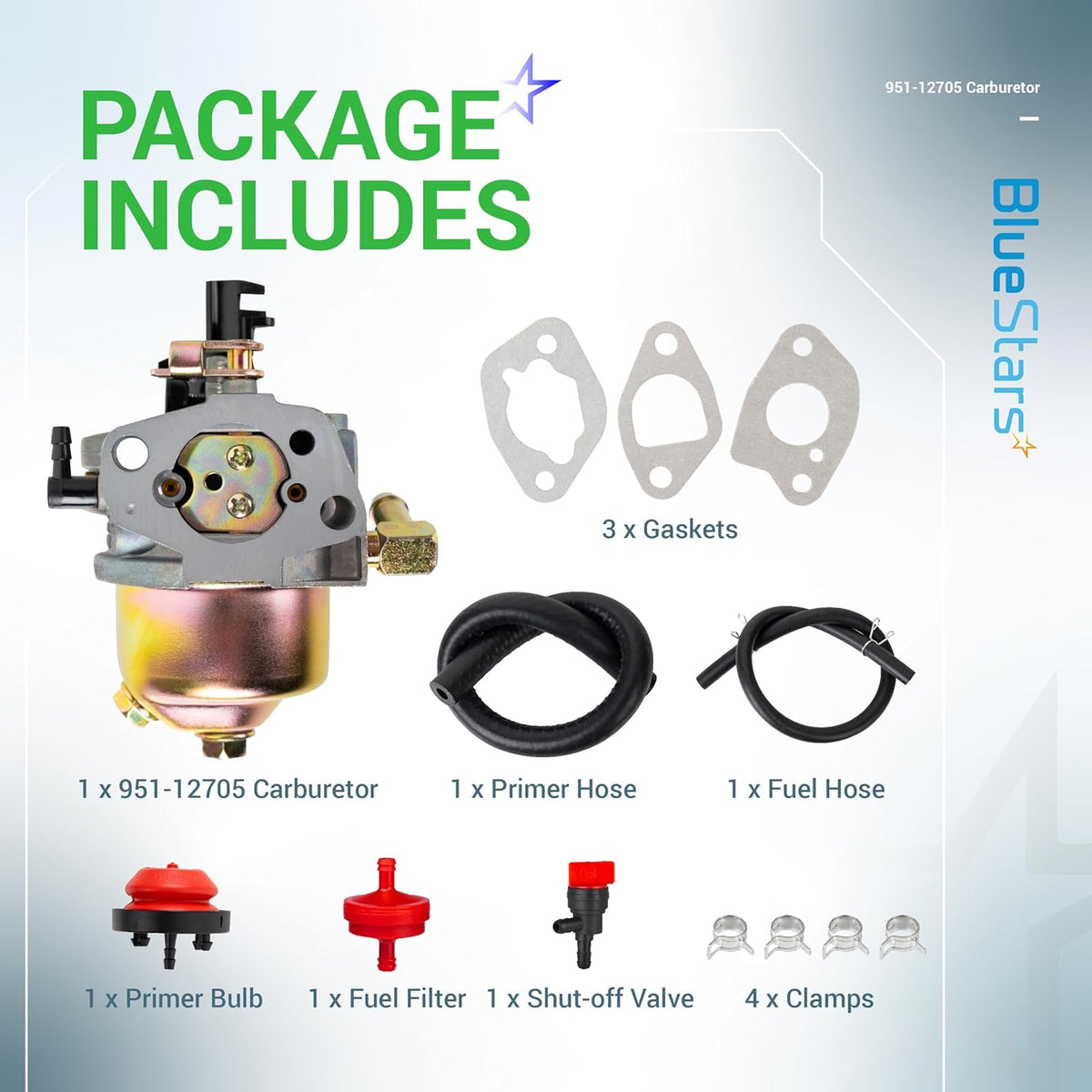
The 951-12705 carburetor assembly is available for compatible MTD snow blower models (Source: BlueStars Parts).
1.5. Fouled, Wet, or Disconnected Spark Plug
A dirty, worn, incorrectly gapped, or disconnected spark plug can prevent the engine from producing the spark needed for ignition. A wet spark plug may indicate that fuel is reaching the cylinder, while a dry plug can suggest a fuel-delivery problem. Neither observation is conclusive without further checks.
Inspect the electrode for carbon deposits, wear, cracks, or corrosion, and make sure the spark plug wire is firmly connected. Replace the plug if it is badly fouled or damaged, and set the gap according to the engine manual.
1.6. Starter System Is Not Cranking the Engine
If the engine does not crank at all, the problem may be in the recoil or electric-start system rather than the fuel system. On electric-start models, check the power source, extension cord, connections, and starter operation. Toro's residential troubleshooting resources also cover power-supply and electric-starter issues that can prevent starting.
If the recoil starter will not move, cold weather may have frozen the mechanism. Do not force the rope; allow the starter to thaw and inspect it before trying again. Repeatedly operating an electric starter can also cause overheating, so follow the starting limits specified in the owner's manual.

A starter-system issue may prevent the engine from cranking (Source: BlueStars Parts).
2. How to Troubleshoot a Snow Blower That Won't Start
Following a logical sequence can help determine whether your snow blower not starting is caused by a simple setup issue or a component that needs cleaning or replacement.
Step 1: Confirm the Starting Controls
- Insert the ignition or safety key fully and set the engine switch to the specified Run or On position, if applicable.
- Open the fuel shutoff valve if your snow blower has one.
- Set the throttle to the position recommended in the owner's manual.
- Move the choke to the correct cold-start position.
- Press the primer bulb only the number of times specified by the manufacturer.
- Try starting the engine again before moving to the next step.
Note: Starting procedures vary by model. Avoid excessive priming or choking because too much fuel can flood the engine and make it harder to start.

Check the ignition or safety key and starting controls before troubleshooting other components (Source: BlueStars Parts).
Step 2: Check Whether the Engine Cranks
- Pull the recoil starter or operate the electric starter according to the owner's manual.
- Listen and feel for whether the engine actually turns over.
- If the engine cranks normally but does not fire, continue to Step 3.
- If the pull cord will not move, check for ice or a problem with the recoil mechanism.
- If the electric starter does not turn the engine, check the power supply and starter system.
- Proceed to Step 6 if the engine does not crank at all.
Safety note: Do not force a stuck recoil cord or repeatedly operate an electric starter that is not turning the engine. Stop and identify the cause first.
Step 3: Check Fresh Fuel and the Primer
- Check that there is enough fuel in the tank.
- Make sure the fuel shutoff valve is fully open, if fitted.
- Inspect the gasoline for signs that it has been stored for an extended period.
- Drain stale or contaminated fuel according to the manufacturer's instructions.
- Refill the tank with fresh gasoline recommended for the engine.
- Inspect the primer bulb for cracks, brittleness, leaks, or deformation.
- Check the primer bulb's operation according to the owner's manual.
- Try starting the snow blower again.
Safety note: Handle gasoline only when the engine is off and cool. Work outdoors or in a well-ventilated area, and keep fuel away from flames, sparks, cigarettes, and hot surfaces.

Check the fuel level and condition before investigating more complex causes (Source: BlueStars Parts).
Step 4: Inspect the Spark Plug
- Turn off the engine and disconnect the spark plug wire.
- Remove the spark plug using the correct socket.
- Inspect the electrode for heavy carbon deposits, corrosion, or excessive wear.
- Check the ceramic insulator for cracks or other damage.
- Check the spark plug gap against the specification in the engine manual.
- Clean the plug if it is only lightly fouled and the manufacturer permits cleaning.
- Replace it if the electrode is badly worn, the ceramic is cracked, or the plug is heavily fouled.
- Reinstall the spark plug and reconnect the wire securely.
- Try starting the engine again.
A wet spark plug may indicate that fuel is reaching the cylinder but ignition is weak or absent. A dry plug can suggest that fuel is not reaching the combustion chamber. Further testing may be needed to confirm the cause.
Safety note: Keep the spark plug wire disconnected while working on the engine to reduce the risk of accidental starting. If spark testing is necessary, use an approved spark tester and follow the engine manufacturer's instructions.
Step 5: Check the Carburetor and Fuel Delivery
- Confirm that fresh fuel is reaching the carburetor.
- Inspect the fuel line for kinks, blockages, leaks, or deterioration.
- Check the carburetor bowl and accessible passages for varnish, dirt, or deposits.
- Remove the fuel bowl only if the procedure is covered by your snow blower's service instructions and you can do so safely.
- Clean accessible jets and fuel passages with an appropriate carburetor cleaner, following the product and equipment instructions.
- Pay particular attention to restricted jets if the engine starts briefly and then stalls.
- Reassemble the carburetor correctly and try starting the engine again.
- Consider rebuilding or replacing the carburetor if it is severely corroded, damaged, or still cannot deliver fuel after cleaning.
Safety note: Carburetor cleaner and gasoline are flammable. Work outdoors or in a well-ventilated area away from ignition sources. Follow the cleaner's instructions and protect rubber or plastic parts from incompatible solvents.

Check the fuel line and carburetor passages for restrictions that may prevent the engine from starting (Source: BlueStars Parts).
Step 6: Check the Starter System if the Engine Won't Crank
- For electric-start models, make sure the power cord is fully connected.
- Check the outlet or power source for proper operation.
- Inspect the extension cord and starter connections for damage or corrosion.
- Allow the starter motor to cool if it has been used repeatedly.
- For recoil-start models, inspect the starter housing for ice or debris.
- Check the recoil rope for fraying, breakage, or failure to retract.
- Allow a frozen starter mechanism to thaw before trying again.
- Do not force the starter if the engine remains locked.
- Have the starter or engine inspected by a qualified professional if it still will not crank.
Safety note: Do not operate an electric starter continuously because the motor can overheat. Follow the maximum cranking time and cooling interval specified in the owner's manual.
3. When Should You Call a Professional?
Basic checks can solve many cases where a snow blower won't start, but some problems require specialized tools or internal engine repair. Consider contacting a qualified service professional when:
- The engine still will not start after basic troubleshooting: If fresh fuel, correct controls, a serviceable spark plug, and basic carburetor checks do not solve the problem, further ignition, compression, or fuel-system testing may be needed.
- The starter will not crank after checking the power supply and connections: A damaged starter motor, solenoid, relay, switch, or internal engine problem may require professional diagnosis.
- The recoil starter remains locked or the engine cannot turn: Do not force the starter rope. A seized internal engine component or damaged starter mechanism may require disassembly and repair.
- The carburetor remains clogged or damaged after basic cleaning: Severe varnish, corrosion, or internal damage may require a carburetor rebuild, adjustment, or replacement.
- You find damaged wiring, switches, or electrical connections: Electrical faults beyond loose or visibly corroded connections should be diagnosed before repeatedly attempting to start the machine.
- Fuel is leaking from the tank, line, primer, or carburetor: Stop using the snow blower until the leak has been repaired. Gasoline and its vapors can ignite around sparks, flames, or hot surfaces.

Contact a qualified service professional if basic troubleshooting does not identify or resolve the problem (Source: BlueStars Parts).
4. How to Prevent Your Snow Blower From Failing to Start
Regular maintenance and proper seasonal storage can reduce the chance of your snow blower failing to start when winter returns. Follow these preventive steps:
- Use fresh fuel: Avoid leaving untreated gasoline in the machine for long periods. Gasoline can begin degrading in as little as 30 days under some storage conditions and may leave deposits that clog the fuel system.
- Use fuel stabilizer when appropriate: Add the correct stabilizer to fresh fuel according to the engine and stabilizer manufacturers' instructions when preparing the machine for storage.
- Follow the recommended off-season storage procedure: Depending on the model, this may involve treating the fuel or draining the fuel system. Follow the snow blower owner's manual rather than applying one storage method to every machine.
- Inspect the spark plug regularly: Check for fouling, wear, corrosion, and the correct electrode gap. Replace a damaged or excessively worn plug according to the maintenance schedule.
- Check the primer bulb and fuel lines: Look for cracks, brittleness, leaks, or loose connections that could interfere with fuel delivery.
- Keep the carburetor and fuel system clean: Using fresh, properly stored fuel helps reduce the risk of gum and varnish blocking carburetor jets and passages.
5. FAQs: Snow Blower Won't Start
5.1. How Long Can Gas Sit in a Snow Blower Before It Goes Bad?
Untreated gasoline can begin to deteriorate in as little as 30 days under some conditions, potentially leading to deposits and carburetor clogs. For seasonal storage, use fresh fuel with an approved stabilizer when appropriate, or follow the fuel-storage procedure in your owner's manual.
5.2. How Do I Know if My Snow Blower Engine Is Flooded?
A flooded engine may be difficult to start after excessive priming or choking, and the spark plug may be wet with fuel. Set the choke to the Run or Open position only if specified by your model's flooded-engine starting procedure, and follow the manufacturer's instructions rather than continuing to prime it.
5.3. Can Cold Weather Alone Stop a Snow Blower From Starting?
Very low temperatures can make starting harder by reducing battery output, thickening oil, and affecting fuel vaporization. Use the correct oil for the expected temperature, fresh fuel that meets the engine specifications, and the starting procedure specified for your model.
5.4. Is It Safe to Spray Starting Fluid Into a Snow Blower to Help It Start?
Do not use pressurized starting fluid unless the engine manufacturer specifically permits it. Starting fluid is highly flammable and may cause fire or engine damage. Checking the fuel, spark, and carburetor systems according to the manufacturer's instructions is a safer troubleshooting approach.
5.5. How Do I Find the Right Carburetor or Primer Bulb for My Snow Blower Model?
Locate the snow blower's model and serial numbers and, for engine-specific parts, the engine model, type, and code when applicable. Use these details in the manufacturer's parts diagram or lookup tool, then match the OEM part number before ordering. Do not choose a carburetor or primer bulb by appearance alone.
When your snow blower won't start, checking the controls, fuel, spark plug, carburetor, and starter system can help identify the cause. If a worn or damaged part needs replacement, browse Snow Blower Parts from BlueStars Parts. Always verify your machine model and original part number before ordering.
Contact Information
8 The Green, Ste A, Dover, Delaware 19901-3618, United States
Website: https://bluestarsparts.com/
References
Briggs & Stratton. (2026, January 21). How to Troubleshoot Your Snow Blower Not Starting.
Toro. (n.d.). Residential Help Topics: Snowthrower Troubleshooting and Maintenance.


