

Imagine loading your dishwasher after a meal, only to find that it won’t drain or clean your dishes properly because the pump has stopped working. If you're wondering how to replace dishwasher pump, you're dealing with a common appliance issue that can often be fixed without calling a technician. With the right tools, a little patience, and high-quality replacement parts from BlueStars Parts, you can complete this DIY repair, save money, and get your dishwasher running like new again.
1. Is it worth replacing the pump on a dishwasher?
In most cases, replacing a faulty dishwasher pump is a smart and cost-effective decision. If your dishwasher is under 10 years old and the rest of the appliance is functioning properly, a new pump can restore its performance and add years to its service life-without the expense of buying a new unit.
Compared to the cost of a new dishwasher, replacing a faulty pump is often the more economical choice. Unless the appliance has multiple major components failing or is nearing the end of its lifespan, installing a new pump can restore reliable performance and help you avoid the expense of a full replacement.

Dishwasher drain pump located beneath the sump assembly (Source: BlueStars Parts)
2. Before replacing the pump: confirm the root cause first
A dishwasher that won't drain or clean properly doesn't always have a failed pump. In many cases, clogged filters, blocked drain hoses, food debris, or minor installation issues create symptoms that closely resemble pump failure. Before ordering a replacement pump, work through these simple checks:
|
Quick Check |
Why It Matters |
|---|---|
|
Clean the dishwasher filter |
A clogged filter restricts water flow and drainage. |
|
Inspect the drain hose |
Kinks or blockages can prevent proper draining. |
|
Check the air gap (if equipped) |
Debris inside the air gap can block drainage. |
|
Listen to the pump |
Humming may indicate a jammed impeller, while complete silence may point to an electrical issue. |
|
Inspect for debris around the impeller |
Broken glass or food particles can stop the pump from rotating freely. |
Before replacing the pump, check the filter, drain hose, high loop or air gap, and garbage disposal inlet for clogs or installation issues. If you recently installed a new garbage disposal, make sure its dishwasher inlet knockout plug has been removed. For step-by-step guidance, see what to check first when your dishwasher did not drain, how to clean the dishwasher drain, and how to clean a clogged dishwasher hose.
3. How do you know if your dishwasher pump is bad?
A failing dishwasher pump can cause a variety of performance issues, from poor drainage to unusual noises. The table below highlights the most common symptoms, their most likely pump-related causes, and the first troubleshooting steps to help identify the problem.
|
Symptom |
Most Likely Pump Issue |
What to Check First |
|---|---|---|
|
Dishwasher will not drain |
Drain pump is clogged, jammed, or has failed |
Check the drain filter, drain hose, and pump impeller for debris or blockages. |
|
Standing water remains at the bottom |
Drain pump is not removing water properly |
Clean the filter and inspect the drain hose before testing the pump. |
|
Dishwasher makes humming, buzzing, or grinding noise |
Pump motor is struggling or the impeller is obstructed or damaged |
Turn off the power and check the pump for food particles, broken glass, or worn components. |
|
Dishwasher leaks near the pump area |
Damaged pump housing, seal, or gasket |
Inspect the pump assembly and surrounding seals for visible cracks or signs of water leakage. |
|
Spray arms do not spin or dishes stay dirty |
Circulation pump is weak or not operating |
Check that the spray arms are not clogged, then inspect the circulation pump for proper operation. |
|
Dishwasher stops mid-cycle |
Pump motor is overheating or failing intermittently |
Listen for unusual pump noises and inspect for overheating, obstructions, or electrical issues. |
|
Error code related to draining or water circulation |
Drain or circulation pump malfunction |
Refer to your dishwasher's error code guide and inspect the corresponding pump and connected components. |
While these symptoms often point to a faulty dishwasher pump, they can also be caused by clogged filters, blocked drain hoses, or other component failures. Checking the simplest causes first can save time and money. If the pump is damaged or no longer operates properly, replacing it is usually the most effective way to restore your dishwasher's performance.
>> Read more: Dishwasher Making a Buzzing Noise? 6 Causes and Fixes.
4. Dishwasher drain pump vs. circulation pump
Your dishwasher relies on two different pumps to operate efficiently. Although they work together during every wash cycle, each pump has a distinct function and shows different symptoms when it fails. The table below compares the drain pump and circulation pump to help you identify which one may be causing the problem.
|
Feature |
Drain Pump |
Circulation Pump (Wash Pump) |
|---|---|---|
|
Pump type |
Removes dirty water from the dishwasher |
Circulates clean water through the spray arms during the wash cycle |
|
Main job |
Drains wastewater at the end of each wash and rinse cycle |
Maintains water pressure for effective cleaning |
|
Common symptoms |
Standing water, poor drainage, drain-related error codes, humming or buzzing during draining |
Dishes remain dirty, spray arms don't spin, weak water pressure, unusual grinding or whining noises |
|
Replacement difficulty |
Generally easier and less expensive to replace |
More complex repair, often requiring additional disassembly and a higher-cost replacement |
Identifying which pump has failed is the first step toward an effective repair. If your dishwasher won't drain, the drain pump is the most likely culprit. If it fills with water but doesn't clean dishes properly, the circulation pump is usually the component to inspect. If the spray arms are simply clogged, the circulation pump may be fine; try to clean the dishwasher spray arms first.

Drain pump and circulation pump perform different functions inside the dishwasher (Source: BlueStars Parts)
5. How to replace a dishwasher drain pump
Replacing a dishwasher drain pump is a manageable DIY repair for many homeowners with basic tools. Taking your time and following each step carefully can help prevent leaks, electrical issues, and damage to other dishwasher components. Before starting, make sure you have the correct replacement drain pump for your dishwasher model.
5.1. Shut off power and water
Turn off the dishwasher's power at the breaker or unplug the power cord if accessible. Then shut off the water supply valve to prevent leaks while working. This simple step protects you from electrical hazards and makes the repair much safer.
Notice: Double-check that the appliance is completely disconnected before moving on to the next step.

Disconnect the power and water supply before replacing the drain pump. (Source: BlueStars Parts)
5.2. Remove the Lower Access Panel
Use a screwdriver to remove the screws securing the toe kick or lower access panel. Once removed, you'll have access to the dishwasher's internal components, including the drain pump and drain hose. Keep the screws in a safe place for reassembly later. If the panel feels stuck, gently wiggle it instead of forcing it off to avoid bending the metal.

Remove the lower access panel to expose the drain pump (Source: BlueStars Parts)
5.3. Pull the Dishwasher Out
Carefully slide the dishwasher out from under the countertop to access the underside more easily. Place a towel or blanket on the floor before laying the dishwasher on its back to protect both the appliance and your flooring. Move slowly to avoid damaging the water line or drain hose. Having a second person help support the dishwasher can make this step safer and easier.

Pull the dishwasher out carefully for easier access to the bottom components (Source: BlueStars Parts)
5.4. Locate the Drain Pump
Find the drain pump mounted near the sump assembly on the bottom of the dishwasher. It is usually connected directly to the drain hose and is smaller than the circulation pump. Take a moment to identify the correct component before removing anything. Consult your dishwasher's parts diagram if you're unsure which pump is the drain pump.

Locate the drain pump before disconnecting any components (Source: BlueStars Parts)
5.5. Disconnect the Hose and Wiring
Unplug the electrical connector from the drain pump, then loosen the clamp and disconnect the drain hose. Some water may spill from the hose, so place a towel underneath to keep the work area clean. Avoid pulling on the wires directly to prevent damage. Inspect the hose and connector for signs of wear or corrosion while they are disconnected.
Quick check: Inspect while everything is disconnected: cracked hose, corroded connector, damaged terminals, loose wiring. If any of these are damaged, replacing the pump alone may not solve the problem.

Disconnect the wiring harness and drain hose before removing the pump. (Source: BlueStars Parts)
5.6. Remove the Old Drain Pump
Release the drain pump by twisting it or removing the retaining clips or mounting screws, depending on your dishwasher model. Lift the pump out carefully and inspect the sump area for debris or damaged seals. Clean the mounting surface before installing the replacement. Removing any trapped food particles now can help prevent future drainage problems.

Remove the old drain pump and clean the mounting area before installation. (Source: BlueStars Parts)
5.7. Install the New Drain Pump
Compare the new pump with the old one to confirm they match before installation. Secure the new pump in place, then reconnect the drain hose and electrical connector, making sure every connection is fully seated. Tight connections help prevent leaks and ensure reliable drainage.
If your troubleshooting confirms that the original drain pump is noisy, leaking, electrically failed, or no longer drains water properly, replacing it with a compatible part is the most reliable long-term solution.BlueStars Parts offers reliable replacement pumps for many popular dishwasher models, including:
-
W10876537/W10724439 Dishwasher Drain Pump: Features a high-torque synchronous motor for dependable drainage, a precision 3-tab twist-lock design for fast installation, and a pre-installed nitrile gasket that provides a secure, leak-resistant seal while helping reduce operating noise.
-
W10348269 Dishwasher Drain Pump: A direct OEM-quality replacement engineered to meet or exceed original equipment specifications, delivering reliable water removal during the drain cycle and long-lasting performance across a wide range of compatible dishwasher models.
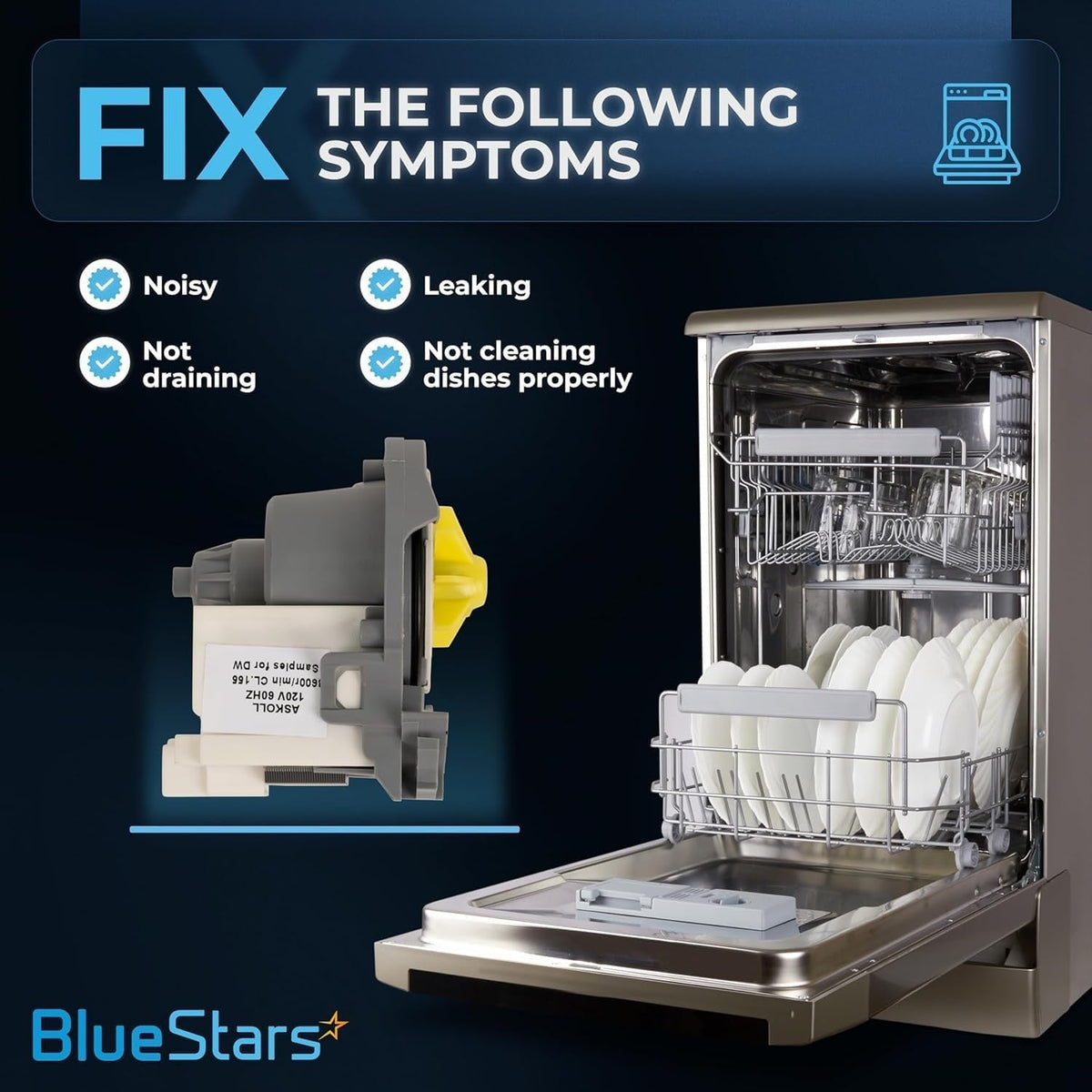
W10348269 Dishwasher Drain Pump (Source: BlueStars Parts)
5.8. Reassemble and Test
Reinstall the lower access panel and slide the dishwasher back into position. Restore the power and water supply, then run a short wash or drain cycle to verify proper operation. Verify underneath the dishwasher for leaks and confirm that the water drains completely before regular use.
Quick check: Run a short drain cycle and verify:
-
water drains completely
-
no leaks underneath
-
pump operates quietly
-
no new error codes appear

Test the dishwasher to confirm proper drainage and ensure there are no leaks. (Source: BlueStars Parts)
6. When to call a technician
Replacing a dishwasher drain pump can solve many drainage problems, but it isn't always the complete solution. The table below provides a quick overview of when a DIY repair is appropriate and when it's best to call a professional.
| Situation | DIY | Professional |
|---|---|---|
| Clean the filter or remove debris from the pump | ✓ | |
| Clear a clogged drain hose or air gap | ✓ | |
| Replace the drain pump (after confirming pump failure) | ✓ (Basic DIY skills required) | |
| Not sure whether the drain pump or circulation pump is faulty | ✓ | |
| Dishwasher still won't drain after replacing the pump | ✓ | |
| Water leaks after reassembly and tightening connections doesn't help | ✓ | |
| Burned wiring, damaged connector, or suspected control board failure | ✓ | |
| Multiple components appear to be failing or the dishwasher is over 10–15 years old | ✓ |
Below, we'll explain each scenario in more detail and why calling a technician is the recommended course of action:
6.1. You are not sure whether the issue is the drain pump or circulation pump
The drain pump and circulation pump perform different functions but can sometimes produce similar symptoms, such as unusual noises or incomplete wash cycles. Replacing the wrong pump not only wastes time and money but also leaves the original problem unresolved.
If you've inspected the dishwasher but still can't determine which pump has failed, a technician can perform electrical and performance tests to identify the faulty component accurately.
6.2. The dishwasher still does not drain after pump replacement
If you've installed a new drain pump and the dishwasher still leaves standing water at the bottom, the problem may not be the pump itself. A clogged drain hose, blocked air gap, faulty check valve, damaged wiring, or a defective control board can all prevent the drain system from operating correctly.
A professional can diagnose these less obvious issues and verify whether the new pump is receiving power and functioning as intended.

If the dishwasher still won't drain after replacing the pump, another component may be causing the problem (Source: BlueStars Parts)
6.3. The dishwasher leaks after reassembly
Water leaking after reinstalling the drain pump often indicates an installation issue rather than a defective replacement part. A loose hose clamp, damaged O-ring, improperly seated pump, or cracked sump housing can all allow water to escape during the drain cycle.
If tightening the connections and inspecting the gasket doesn't stop the leak, it's best to have the dishwasher checked before continued use causes water damage to your cabinets or flooring.
6.4. The pump wiring, connector, or control board may be damaged
A drain pump cannot operate without a proper electrical supply. Burned wiring, corroded connectors, or a failed control board can prevent the pump from receiving power, even if the replacement pump is brand new.
Because diagnosing electrical faults requires specialized equipment and experience, contacting a qualified technician is the safest option when wiring or electronic components are suspected. Proper testing can identify the root cause and prevent unnecessary replacement of additional parts.

Damaged wiring or a faulty control board can prevent the drain pump from receiving power (Source: BlueStars Parts)
6.5. The repair cost may not be worth it for an older dishwasher
While replacing a drain pump is often a cost-effective repair, it may not be the best investment for an older dishwasher with multiple failing components. If the appliance is more than 10-15 years old or has recurring problems such as control board failures, motor issues, or significant leaks, repair costs can quickly add up.
In these situations, compare the repair cost with the price of a new dishwasher. If repairs cost close to half the price of a replacement, investing in a new, more energy-efficient model may be the better long-term option. A qualified technician can help you decide which choice offers the best value.
7. FAQs
7.1. Is it worth replacing the pump on a dishwasher?
In most cases, yes. If your dishwasher is less than 10 years old and is otherwise in good condition, replacing a faulty pump is usually much more affordable than buying a new appliance. A new pump can restore proper drainage and extend the dishwasher's service life without the higher cost of a full replacement.
7.2. How much does it cost to replace a pump on a dishwasher?
Professional dishwasher pump replacement typically costs $150 to $400, including parts and labor. If you choose to replace the pump yourself, the replacement part generally costs $30 to $150, depending on the dishwasher brand and model. DIY replacement can significantly reduce repair costs, provided you have the correct replacement pump and follow the installation instructions carefully.
7.3. How do I know if my dishwasher pump is bad?
Common signs of a failing dishwasher pump include standing water left in the tub, poor drainage, humming or grinding noises during the drain cycle, water leaking near the pump, and drain-related error codes. Before replacing the pump, inspect the filter and drain hose for clogs, as these can produce similar symptoms.
7.4. Is it cheaper to buy a new dishwasher or replace the pump?
Replacing the pump is usually the more cost-effective option. Since a new dishwasher often costs $500 to $1,500 or more, repairing the existing appliance is typically the better investment unless it has multiple major component failures or is nearing the end of its expected lifespan.
7.5. Can I replace a dishwasher pump myself?
Yes, replacing a dishwasher drain pump is a DIY-friendly repair for many homeowners with basic tools. Be sure to disconnect the power and water, use a compatible replacement part, and follow the manufacturer's instructions. If the problem continues after replacement, contact a qualified technician.
Once you've confirmed the pump is the problem, the right replacement and an hour of work are usually all it takes to get your dishwasher draining again. Browse Dishwasher Parts from BlueStars Parts to find a pump that fits your model and replace your dishwasher pump with confidence.
Contact information:
8 The Green, Ste A, Dover, Delaware 19901-3618, United States
Website: https://bluestarsparts.com/
Related Articles
- My Dishwasher Did Not Drain: What Should I Check First?
- How to Clean Dishwasher Drain and Stop Bad Smells in 5 Steps
- Cleaning Dishwasher Hose: 6 Simple Steps for Better Drainage
- Dishwasher Making a Buzzing Noise? 6 Causes and Fixes
- LG Dishwasher Won't Drain? Simple Troubleshooting Guide
- How to Clean Dishwasher Spray Arms for Better Cleaning
References
Whirlpool. (n.d.). Dishwasher not draining. Whirlpool Product Help.
Sears Home Services. (2026). How to replace a dishwasher circulation pump. Sears Home Services Blog.
EasyBear Appliance Repair. (2026). How much does a dishwasher drain pump replacement cost? EasyBear Blog.


