

When splatters, steam, and sticky grease build up after everyday cooking, your microwave filter can quickly become clogged and greasy. Over time, this traps odors, restricts airflow, and puts extra strain on the motor. Knowing how to properly clean microwave filter is a simple yet essential maintenance step every homeowner should have in their routine. At BlueStars Parts, we're dedicated to helping you keep your appliances running like new with the right parts, tools, and expert guidance.
Quick Answer: How Do You Clean a Microwave Filter?
Remove the reusable grease filter, soak it in hot water with dish soap for 10-30 minutes, scrub gently, rinse, let it air dry completely, then reinstall. If your microwave uses a charcoal filter, don't wash it - replace it every 6-12 months instead.
|
Step |
Action |
Time needed |
|
1. Prep |
Turn off power to the microwave and let it cool |
1-2 minutes |
|
2. Remove |
Release the tab or clip and slide the grease filter out |
1-2 minutes |
|
3. Soak |
Soak in hot water and dish soap (add baking soda or vinegar for heavy grease) |
10-30 minutes |
|
4. Scrub |
Gently scrub both sides with a soft-bristle brush |
3-5 minutes |
|
5. Rinse & dry |
Rinse thoroughly, then air dry completely |
4+ hours (mostly unattended) |
|
6. Reinstall |
Slide the dry filter back in until it locks in place |
1-2 minutes |
1. Signs your microwave filter needs cleaning
|
Symptom |
What it may indicate |
What to check first |
|
Cooking odors linger longer than usual |
Grease or a saturated charcoal filter is blocking airflow |
Check the grease filter for visible buildup |
|
Ventilation fan seems weaker than normal |
Grease is clogging the mesh and restricting air |
Inspect the grease filter mesh under good light |
|
Visible grease film on the filter or vent grille |
Grease filter hasn't been cleaned recently |
Remove the filter and check both sides |
|
Microwave runs hotter or louder than usual during venting |
The fan motor is working harder against a clogged filter |
Clean the grease filter, then monitor the next few uses |
|
Odors persist even after cleaning the grease filter |
The charcoal filter (not the grease filter) may be saturated |
Check whether your model has a charcoal filter to replace |
If odors are the main complaint and the grease filter already looks clean, the charcoal filter is the more likely culprit - see Section 5.
>> Related guide: Microwave Not Heating Up Food? 6 Causes and Fixes
None of these signs showing up yet? That's when the standard maintenance schedule below takes over.
2. Microwave filter maintenance schedule
|
Filter Type |
Maintenance |
Recommended Frequency |
Why It Matters |
|
Grease filter |
Clean |
Every month, or sooner if grease buildup is visible or ventilation seems weaker |
Regular cleaning prevents grease from clogging the exhaust system, improves airflow, and helps protect the microwave fan. |
|
Charcoal filter |
Replace (do not wash) |
Every 6–12 months, or sooner if cooking odors persist |
Charcoal filters absorb odors but lose effectiveness over time and cannot be restored by washing. |
Once you know how often each filter needs attention, the next step is making sure you have the right supplies on hand before you start.
3. Microwave filter cleaning supplies checklist
Before cleaning your microwave's grease filter, gather the right supplies to make the process easier and safer. Gentle degreasers and non-abrasive tools protect the metal mesh from damage.
|
Item |
Why it helps |
|
Hot water |
Helps dissolve and loosen greasy buildup from the filter mesh, making it easier to clean. |
|
Grease-cutting dish soap |
Breaks down tough grime and cooking grease more effectively during soaking. |
|
Baking soda |
Boosts the cleaning power of the soaking solution, especially for filters that have not been cleaned in a while. |
|
Soft-bristle brush |
Helps scrub away stuck-on grease without scratching or damaging the metal mesh. |
|
Microfiber cloths or paper towels |
Useful for drying the filter completely before reinstalling it. |
If your microwave filter is too greasy, damaged, or difficult to clean completely, replacing it can improve ventilation and reduce cooking odors. The W10208631A Microwave Grease Filter Replacement comes in a 5-pack and is designed for compatible microwave models.
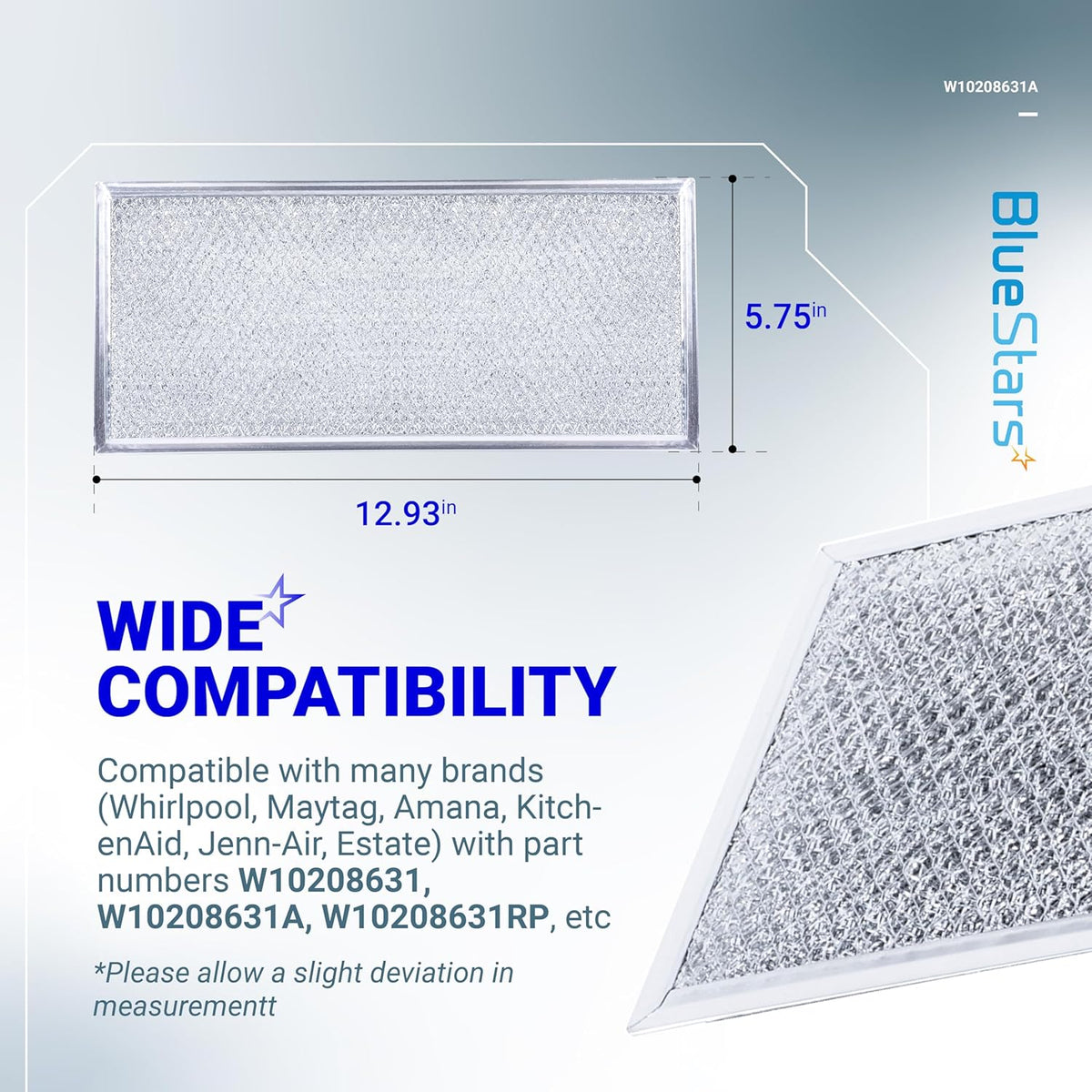
W10208631A Microwave Grease Filter Replacement (Source: Bluestars Parts)
Regular filter maintenance helps prevent common microwave problems caused by restricted airflow, grease buildup, and poor ventilation.
With supplies gathered and power off, here's the full cleaning process from start to finish.
4. How to Clean a Microwave Filter (Step-by-Step Guide)
What you may need:
- Soft-bristle brush or old toothbrush
- Grease-cutting dish soap
- Baking soda or white vinegar (for heavier buildup)
- Hot water and a sink or basin
- A dry towel for the surrounding area
Safety note: Unplug the microwave or switch off the circuit breaker, and let the appliance cool completely before removing the filter. Wear gloves if your filter has sharp aluminum edges, and check your owner's manual if you're unsure how it's secured.
Step 1: Remove the grease filter
On most over-the-range (OTR) microwaves, the reusable grease filter sits underneath the appliance, above the cooktop. Release the locking tab or retaining clip and carefully slide the filter out.
Quick test: If the filter doesn't slide out with light pressure, stop and check your owner's manual rather than forcing it - some models use a different release mechanism.

Remove the filter from its housing by gently sliding or popping it out (Source: Bluestars Parts)
Step 2: Soak the filter
Fill a sink or basin with hot water and a generous amount of liquid dish soap. For heavy grease buildup, add about ¼ cup of baking soda or white vinegar. Let the filter soak for 10-30 minutes so the grease softens before scrubbing.
Quick test: After soaking, the grease should look loosened or lifted from the mesh rather than baked on. If it still looks solid, let it soak another 10-15 minutes before scrubbing.
Step 3: Gently scrub away grease buildup
Use a soft-bristle brush or an old toothbrush to gently scrub grease from both sides of the metal mesh. Avoid steel wool or abrasive pads, which can damage the filter.
Quick test: Hold the filter up to the light - the mesh should look shiny and open, not tacky or coated in film.

Use gentle pressure and take care not to bend the filter or filter frame (Source: Bluestars Parts)
Step 4: Rinse the filter thoroughly
Rinse the filter under hot running water until all grease, baking soda, and soap residue have been removed.
Quick test: Run your finger lightly over the mesh (once cooled) - it should feel clean, not slippery or soapy.
Step 5: Let the filter dry completely
Allow the filter to air dry completely before reinstalling it. Drying time is at least 4 hours for aluminum filters, and longer in humid conditions. Never reinstall a damp filter - trapped moisture can affect ventilation performance.
Quick test: The filter should feel completely dry to the touch, with no cool or damp spots, before it goes back in.

Drying time is a minimum of 4 hours for aluminum filters (Source: Bluestars Parts)
Step 6: Reinstall the clean grease filter
Slide the clean, dry filter back into its housing until it locks securely into place. A properly installed filter helps maintain efficient airflow and prevents grease from entering the vent system.
Quick test: Give the filter a gentle tug after reinstalling — it should stay locked in place, not shift or rattle.
>>> Related Guide: How To Clean & Maintain a Microwave: The Ultimate DIY Guide
5. Grease Filter vs Charcoal Filter: Which One Should You Clean?
Most over-the-range (OTR) microwaves have one or two filters depending on how they vent air. A reusable grease filter captures grease and cooking particles, while a charcoal filter absorbs cooking odors in recirculating models. Because these filters serve different purposes, they also require different maintenance.
|
Feature |
Grease Filter |
Charcoal Filter |
|
Purpose |
Captures grease and cooking particles |
Reduces cooking odors |
|
Location |
Underneath the microwave |
Behind the upper vent grille |
|
Material |
Aluminum or stainless steel mesh |
Activated charcoal |
|
Washable |
Yes |
No |
|
Maintenance |
Clean about once a month |
Replace every 6–12 months |
|
Replace when |
Bent, rusty, damaged, or won't come clean |
Odors persist or the filter reaches the recommended replacement interval |
If your microwave uses a GE-compatible charcoal filter, the JX81H/WB02X10956 Microwave Charcoal Filter is a reliable direct replacement that fits securely and restores your microwave's odor-filtering performance right away.
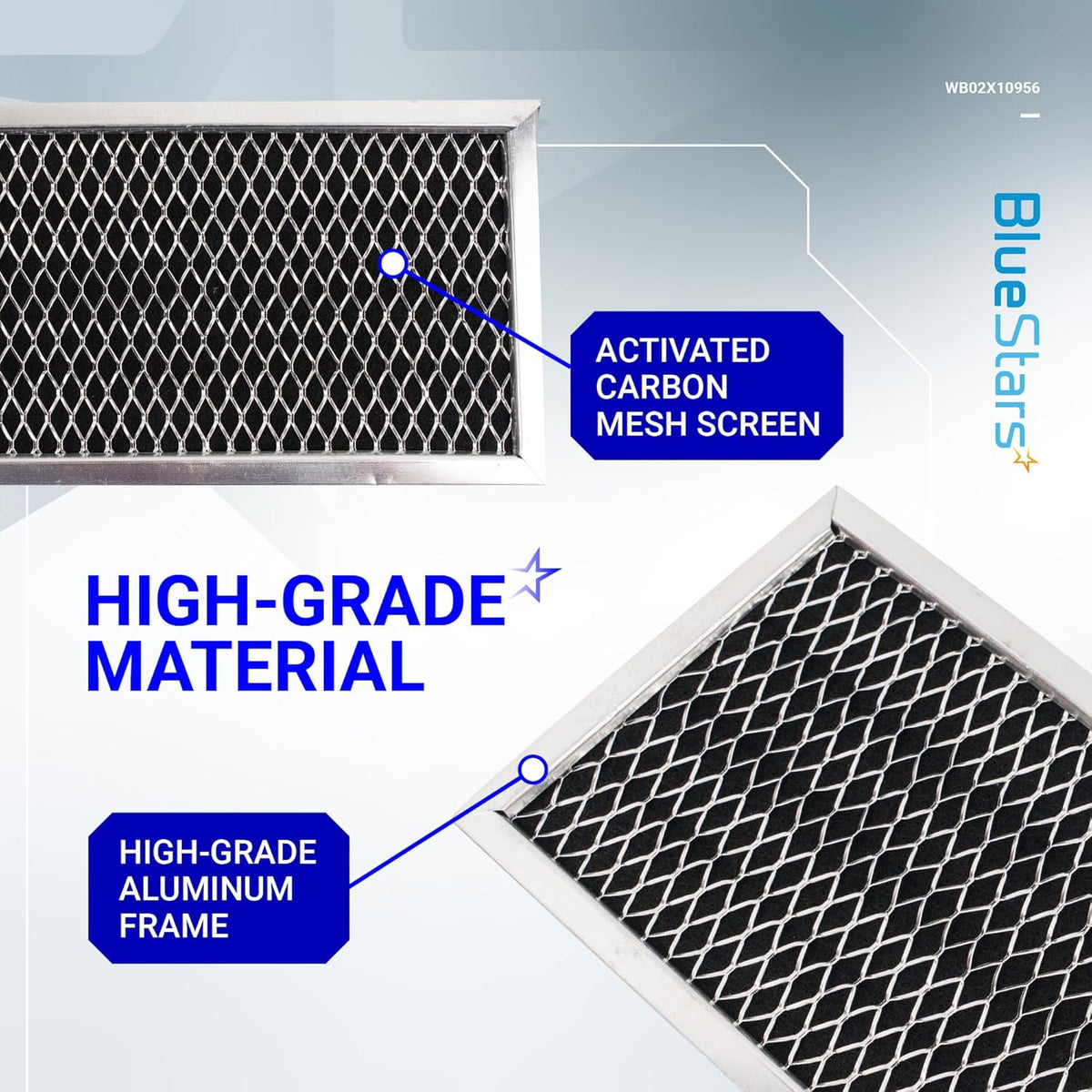
JX81H/WB02X10956 Microwave Charcoal Filter (Source: Bluestars Parts)
For Whirlpool and Maytag over-the-range models, 8206230A Microwave Charcoal Filter is a compatible, high-quality option that makes filter replacement quick and hassle-free.

8206230A Microwave Charcoal Filter (Source: Bluestars Parts)
6. Frequently Asked Questions
6.1. Where are microwave filters located?
Microwave filters are usually located underneath over-the-range microwaves, right above the stovetop. These are typically grease filters designed to trap oil, smoke, and cooking particles. Some models also have charcoal filters placed behind the front vent grille or above the microwave door to help remove odors from recirculated air.
6.2. Can microwave filters be washed in the dishwasher?
Many metal grease filters can be safely cleaned in the dishwasher, especially aluminum or stainless steel mesh filters. Charcoal filters are not washable and must be replaced when dirty. Since instructions vary by brand and model, check your microwave's user manual before using a dishwasher.
6.3. Do All Microwaves Have Filters?
Not all microwaves have filters. Countertop microwaves often skip ventilation filters because they're only designed for heating food. Over-the-range microwaves almost always have grease filters, and sometimes charcoal filters too, because they also function as kitchen ventilation systems.
6.4. How long does it take a microwave filter to dry?
Plan for at least 4 hours for an aluminum grease filter to air dry completely, longer in humid kitchens. Never reinstall a damp filter - trapped moisture can affect ventilation performance and, on some models, trigger a musty smell.
6.5. What happens if you never clean your microwave filter?
Grease keeps building up, which restricts airflow, traps odors, and forces the fan motor to work harder. Over time this can reduce ventilation performance and, in more severe cases, create a fire hazard from accumulated grease.
Keeping your microwave filter clean is an easy but important step in maintaining strong ventilation, reducing kitchen odors, and helping your microwave run more efficiently. If your current filter is damaged or too clogged to restore, BlueStars Parts offers replacement microwave filters designed to fit a wide range of popular microwave models.
Contact Information:
8 The Green, Ste A, Dover, Delaware 19901-3618, United States
Website: https://bluestarsparts.com/
Explore Related Articles:
7 Microwave Problems: What Homeowners Should Check First
Is It Worth Repairing a Microwave? What to Consider First
Microwave Making Loud Noise? Quick Diagnosis and Repair Tips
Microwave Not Heating Up Food? 6 Causes and Fixes
How to Change Microwave Filter in a Few Simple Steps
References:
- AppliancePartsPros.com. (2023, May 8). How to clean a microwave grease filter. https://www.appliancepartspros.com/b/?p=2546
- RemoveAndReplace.com. (n.d.). How to easily replace a microwave grease vent filter. https://removeandreplace.com/?p=21738


