

A lawn mower smoking usually points to one of two problems: oil is burning where it should not, or the engine is running with an incorrect air-to-fuel mixture. The fastest clue is the color of the smoke. White or blue smoke usually points to an oil issue, while black smoke often means the engine is running too rich. In this guide, BlueStars Parts explains what each smoke color means, what to check first, and when the problem requires professional repair.
Quick Answer: Why Is My Lawn Mower Smoking?
If your lawn mower starts smoking, turn it off first and check the color of the smoke. Smoke color is one of the fastest ways to narrow down the cause:
| Smoke / Symptom | Likely Cause | What to Do |
|---|---|---|
| White or blue smoke | Engine oil is burning | Check the oil level, recent tipping, oil spills, and air filter. |
| Black smoke | Too much fuel or not enough air | Check the air filter, choke, and carburetor. |
| Oil smells like gasoline | Fuel may be leaking into the engine oil | Stop the mower, inspect the carburetor, and replace contaminated oil. |
| Smoke after tipping the mower | Oil may have entered the cylinder, air filter, or exhaust | Set the mower upright, check the oil and filter, then allow residual oil to clear. |
| Electric mower is smoking | Motor, wiring, battery, or debris may be overheating | Turn it off, disconnect power, and inspect before restarting. |
Quick takeaway: White or blue smoke usually points to burning oil, while black smoke usually means the engine is running too rich. If the smoke continues after basic checks, or you notice power loss, knocking, oil leaks, or an electrical-burning smell, stop using the mower and have it inspected.
1. What to Do Immediately When Your Lawn Mower Starts Smoking
If your lawn mower suddenly starts smoking, turn the engine off first. Let the mower cool and disconnect the spark plug wire before inspecting a gas-powered mower. For a battery-powered mower, remove the battery before working around the blade or motor.
Then check these areas in order:
- Step 1: Check the Smoke Color: White or blue smoke usually indicates burning oil, while black smoke usually points to too much fuel or not enough air.
- Step 2: Think About What Happened Before the Smoke Started: Check whether you recently tipped the mower, changed the oil, refilled the tank, mowed on a slope, or worked through unusually heavy grass.
- Step 3: Inspect for Oil and Airflow Problems: Look for spilled oil around the muffler, engine block, and air-filter housing. Check the engine oil level on a flat surface and inspect the air filter for dirt or oil contamination.
- Step 4: Check Whether the Oil Smells Like Gasoline: If the dipstick smells strongly like gas or the oil level has unexpectedly risen, fuel may be leaking into the crankcase through the carburetor.
- Step 5: Restart Only After Fixing an Obvious Minor Issue: If the mower was simply tilted or a small amount of oil was spilled, residual oil may smoke briefly while it burns off.
Stop using the mower immediately if the smoke becomes heavier, the engine loses power, you hear knocking, oil continues leaking, or you smell burning electrical insulation.
For broader diagnosis beyond smoking, see our lawn mower troubleshooting guide.

If your lawn mower begins smoking, turn it off immediately (Source: BlueStars Parts)
2. Quick Identify the Problem by Smoke Color
Smoke color is one of the fastest ways to narrow down the problem, but it should be treated as a diagnostic clue rather than a final diagnosis.
2.1. White or Blue Smoke
If your lawn mower is blowing white smoke, the most common explanation is that engine oil is burning where it should not. White smoke may appear after the mower has been tipped, overfilled with oil, or serviced, while blue smoke often points to the same type of oil-burning issue. In many cases, the smoke is temporary, but persistent white or blue smoke can indicate an oil leak or internal engine wear.
Common causes include:
- Too much engine oil
- Oil spilled onto a hot muffler or engine surface
- Oil entering the cylinder after the mower was tilted
- Oil entering or soaking the air filter
- A crankcase leak
- Worn piston rings, cylinder wear, or a damaged head gasket in more serious cases
2.2. Black Smoke
If your lawn mower is blowing black smoke, the engine is usually running rich, meaning it is getting too much fuel or not enough air. This is commonly caused by restricted airflow, a stuck choke, or a carburetor problem.
Start by checking:
- A dirty or clogged air filter
- A choke that remains partially or fully closed
- A flooded or dirty carburetor
- Old or contaminated fuel
- Fuel-system problems that cause excess fuel to enter the engine
If the black smoke appears when starting the lawn mower but clears shortly afterward, check the choke first. A choke that stays closed too long can temporarily create an overly rich fuel mixture.
If the mower blows black smoke and then dies, inspect the air filter, choke, fuel supply, and carburetor. Persistent black smoke combined with stalling usually means the air-fuel mixture is too rich or fuel delivery is not being controlled properly.
2.3. Gray Smoke
Gray smoke can sometimes look similar to blue smoke, especially in bright daylight. In many cases, it still points to oil entering the combustion process or burning on hot engine components, so the first checks should be similar to those for white or blue smoke.
Common causes include:
- Engine oil is overfilled
- The mower was recently tilted or transported incorrectly
- Oil spilled onto the muffler or engine during maintenance
- Oil entered the air filter or combustion chamber
- Internal engine wear, such as worn piston rings or a damaged head gasket
If the smoke has an oily smell, start by checking the oil level on a flat surface, inspecting the air filter, and looking for visible oil around the engine or muffler. Also think about whether the mower was recently tipped, serviced, or refilled with oil.
If the gray smoke continues after these basic checks, especially with power loss, repeated oil consumption, knocking, or persistent smoke, stop using the mower and inspect for an internal engine problem.

The color of the smoke is actually telling you exactly what's wrong (Source: BlueStars Parts)
3. Common Causes of Lawn Mower Smoking (Detailed Explanation)
Understanding what's driving your lawn mower smoking problem is the key to fixing it efficiently. Below are the most common causes, what they look like, and exactly what to do about each one.
3.1 Lawn Mower Was Tilted the Wrong Way
One of the most common reasons a mower suddenly produces white or blue smoke is that it was recently tilted for blade cleaning, maintenance, or transport.
Tilting can allow engine oil to move into the air-filter housing, carburetor, cylinder, or exhaust. When the engine restarts, that oil burns and creates visible smoke.
How to Fix It:
- Return the mower to a level operating position.
- Check the oil level and correct it if necessary.
- Inspect the air filter for oil contamination.
- Wipe away oil around the engine and muffler.
- If there is no active leak or other abnormal symptom, restart the mower outdoors and observe it.
A small amount of residual smoke may clear after several minutes once the excess oil has burned away.
Important: Always follow the mower manufacturer’s instructions before tipping the machine. On many walk-behind mowers, the carburetor and air-filter side should be kept upward, but the correct orientation can vary by model.
For the full cleaning procedure, see how to clean a lawn mower properly.
3.2 Too Much Oil in the Lawn Mower
Overfilling the crankcase is another common cause of white or blue exhaust smoke. Excess oil may enter the combustion chamber or reach hot engine components where it burns.
How to Fix It:
- Place the mower on a level surface.
- Let the engine cool.
- Remove and clean the dipstick.
- Reinsert it according to the instructions for your engine.
- If the oil is above the “Full” mark, drain enough oil to return it to the specified level.
- Use only the oil type and capacity recommended in the owner’s manual.
Do not guess how much oil the engine needs based only on bottle size. Engine capacity varies by model.
What to expect: If overfilled oil was the only cause, the smoke may take a few minutes to disappear because residual oil still needs to burn away.
3.3 Dirty or Oil-Soaked Air Filter
A clogged air filter restricts the amount of air reaching the engine. This can create an overly rich fuel mixture and cause black smoke, rough running, poor fuel efficiency, or loss of power.
An air filter can also become soaked with oil if the mower was tipped incorrectly.
How to Fix It:
First identify the filter type:
- Foam filter: Depending on the manufacturer, it may be washable with soap and water. Let it dry completely before reinstalling and follow your engine manual regarding filter oil.
- Paper filter: Do not automatically wash it with water. Light debris may be removed according to the manufacturer’s instructions, but a very dirty, damaged, or oil-soaked paper filter should generally be replaced.
For detailed steps, see how to clean a lawn mower air filter.
If your mower uses a compatible Briggs & Stratton-style filter, you can also check the 491588S Air Filter & 5062K Spark Plug Kit. The kit combines two commonly serviced components in one package, helping restore proper airflow and reliable ignition when the existing parts are dirty or worn. Its main advantage is the convenient two-part replacement setup for routine lawn mower maintenance.
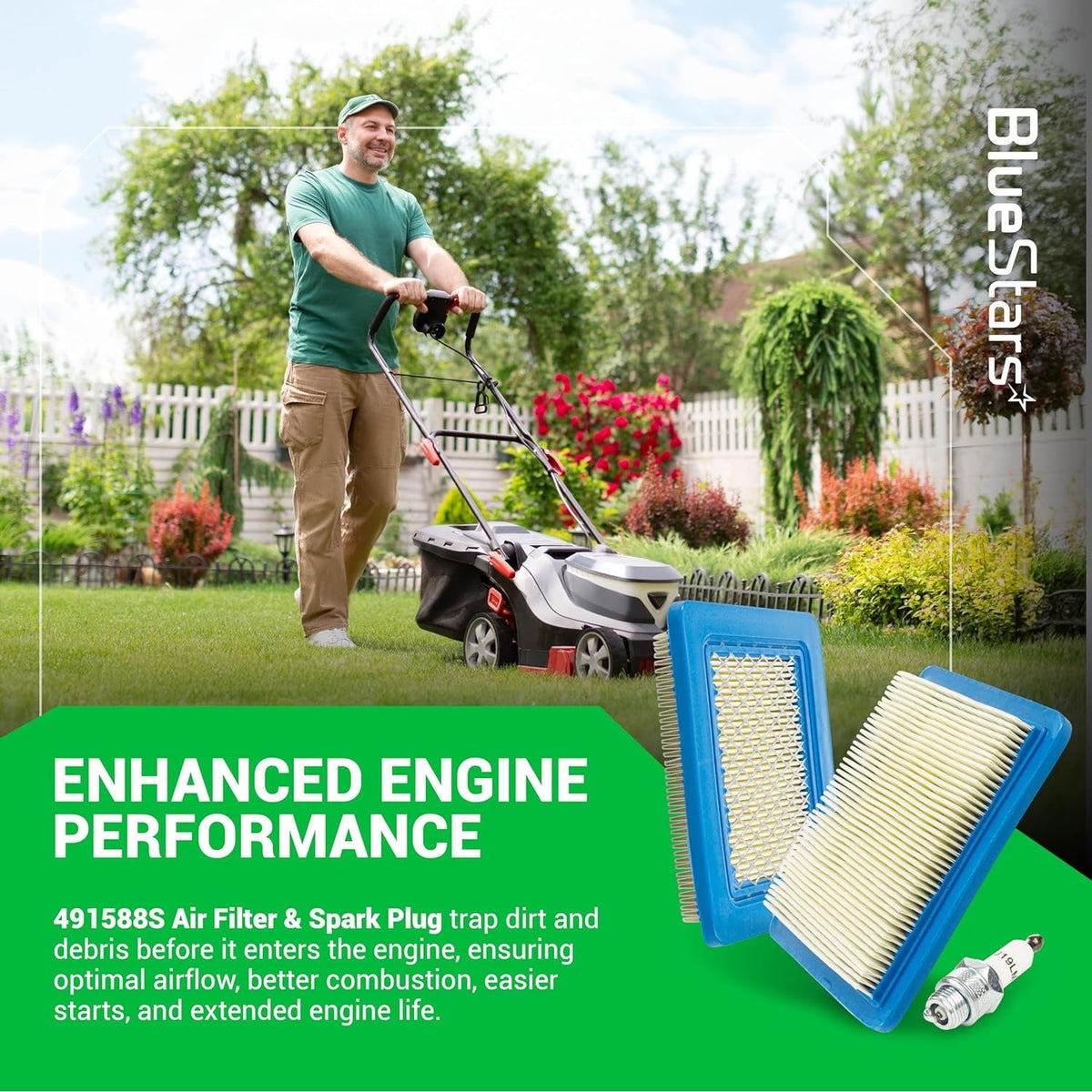
491588S Air Filter & 5062K Spark Plug
3.4 Carburetor or Choke Problem
If your mower produces thick black smoke even after the air filter has been checked, the next likely area is the carburetor or choke.
The choke reduces airflow during cold starts. If it remains closed after the engine warms up, the engine can continue running with too much fuel and not enough air.
A dirty or flooded carburetor can create a similar problem.
How to Fix It:
- Make sure the choke fully opens after startup.
- Check the air filter before working on the carburetor.
- Use fresh fuel.
- Inspect the carburetor for dirt, varnish, or flooding.
- Clean or service the carburetor according to the engine manufacturer’s instructions.
Avoid making carburetor-mixture adjustments unless your specific engine manual provides the procedure. Some engines use fixed-jet or non-adjustable carburetors, and incorrect adjustment can make the engine run worse.
If the mower also stalls or surges, see Lawn Mower Starts Then Dies: Common Causes and Fixes.
3.5 Gasoline Is Getting Into the Engine Oil
Pull out the dipstick and smell the oil. If it has a strong gasoline odor, or the oil level appears unusually high even though you did not add oil, fuel may be leaking through the carburetor and entering the crankcase.
A common cause is a carburetor float or inlet needle that is not sealing properly.
How to Fix It
- Do not continue running the engine with fuel-contaminated oil.
- Shut off the fuel supply if the mower has a fuel shutoff valve.
- Inspect and service the carburetor.
- Drain the contaminated oil.
- Refill with the correct fresh engine oil before restarting.
Fuel-thinned oil cannot lubricate the engine properly, so simply topping up the crankcase is not an adequate fix.
If you are not comfortable servicing the carburetor, use a small-engine repair technician.
3.6. Oil Spilled on the Muffler or Engine
If the mower started smoking immediately after an oil change, refilling, or maintenance, inspect the outside of the engine before assuming an internal failure.
Oil spilled onto the muffler or another hot surface can create white or bluish smoke as it burns.
How to Fix It:
- Shut the mower off and let it cool.
- Wipe away visible oil from accessible surfaces.
- Check the oil level to make sure the engine was not also overfilled.
- Inspect for an active oil leak.
Once the spill has been cleaned and no active leak is present, a small amount of residue may continue to smoke temporarily as it burns off.

3.7. Old or Contaminated Fuel
Old fuel is more commonly associated with hard starting, surging, poor combustion, and carburetor deposits than with smoke by itself. However, degraded fuel can contribute to combustion problems and should still be checked if the mower has been stored for several weeks or months.
How to Fix It
- Drain stale or contaminated fuel safely.
- Refill with fresh fuel that meets the engine manufacturer’s specifications.
- Inspect the carburetor if the engine continues to run rich or unevenly.
- Use fuel stabilizer when storing the mower if recommended by the manufacturer.
3.8. Internal Engine Damage
If blue or white smoke continues after the oil level, air filter, tipping, and external spills have been ruled out, the mower may be burning oil internally.
Possible causes include:
- Worn piston rings
- Worn cylinder
- Damaged valve seals
- Blown head gasket
- Crankcase leak
Signs the Problem May Be Internal
- Smoke continues instead of gradually clearing
- Engine consumes oil repeatedly
- Significant power loss
- Knocking or abnormal mechanical noise
- Oil leaks
- Difficulty keeping the engine running
At this point, continued operation can make the damage worse. Stop using the mower and have the engine inspected if the basic troubleshooting steps do not solve the problem.
4. How to Prevent a Lawn Mower from Smoking?
Most preventable smoking problems come from incorrect oil levels, restricted airflow, improper tipping, or neglected maintenance.
To reduce the risk:
- Check the engine oil level before use.
- Never exceed the manufacturer’s specified oil capacity.
- Use the correct oil type for your engine.
- Keep the air filter clean and replace damaged filters.
- Use fresh fuel.
- Avoid storing untreated gasoline for long periods.
- Follow the owner’s manual when tipping the mower.
- Clean grass and debris from the deck and cooling areas.
- Check the spark plug, air filter, fuel system, and oil during regular maintenance.
- Investigate recurring smoke instead of repeatedly allowing it to burn off.
For a complete preventive checklist, see our lawn mower maintenance guide.

Simple lawn mower maintenance checks that help prevent smoking problems, including proper oil use, air filter care, fresh fuel, and routine inspection.
5. When Should You Stop Using a Smoking Lawn Mower?
A brief puff of smoke after the mower was tipped or after a minor oil spill may clear once the underlying problem has been corrected. Persistent or worsening smoke deserves more caution.
Stop the mower and avoid restarting it if:
- Smoke becomes thicker instead of decreasing
- The mower loses substantial power
- The engine knocks, bangs, or makes unusual mechanical noises
- Oil is leaking continuously
- Engine oil smells strongly of gasoline
- You smell burning plastic or electrical insulation
- An electric mower is smoking from the motor, battery, or wiring
- The mower continues smoking after the basic oil and air-filter checks
When the cause cannot be confidently identified, professional inspection is safer than repeatedly running the engine to see whether the smoke disappears.
6. FAQs About a Smoking Lawn Mower
6.1. Is It Safe to Use a Lawn Mower That Is Smoking?
Do not continue mowing until you know the cause. A brief puff of white or blue smoke after tipping the mower or spilling oil may be temporary, but persistent smoke, power loss, knocking, leaking oil, or an electrical-burning smell can indicate a more serious problem.
6.2. Why Is My Lawn Mower Smoking White After I Tipped It?
Tilting a gas mower can allow oil to enter the cylinder, carburetor, air-filter housing, or exhaust area. When the mower is restarted, the oil burns and creates white or bluish smoke. Return the mower to a level position, check the oil and air filter, and follow the manufacturer’s instructions for safe tipping.
6.3. Can Too Much Oil Cause a Lawn Mower to Smoke?
Yes. Too much oil can enter areas where it should not and create white or blue exhaust smoke. Check the dipstick on a level surface and drain excess oil until it reaches the manufacturer’s specified level.
6.4. Why Does My Lawn Mower Oil Smell Like Gasoline?
A strong gasoline smell in the engine oil may mean fuel is leaking through the carburetor into the crankcase, sometimes because of a faulty float or inlet needle. Do not continue running the mower with fuel-contaminated oil. Repair the fuel leak and replace the engine oil before restarting.
6.5. Why Does My Lawn Mower Blow Black Smoke and Then Die?
A lawn mower that produces black smoke and then stalls may be running too rich because of a clogged air filter, stuck choke, flooded carburetor, or another fuel-delivery problem. Start with the air filter and choke before moving to carburetor troubleshooting.
A smoking lawn mower can often be traced to excess oil, restricted airflow, fuel problems, or improper tipping. Start with the smoke color, check the oil level and air filter, and stop using the mower if the smoke persists or comes with power loss, knocking, leaks, or an electrical-burning smell. For routine maintenance and compatible replacement parts, explore lawn mower parts from BlueStars Parts and always verify your mower or engine model before ordering.
Contact information:
8 The Green, Ste A, Dover, Delaware 19901-3618, United States
Website: https://bluestarsparts.com/
Explore related Articles:
- Lawn Mower Pull Cord Stuck? Here's Why and How to Fix It
-
How to Change a Spark Plug on a Lawn Mower
- Why Does Your Lawn Mower Backfire and How to Fix It?
- How to Sharpen Reel Mower Blades: A Step-by-Step Guide
-
Lawn Mower Running Rough? 6 Common Causes and How to Fix
Reference:
BlueStars Parts. (2026, April 12). Lawn mower troubleshooting: Common problems & fixes. https://bluestarsparts.com/blogs/news/lawn-mower-troubleshooting
Briggs & Stratton. (2026, January 15). Why is white / blue smoke coming from the engine? https://www.briggsandstratton.com/en-us/support/faqs/engine-emits-white-blue-smoke
Briggs & Stratton. (2026, January 9). 5 mower troubleshooting tips. https://www.briggsandstratton.com/en-us/support/maintenance-how-to/5-mower-troubleshooting-tips


