

If your refrigerator making loud noise issue suddenly becomes noticeable, the first step is to identify what the sound is and where it is coming from. Buzzing or humming from the lower back may point to the condenser fan, coils, start components, or compressor, while grinding or scraping inside the freezer often suggests an evaporator fan hitting ice or wearing out. This guide from BlueStars Parts explains the most common causes, what you can safely check yourself, and when a noisy refrigerator needs professional repair.
Quick Answer: Why Is My Refrigerator Making a Loud Noise?
A refrigerator is making a loud noise most often because of an evaporator fan hitting ice, a dirty or failing condenser fan, vibration from an uneven refrigerator, a loose drain pan, or a start relay or compressor problem. The fastest way to narrow it down is to match the type of noise with its location.
| Noise | Likely Source | Location | First Check |
|---|---|---|---|
| Buzzing or humming | Condenser fan, compressor, dirty coils | Bottom rear | Inspect fan and clean coils |
| Grinding or scraping | Evaporator fan hitting ice or worn motor | Inside freezer | Listen near freezer fan area |
| Clicking | Start relay or compressor start issue | Bottom rear | Listen for repeated click-buzz cycles |
| Rattling or vibrating | Uneven fridge, loose drain pan, cabinet contact | Underneath or around fridge | Stabilize and check for loose parts |
| Squealing | Fan motor or worn bearings | Freezer or rear | Inspect the fan source |
| Knocking or banging | Water line, ice maker, compressor mounts | Rear or inside | Note when the sound occurs |
| Gurgling or popping | Defrost cycle or refrigerant flow | Inside cabinet | Usually normal if occasional |
1. Where Is the Loud Refrigerator Noise Coming From?
Before replacing any part, you should listen carefully to where the noise is strongest. The location of the sound can quickly narrow down whether the problem comes from the evaporator fan, condenser area, leveling, drain pan, water system, or compressor.

1.1. Noise Coming From Inside the Freezer
Grinding, scraping, squealing, or loud whirring from the freezer usually points to the evaporator fan area. Ice buildup can interfere with the fan blades, or the fan motor itself may be wearing out.
What to check:
- Step 1: Open the freezer door and listen for a change in the noise.
- Step 2: Check for visible frost or ice buildup around the rear interior panel.
- Step 3: If the noise changes or stops when the door is opened, the evaporator fan area is a strong suspect.
- Step 4: Do not use knives, screwdrivers, or other sharp tools to chip away ice.
If the fan is hitting ice, a full defrost may temporarily stop the noise. If the sound returns, the underlying defrost or fan problem should be diagnosed.
1.2. Noise Coming From the Bottom Back of the Refrigerator
If your refrigerator is making a buzzing noise or a loud hum from the lower rear area, check the condenser fan, condenser coils, start components, and compressor.
What to check:
- Step 1: Unplug the refrigerator before inspecting the rear or bottom area.
- Step 2: Look for dust, pet hair, or debris around the condenser coils and fan.
- Step 3: Check whether the fan blade is obstructed or visibly damaged.
- Step 4: Note whether the noise is a steady hum, repeated clicking, rattling, or a deeper knocking sound.
A normal compressor usually produces a low operating hum. A new, unusually loud hum, repeated click-buzz cycle, or heavy knocking deserves closer inspection.
1.3. Noise Coming From Underneath or Around the Cabinet
A rattling or vibrating sound does not always mean an internal part has failed. If the fridge makes weird noise but the sound changes when you touch or reposition the appliance, the issue may be related to leveling or contact with nearby surfaces.
What to check:
- Step 1: Gently push on different corners to see whether the refrigerator rocks.
- Step 2: Make sure the cabinet is not touching a wall, counter, or surrounding furniture.
- Step 3: Check whether bottles, shelves, or containers are vibrating against one another.
- Step 4: Inspect the accessible drain pan underneath for looseness or misalignment.
- Step 5: Adjust the leveling feet according to the owner's manual if the refrigerator is unstable.
Do not use a fixed clearance measurement for every model. Follow the installation spacing recommended by the refrigerator manufacturer.
1.4. Noise Coming From the Ice Maker or Water Line
Knocking, tapping, buzzing, or brief rattling may occur when the ice maker fills, the water valve opens, or ice drops into the bin.
What to check:
- Step 1: Note whether the sound happens only during an ice-making or water-dispensing cycle.
- Step 2: Check visible water tubing for vibration or contact with the cabinet.
- Step 3: Make sure the ice bin and nearby components are seated correctly.
- Step 4: If the refrigerator has no active water supply, turn off the ice maker according to the owner's manual.
Occasional water-flow or ice-drop sounds can be normal. Repeated loud knocking, vibration, or buzzing outside the normal fill cycle may indicate a loose water line, valve issue, or another component that needs inspection.
2. Refrigerator Making Loud Noise: Causes and How to Fix Them
Once you know where the sound is coming from, match it with the most likely component. If your refrigerator is making a loud noise, start with fan, vibration, and airflow-related issues before assuming the compressor has failed.
2.1. Evaporator Fan Is Hitting Ice or Wearing Out
The evaporator fan circulates cold air from the freezer throughout the refrigerator. If ice builds up around the fan blade, or the motor begins to wear out, you may hear grinding, scraping, squealing, or loud whirring from inside the freezer.
Common signs:
- Grinding or scraping from the freezer
- Loud whirring or squealing
- Noise changes when the freezer door is opened
- Frost or ice buildup near the rear freezer panel
- Refrigerator compartment may become warmer than normal
How to fix:
- Step 1: Unplug the refrigerator.
- Step 2: Check for visible frost or ice around the evaporator fan area.
- Step 3: If ice is obstructing the fan, allow the refrigerator to defrost safely.
- Step 4: Never chip ice away with a knife, screwdriver, or other sharp tool.
- Step 5: If the fan still sounds rough after the ice is cleared, inspect the fan blade and motor for wear.
If diagnosis confirms a worn evaporator fan motor, the 2315539 Refrigerator Evaporator Fan Motor is designed for select Whirlpool, Kenmore, Maytag, Amana, KitchenAid, and related refrigerator models. Always verify your refrigerator model and original part number before ordering.
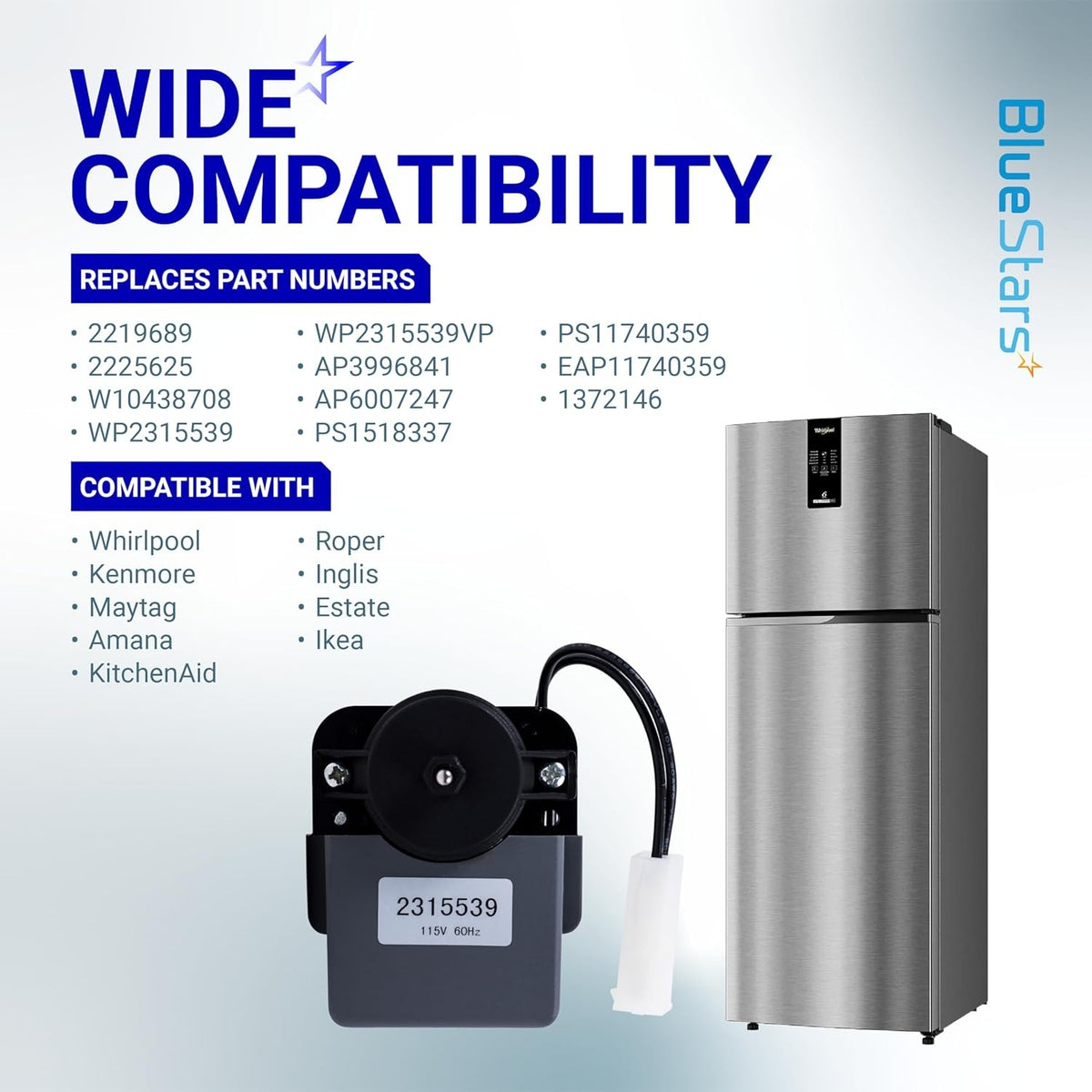
2315539 Refrigerator Evaporator Fan Motor
2.2. Condenser Fan Is Dirty, Obstructed, or Failing
If your refrigerator is making a buzzing noise or loud humming sound from the lower back, the condenser fan is one of the first components to inspect.
Dust, pet hair, or debris can interfere with the fan blade, while worn motor bearings can make the fan noticeably louder. Dirty condenser coils do not usually create the noise themselves, but they can make the cooling system run longer and put more load on the condenser fan and compressor.
Common signs:
- Loud buzzing, humming, grinding, or rattling from the bottom rear
- Refrigerator runs for longer periods
- Condenser fan blade turns slowly or irregularly
- Heavy dust or pet hair around the fan and coils
- Refrigerator or freezer feels warmer than usual
How to fix:
- Step 1: Unplug the refrigerator.
- Step 2: Access the condenser area according to the owner's manual.
- Step 3: Vacuum or gently brush dust and debris from the accessible condenser coils and fan area.
- Step 4: Check whether anything is touching or blocking the fan blade.
- Step 5: If the fan remains noisy, does not spin properly, or has excessive play, the motor may need replacement.
For compatible GE, Hotpoint, Kenmore, Haier, Monogram, Café, RCA, and Americana models, the WR60X10220 Refrigerator Condenser Fan Motor Replacement may be suitable when loud rear-bottom noise is caused by a failing condenser fan motor. Check your model and original part number before purchasing.
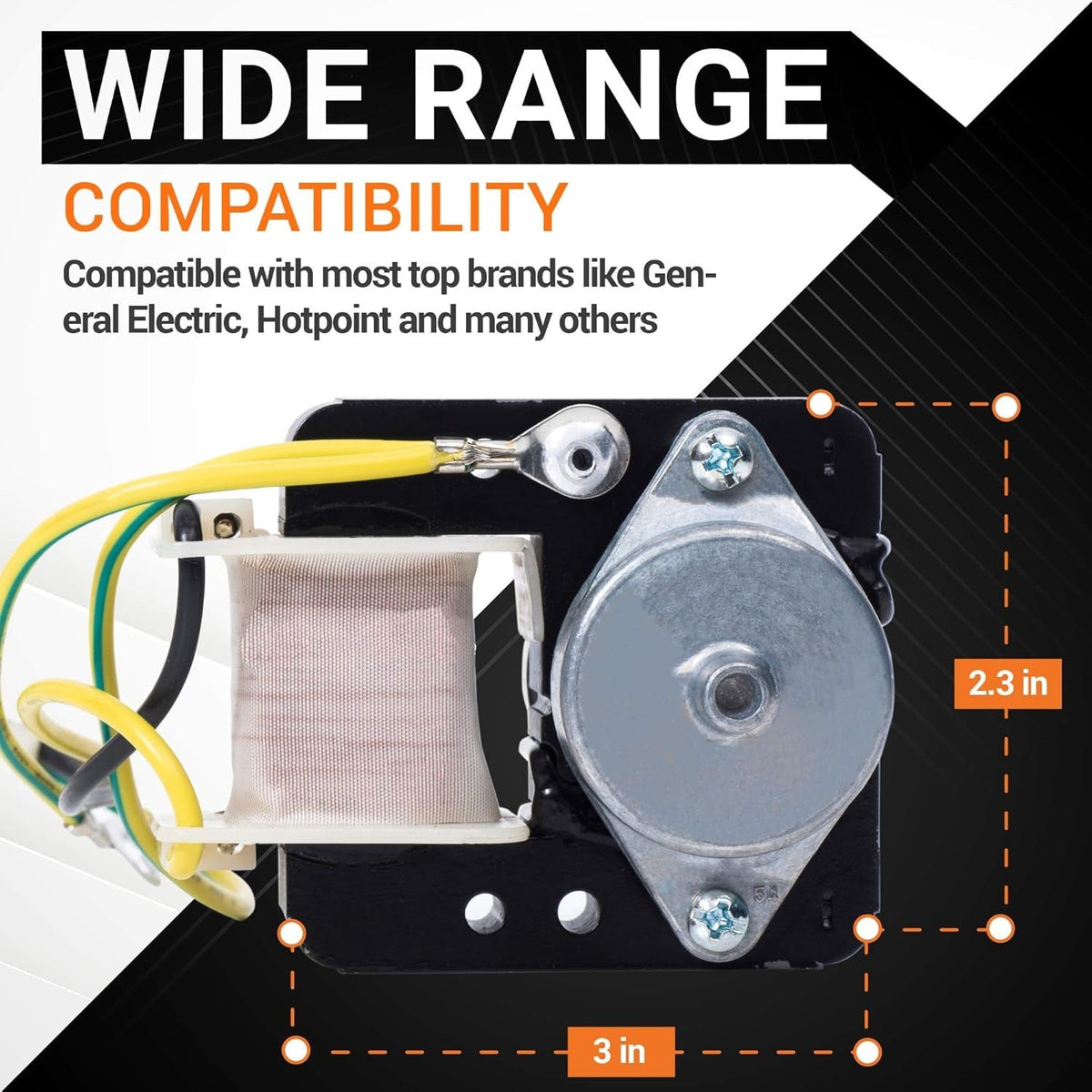
WR60X10220 Refrigerator Condenser Fan Motor Replacement
2.3. The Refrigerator Is Uneven or Vibrating Against Something
A rattling refrigerator does not always have a failed internal component. An uneven floor, incorrectly adjusted leveling feet, nearby cabinets, or items inside the refrigerator can amplify normal vibration.
Common signs:
- Rattling or vibrating while the compressor is running
- Noise decreases when you hold or push lightly against the cabinet
- Refrigerator rocks when pushed at the corners
- Bottles, shelves, or containers vibrate together
- Cabinet touches a wall or nearby furniture
How to fix:
- Step 1: Check whether the refrigerator rocks when gently pushed at the corners.
- Step 2: Adjust the leveling feet until the refrigerator stands firmly.
- Step 3: Make sure the cabinet is not touching a wall, countertop, or surrounding furniture.
- Step 4: Reposition bottles, shelves, or containers that are vibrating together.
- Step 5: Follow the clearance requirements in your refrigerator's installation manual.
If the rattling disappears after leveling or repositioning the refrigerator, the noise was likely caused by vibration rather than a failed part.
2.4. Drain Pan Is Loose or Misaligned
Many refrigerators have a drain pan near the bottom of the appliance that collects water during the defrost cycle. If the pan shifts out of position, becomes loose, or cracks, it can vibrate against the refrigerator frame.
Common signs:
- Rattling from underneath the refrigerator
- Noise is strongest when the compressor or fan starts
- Rattle changes when the refrigerator is moved
- Drain pan appears loose, cracked, or out of position
How to fix:
- Step 1: Unplug the refrigerator.
- Step 2: Locate the drain pan if it is safely accessible on your model.
- Step 3: Check whether the pan is sitting correctly in its guides or mounting points.
- Step 4: Reseat the pan if it has shifted.
- Step 5: Replace the pan if it is cracked or damaged.
Some refrigerator drain pans are not designed for easy homeowner access, so check the owner's manual before removing panels.
2.5. Start Relay Is Struggling to Start the Compressor
The start relay helps provide the compressor with the initial electrical current needed to start. When the relay begins to fail, the compressor may try repeatedly to start, producing a distinctive click-buzz-click pattern.
Common signs:
- Repeated clicking every few minutes
- Compressor hums briefly and then stops
- Refrigerator has power but is not cooling properly
- Clicking comes from the compressor area at the lower rear
How to fix:
- Step 1: Unplug the refrigerator.
- Step 2: Confirm that the clicking is coming from the compressor area rather than a normal control or ice-maker cycle.
- Step 3: Do not repeatedly restart the refrigerator if the compressor continues clicking without starting.
- Step 4: Have the start relay and compressor circuit properly diagnosed before replacing parts.
A loose or rattling sound from a removed relay can suggest internal damage, but it is not enough by itself to confirm that the relay has failed.
For select LG, Kenmore, and related models, the 6748C-0004D Refrigerator Start Relay may be relevant when the compressor will not start and repeated clicking is heard from the compressor area. Always confirm model compatibility and the original part number first.

6748C-0004D Refrigerator Start Relay
2.6. Ice Maker or Water Line Is Knocking or Buzzing
Not every knocking or buzzing sound means the refrigerator is failing. Ice makers and water inlet systems naturally make some noise when water enters the refrigerator or ice drops into the bin.
The problem is more likely when the noise becomes unusually loud, repeats frequently, or occurs outside the normal ice-making cycle.
Common signs:
- Buzzing when the ice maker fills with water
- Knocking or tapping from the rear water line
- Rattling tubing against the cabinet
- Noise occurs shortly before or after ice drops
- Ice maker repeatedly tries to fill without a water supply
How to fix:
- Step 1: Note when the noise occurs and whether it matches an ice-making or dispensing cycle.
- Step 2: Check visible water tubing for loose sections touching the cabinet.
- Step 3: Make sure the ice bin is seated correctly.
- Step 4: If the refrigerator is not connected to a water supply, disable the ice maker according to the owner's manual.
- Step 5: Have the water inlet valve inspected if loud buzzing continues during fill cycles or water flow is abnormal.
Brief filling, water-flow, and ice-drop noises are often normal.
2.7. Compressor Is Making an Abnormally Loud Noise
The compressor naturally produces a low humming sound while the refrigerator is cooling. A refrigerator is making a humming noise does not automatically mean the compressor is failing.
However, a new or unusually loud hum, heavy knocking, repeated click-buzz cycles, or excessive vibration from the compressor area can indicate a developing problem.
Common signs:
- Humming becomes much louder than before
- Deep knocking or clunking from the lower rear
- Compressor repeatedly tries to start and stops
- Refrigerator is also struggling to cool
- Burning smell or abnormal overheating accompanies the noise
How to fix:
- Step 1: Clean the accessible condenser coils and confirm that the condenser fan is operating properly.
- Step 2: Make sure the refrigerator has adequate ventilation according to the manufacturer's installation instructions.
- Step 3: Listen for whether the noise occurs continuously or only during compressor startup.
- Step 4: Stop using the refrigerator and seek professional diagnosis if there is a burning smell, repeated electrical clicking, or heavy internal knocking.
- Step 5: Do not attempt to open or repair the sealed compressor system yourself.
Compressor or sealed-system repairs generally require specialized tools and should be handled by a qualified refrigeration technician.
3. Which Refrigerator Noises Are Normal?
Not every refrigerator sound means something is wrong. Modern refrigerators regularly make low humming, gurgling, popping, clicking, and ice-making sounds during normal operation. The key is whether the sound is brief and occasional or new, unusually loud, persistent, or accompanied by poor cooling.
| Noise | Usually Normal? | What It May Mean |
|---|---|---|
| Soft humming | Yes | Compressor or fan running normally |
| Light gurgling | Usually | Refrigerant flow or defrost water moving through the system |
| Occasional popping or cracking | Usually | Thermal expansion during cooling or defrost |
| Ice dropping into the bin | Yes | Normal ice-maker cycle |
| Brief clicking | Often | Compressor, relay, or control switching on and off |
| Repeated loud clicking | No | Start relay or compressor-start problem |
| Grinding or scraping | No | Fan blade hitting ice, debris, or a worn fan motor |
| Persistent loud buzzing | Needs checking | Condenser fan, compressor, water valve, or electrical issue |
| Heavy knocking or clunking | No | Compressor, mounts, water line, or another mechanical issue |
| Loud squealing | No | Worn fan motor or bearings |
If the sound has always been present and the refrigerator is cooling normally, it may be part of normal operation. If the noise suddenly becomes louder, changes in character, or appears together with temperature problems, inspect the source more closely.
4. Safety: What You Can Check Yourself vs When to Stop
Many refrigerator noise problems can be checked safely at home, especially leveling, vibration, accessible coils, and visible fan obstructions. However, electrical, compressor, refrigerant, and sealed-system problems should be left to a qualified technician.
Safe DIY vs Professional Repair
| Check or Repair | DIY? | What to Do |
|---|---|---|
| Leveling feet | Yes | Adjust until the refrigerator stands firmly |
| Cabinet or bottle vibration | Yes | Reposition the appliance or items inside |
| Exterior condenser coil cleaning | Yes | Unplug first, then vacuum or brush accessible dust |
| Visible condenser fan debris | Yes | Unplug before removing accessible debris |
| Manual defrost for fan ice buildup | Yes | Let ice melt naturally; do not chip it with sharp tools |
| Drain pan reseating | Usually | Reseat only if safely accessible |
| Fan motor replacement | Moderate | Follow model-specific instructions and disconnect power |
| Start relay testing or replacement | Moderate | Electrical diagnosis is recommended |
| Compressor repair | No | Requires professional refrigeration service |
| Refrigerant / sealed-system repair | No | Requires specialized tools and training |
Stop DIY Troubleshooting If You Notice
- Burning or electrical smell
- Smoke
- Repeated breaker trips
- Heavy knocking from inside the compressor
- Repeated click-buzz cycles with poor or no cooling
- Compressor or wiring that appears excessively overheated
- Damaged refrigerant tubing
- Hissing accompanied by poor cooling, oily residue, or visible system damage
Always unplug the refrigerator before accessing fan, coil, relay, or lower rear components. Fan blades may have sharp edges, and the compressor can become very hot during normal operation.
5. Frequently Asked Questions
5.1. Why does my refrigerator get louder at night?
Refrigerator sounds often seem louder at night because the surrounding environment is quieter. Normal compressor, fan, defrost, and ice-maker noises may become more noticeable even though the refrigerator itself is operating normally. If the sound is new, unusually loud, or accompanied by poor cooling, inspect the source.
5.2. Why does my refrigerator make noise after I close the door?
Closing the refrigerator or freezer door can trigger changes in airflow and pressure, and the fan may resume once the door switch is engaged. A brief fan or humming sound can be normal. Grinding or scraping that starts after the door closes may indicate the evaporator fan is contacting ice or another obstruction.
5.3. Why does my refrigerator make a buzzing noise every few minutes?
Intermittent buzzing can come from the compressor starting, the condenser fan, or the water inlet valve during an ice-maker fill cycle. If the buzzing is followed by repeated clicking, poor cooling, or the compressor failing to start, the start relay or compressor circuit may need inspection.
5.4. Can a noisy refrigerator increase my electricity bill?
Yes, in some cases. A refrigerator with dirty condenser coils, a struggling fan, poor ventilation, or another cooling problem may run longer than normal and use more electricity. Noise alone does not always mean higher energy use, but loud operation combined with long run times is worth checking.
5.5. Why does my fridge make noise after a power outage?
After power is restored, the compressor and fans may restart, and the refrigerator may run longer while returning to its target temperature. Temporary humming, clicking, or airflow sounds can be normal. Repeated click-buzz cycles, failure to cool, or unusually loud mechanical noises should be investigated.
5.5. How can I tell whether the noise is coming from the fan or compressor?
Listen to the location and type of sound. Noise from inside the freezer is more likely related to the evaporator fan, while buzzing, humming, or clicking from the lower rear may involve the condenser fan, start relay, or compressor. If the sound changes when the freezer door is opened, the evaporator fan area is a strong suspect.
A refrigerator making loud noise is often easier to diagnose once you identify both the type of sound and where it is coming from. Start with simple causes such as an uneven refrigerator, loose items, dirty condenser areas, or fan obstructions before assuming the compressor has failed. If the noise is accompanied by poor cooling, repeated clicking, burning smells, or heavy compressor knocking, professional diagnosis is the safer choice. Once the faulty component is confirmed, explore the Refrigerator Parts from BlueStars Parts and always verify your refrigerator model, original part number, and specifications before ordering.
Contact information:
8 The Green, Ste A, Dover, Delaware 19901-3618, United States
Website: https://bluestarsparts.com/
References
Whirlpool Corporation. (n.d.). Refrigerator normal sounds and noises. Whirlpool Product Help.
GE Appliances. (n.d.). Refrigerator – Normal sounds and noises made. GE Appliances.
Whirlpool Corporation. (n.d.). Why is my refrigerator making noise? Whirlpool.
Whirlpool Corporation. (n.d.). Refrigerator noise – Buzzing. Whirlpool Product Help.
Related Articles


