




Lifetime Warranty
50+5 uF MFD 370/440 VAC Dual Run Start Round AC Capacitor - Fits Condenser, Heat Pump - Replaces 97F9850
Save 16%
0.00
Regular price
$20.79
Regular price
$24.74
Sale price
$20.79
Fast delivery
CONFIRM THE FIT FOR YOUR MODEL
Enter your model number
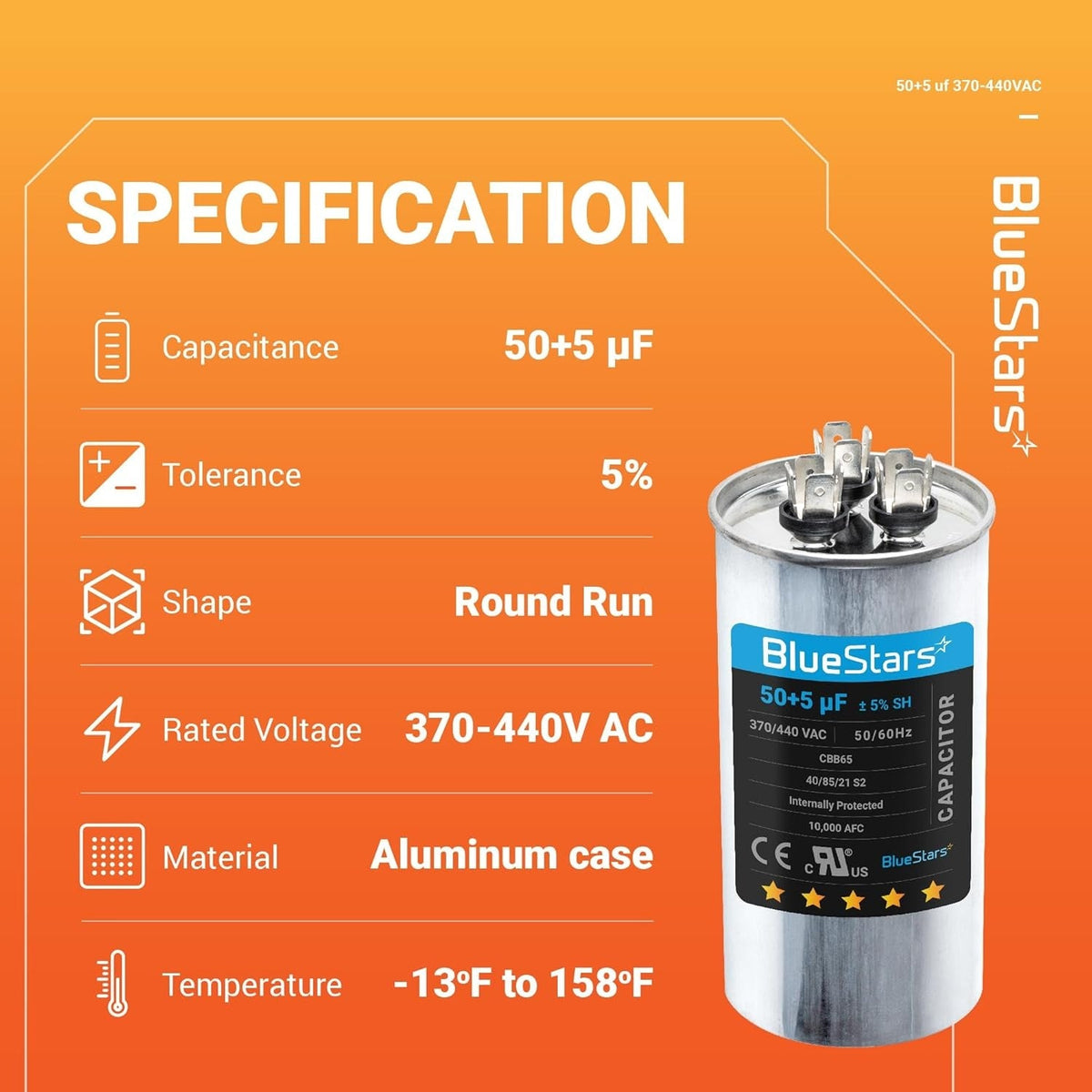
97F9850 97F9970 50+5 uF/MFD 370 or 440 VAC Dual Run Circular Start Capacitor
Key Features
- Capacitance Rating: 50 + 5 Microfarad (uF/MFD)
- Voltage Rating: Dual rated for 370 VAC or 440 VAC applications
- Capacitance Tolerance: ±6%
- Shape: Round / Circular
- Dimensions: 2.36 inch (60 mm) diameter
- Terminals: Three terminals for Common, Compressor, and Fan Motor
- Construction: Aluminum case, oil-filled design for heat dissipation
- Safety: UL 810 listed; contains no PCBs
Replaces / Cross-Reference Part Numbers
- 97F9850
- 97F9970
- Also replaces other brand capacitors with matching 50/5 MFD and 370V or 440V specifications.
Compatibility & Fitment
- For use in a wide range of HVAC systems, central air conditioners, and heat pumps.
- Functions as a direct replacement for units from various manufacturers requiring a 50/5 uF dual run capacitor.
- Always verify the MFD and voltage ratings of your original capacitor before purchasing.
When to Replace
- Compressor or fan motor hums but fails to start.
- Component runs intermittently or not at all.
- The capacitor case is visibly swollen, bulging, or leaking oil.
- Capacitance tests outside the component's rated tolerance.
Installation Tips
- Disconnect all electrical power to the HVAC unit before servicing.
- Discharge the existing capacitor to avoid electrical shock.
- Note the wire placement on the old capacitor's "C", "HERM", and "FAN" terminals before disconnecting.
- A 440V rated capacitor can safely replace a 370V capacitor, but a 370V cannot replace a 440V.
- Ensure the 50 MFD and 5 MFD ratings match the original part precisely.


-

Step 1
Turn off the power and locate the capacitor -

Step 2
Discharge any stored electricity by shorting the terminals -

Step 3
Take a photo or note how the wires connect. Disconnect wires & install the new capacitor. -

Step 4
Reassemble and test